
Coron
"Swimming inside a Japanese warship seventy years after it sank — history has never felt this physical."
WWII shipwrecks, volcanic lakes, and the diving capital of the Philippines.

Coron sits at the northern tip of Palawan province, and it operates on a different frequency than the rest of the Philippine beach circuit. This is not primarily a beach destination — though the beaches exist and they are fine. This is a diving destination, a lake destination, a place where the combination of World War II history and geological improbability creates experiences you simply cannot have anywhere else on earth.
The Japanese shipwrecks are the main event. In September 1944, American carrier-based planes attacked a Japanese supply fleet sheltering in Coron Bay, sinking twelve ships. Today, those wrecks sit in warm, clear water at depths ranging from five to forty meters, and diving them is one of the great underwater experiences in the world. The Irako — a refrigeration ship — lies on its side at thirty-six meters, its interior corridors still navigable for experienced divers, the engine room a cathedral of rusted machinery colonized by soft coral. The Akitsushima — a seaplane tender — has a crane that rises from the deck toward the surface like a skeletal finger pointing at the light above.

You do not need to be an advanced diver for all of them. The Lusong Gunboat sits in three meters of water — shallow enough to snorkel — its deck encrusted with coral and teeming with fish that have turned a warship into a reef. I snorkeled over it at midday, the sun directly above, and the shadow of the ship on the sand below was so clear it looked like a blueprint drawn by the ocean itself.
Kayangan Lake is the other icon — reached by a steep but short hike over limestone, it opens below you as a lake of such impossible clarity that the rocks on the bottom, twelve meters down, are as sharp as if viewed through glass. The water is a mix of fresh and salt, stratified so that you swim through layers of different temperature, and the limestone walls around the lake create an amphitheater that echoes every splash. It is the most photographed spot in the Philippines for a reason, but visiting at dawn — before the tour boats arrive — you can have it nearly alone, and the silence is extraordinary.
Twin Lagoon is another highlight — two bodies of water separated by a limestone wall, connected by an underwater gap you swim through (or, at low tide, a gap in the rock you climb over). The temperature shifts as you pass from one lagoon to the other — one is warm, one is almost hot, heated by geothermal activity below — and the color of the water changes with it.

Coron town is functional rather than charming — a grid of concrete buildings, dive shops, and restaurants that cater to a transient population of divers and island-hoppers. But the Mount Tapyas viewpoint, reached by climbing 721 steps to the summit behind town, offers a sunset panorama across Coron Bay that justifies every step. Bring water. Bring a cold San Miguel for the top. Watch the islands turn black against a sky that cycles through every warm colour the atmosphere can produce.
When to go: November to May for calm seas and best visibility. March to June offers the clearest water for wreck diving. The monsoon season (July to October) brings rough seas and many dive operators reduce their schedules.
Keep exploring
More from Philippines
 philippines
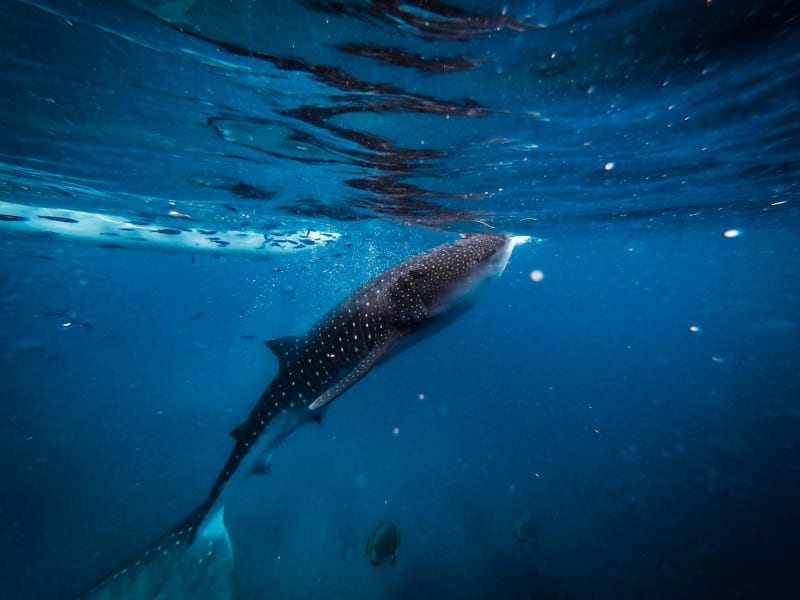
 Donsol
The whale shark capital of the world, where gentle giants feed close to shore every dry season.
Explore philippines
 Dumaguete
A laid-back university town, world-class diving at Apo Island, and the Visayas' most underrated gateway.
Explore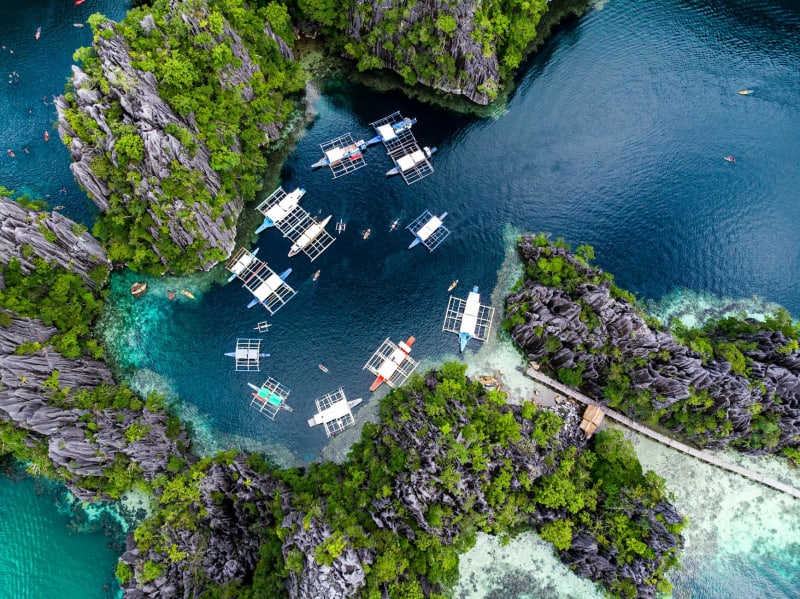 philippines
 El Nido
Limestone cathedrals, secret lagoons, and the island-hopping that defines the Philippine experience.
Explore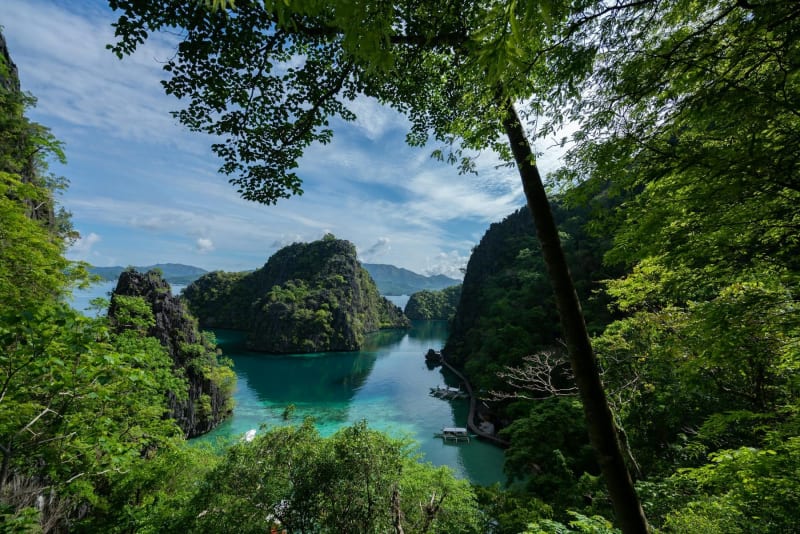 philippines
 Coron Lake Kayangan
The cleanest lake in Asia inside a karst lagoon on Coron Island, accessible through a fissure in the limestone cliff.
Explore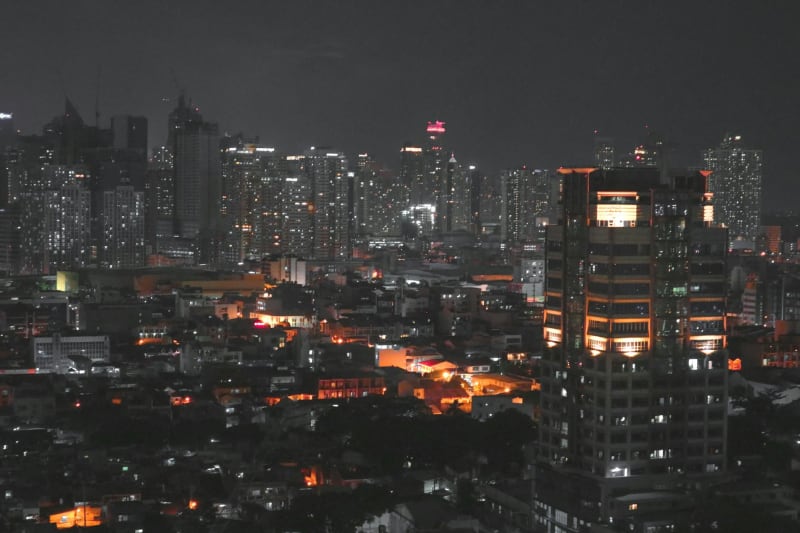 philippines
 Manila
A megacity of contradictions — colonial churches, neon-lit nightlife, and the best street food in Southeast Asia.
Explore philippines
 Palawan
Limestone lagoons, underground rivers, and the most beautiful island-hopping in Southeast Asia.
Explore