Batanes
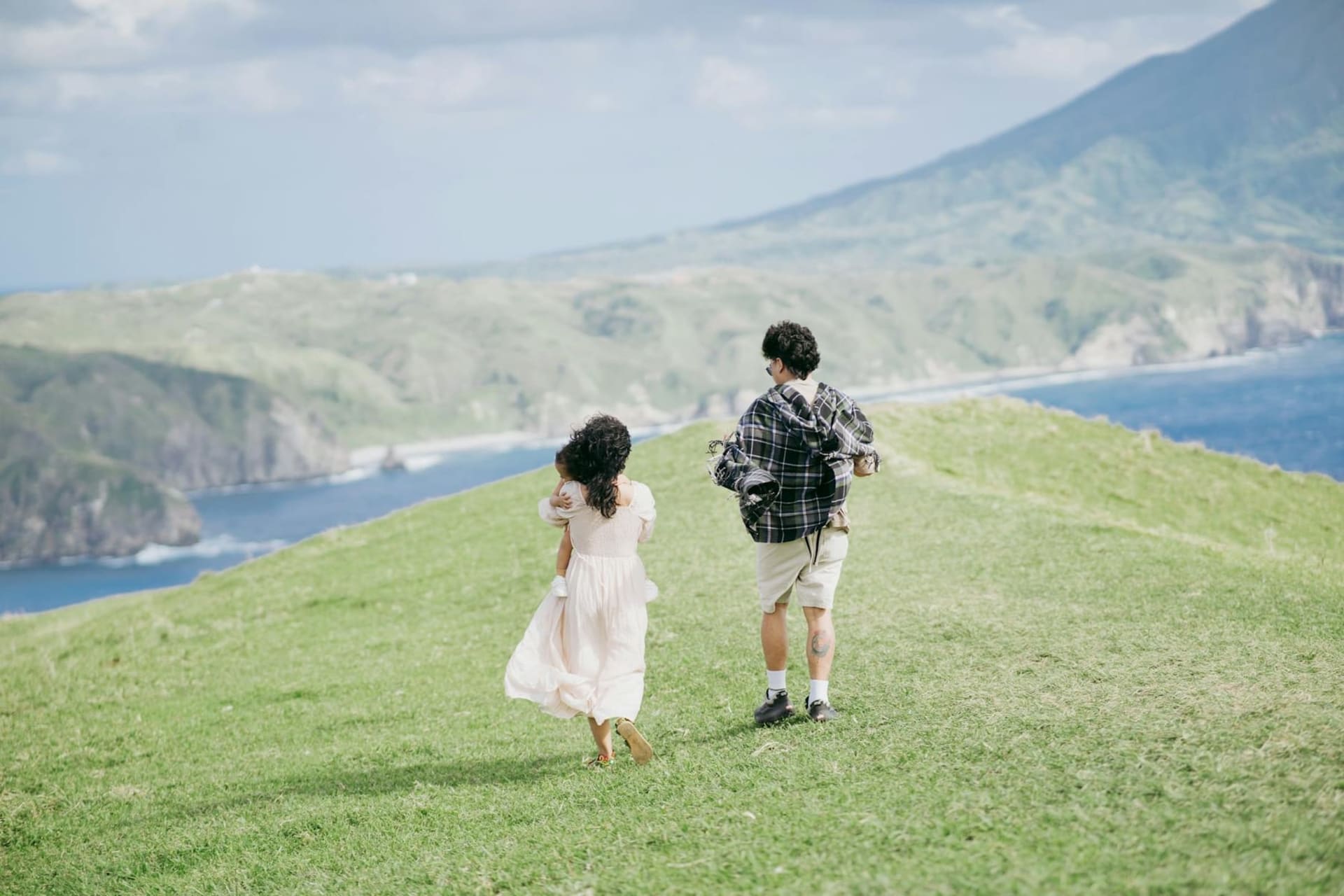
"Batanes looks like the Philippines daydreaming of Ireland — green hills, typhoon walls, and absolute edge-of-world solitude."
Stone Ivatan houses cling to grass-rolled hills at the northernmost tip of the Philippines, near Taiwan.
I didn’t expect to feel so far from everything. Not far in the exhausted, jet-lagged sense, but far in the way that matters — the kind of far where the world you usually carry with you simply stops arriving. Batanes does that. It sits at the northern edge of the Philippine archipelago, closer to Taipei than to Manila, and it carries that geographic fact in its bones.
The Weight of Stone
The Ivatan built their houses to survive typhoons, and it shows. The walls of the old stone homes in Sabtang are half a meter thick — limestone and coral, mortared with lime made from burned shells. Walking through Chavayan village in the early morning, before the heat found its angle, I kept pressing my palm against those walls the way you touch something you don’t quite believe in. They’re cool even in June. They smell of damp earth and old rain.
Lia found a woman weaving a vakul — the mushroom-shaped helmet Ivatan women wear against wind and sun — outside her door on the main lane. We stood and watched for longer than was probably polite. The woman didn’t stop or look up. The rhythm of her hands was its own complete sentence.
What the Road to Marlboro Country Teaches You
Everyone calls it Marlboro Country, the rolling hills above Basco, because of some old cigarette campaign that used this landscape. The name is ridiculous and somehow it sticks. We arrived at dawn on rented scooters, the road slick from overnight rain, and the hills were doing something I hadn’t seen grass do before — moving in long, slow waves, the wind pressing through them like a hand through water.
The surprise was the silence. I’d expected wind noise, the distant sea, maybe birds. What I got was a kind of acoustic softness, as if the hills absorbed sound rather than reflected it. Standing there, I understood why people talk about Batanes in religious terms. It isn’t mystical — it’s just that the landscape is so complete it leaves no room for distraction.
On Eating at the Edge of the World
Lunch in Basco meant luñis — Ivatan pork preserved in fat, cooked until the edges crisped — eaten at a wooden table with a view of the lighthouse on Naidi Hill. The flavor was deep and salt-forward, nothing like adobo, closer to French confit than anything else I expected to find here. I ordered seconds. I’m not sorry.
When to go: March through May is the calmest window — typhoon season runs from June through November and can ground flights indefinitely. February can work if you accept some unpredictability.