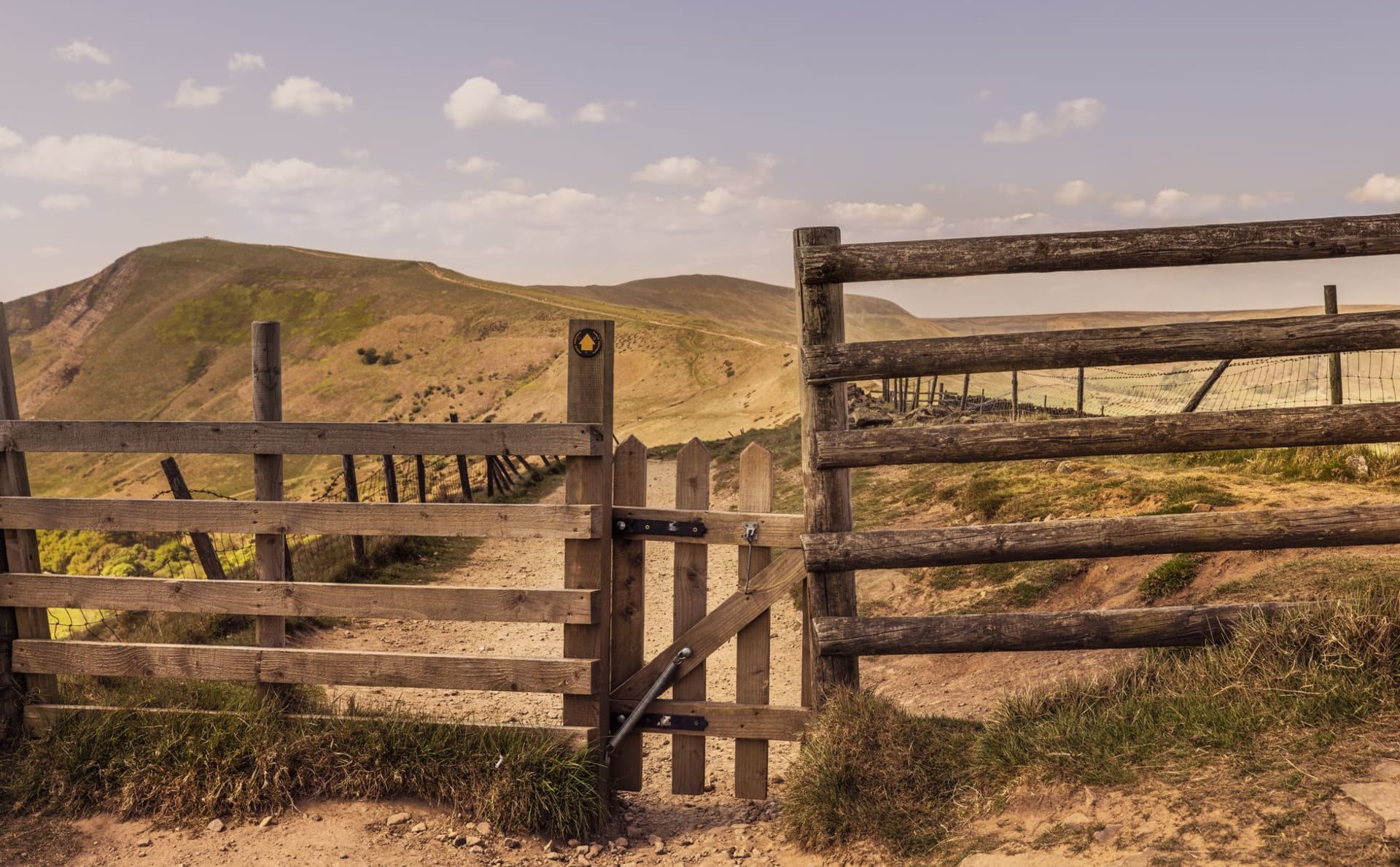
I got the directions wrong the first time and ended up approaching Stanage Edge from the Sheffield side, which meant climbing through heather and bilberry for forty minutes on an unmarked path that kept threatening to disappear entirely. When the edge finally appeared above me — that sudden dark wall of gritstone running ruler-straight across the skyline — I had the irrational feeling of having found something enormous that had been hiding. Which is absurd, because Stanage Edge is four miles long and has been one of Britain’s great climbing grounds for over a century. But it does appear suddenly. You are in the moor, and then the moor has a roof.
The gritstone here is the colour of rust and iron, the surface rough enough to grip but smooth in places where generations of hands and boot soles have polished certain holds to something almost glassy. Climbers have been coming to Stanage since the 1890s, when Sheffield steel workers would cycle out on weekends to pull themselves up faces with names like The Unconquerables and Wall End Slab. The ethos was working class, practical, anti-elitist — no fancy gear, just rope and determination — and something of that spirit persists. I watched a young woman leading a route in a light drizzle, her gear a deliberate casualness, moving up the rock with the easy efficiency of someone who has done this ten thousand times. Her belayer below was eating a sandwich.

The top of the edge is a different experience from the base — you walk a broad path along the rim with the moor behind you and the valley falling away in front, Sheffield visible in the distance as a cluster of buildings rising from the green. On a clear day the city is surprisingly close, maybe ten kilometres. On a misty day it disappears entirely and you could be anywhere in the last thousand years of English moorland history. The path runs past ancient millstones left abandoned where they were quarried — great circular stones that were never finished or never collected, lying in the heather as if someone set them down for a moment and forgot to come back. Some are half-carved, some complete, all slowly sinking into the peat. A graveyard for the industrial revolution’s unfulfilled intentions.
The path continues north and south and you can walk the full four miles without anyone bothering you. I went south toward High Neb, where the edge curves slightly west and the views open up to include Ladybower Reservoir in its dark valley to the north. The wind was doing its usual work — not violent, just steady, the kind of wind that slowly removes the last traces of whatever city preoccupation you arrived with. By the time I reached the southern end I had forgotten what I had been worried about in Manchester the day before. This is Stanage’s underrated function.

The nearest village is Hathersage, fifteen minutes down the hill, where the pubs are good and the tea rooms are unremarkable in the best possible way. The car park at Dennis Knoll fills on weekends but empties by mid-afternoon. If you can walk up on a weekday, do it — the edge is a different place without the clusters of people, when the only sounds are the wind on the rock and occasional distant shout from a climber figuring out a sequence. Some things are better empty, and this is one of them.
When to go: Year-round, but the shoulder seasons are best. April and May for green bracken and clear visibility. October for the rust-and-copper moor in full autumn colour. Avoid summer bank holidays — the car park situation approaches chaos and the path gets genuinely crowded. Winter mornings after frost, when the gritstone is completely empty, are for those who don’t mind an ice-edged wind.