Edale
"I stepped off the train and walked straight into the kind of quiet that cities don't believe in."
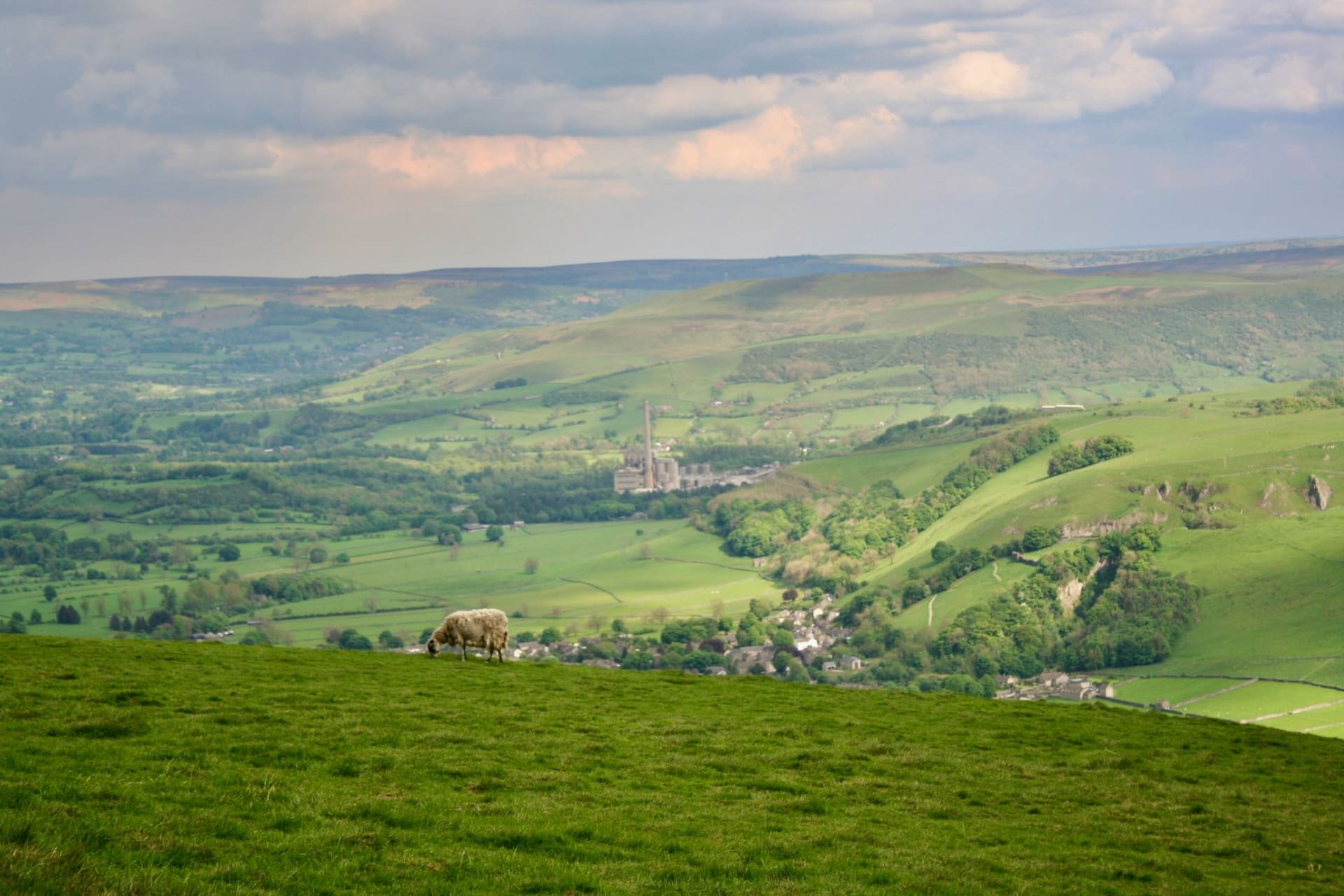
The train from Manchester Piccadilly empties at Edale and that is that — end of the line, literally, the rails terminating here as if the moors themselves refused the railway any further progress. I arrived on a Tuesday in October, the carriage that had been half full now just me and a man with a dog the size of a small horse. We walked out of the station together onto a lane so narrow it barely qualified as infrastructure, and within four minutes the man and his horse-dog had turned left into a farmyard and I was alone with nothing in front of me but the dark bulk of Kinder Scout rising from the valley floor, its edges lost in low cloud. This is how Edale begins: not with a welcome, exactly, but with the immediate clarification that the landscape outranks everything else here.
The village itself is a loose handful of cottages, a church, two pubs, and a campsite. The Nag’s Head is where the Pennine Way officially starts — there is a brass plaque — and on weekend mornings serious walkers with serious boots and impractical amounts of packed food gather outside to begin the 430-kilometre route north to Kirk Yetholm in Scotland. Most of them look quietly terrified in a way they are trying to hide. I ordered a coffee and watched them go, feeling the particular comfort of someone who has no intention of walking to Scotland.

What I did instead was walk the half-hour climb to the plateau of Kinder Scout by the Grindsbrook route, which starts behind the village and steepens considerably once you clear the lower fields. The path crosses a series of small streams, each one the colour of black tea — the peat staining the water on its way down from the bog. On the plateau itself, where the wind was doing something fierce and purposeful, I found a landscape that had very little interest in being beautiful in any conventional sense. It was brown and khaki and wet underfoot, the peat hags rising in dark humps above shallow channels. But there was something almost confrontational about its scale — this flat wilderness 600 metres above sea level, the city of Sheffield visible on clear days as a grey smear on the horizon. It takes a particular kind of stubbornness to find this compelling and I am apparently that kind of person.
Back in the valley in the afternoon, the light had turned that specific British October gold that does something extraordinary to wet grass — makes it look almost luminous, like the hillsides are lit from inside. I sat on the wall outside the Old Nag’s Head with a pint of Moonshine from the Abbeydale Brewery and watched the clouds move fast over the Scout’s rim. The pub food is honest — a stew that tasted like someone’s grandmother made it rather than someone trying to approximate what someone’s grandmother made. The bread came in thick slices with real butter.

Edale has no gift shops, no artisan anything, no Wi-Fi signs in the pub window. What it has is the train — that small miracle of a line that threads through the Hope Valley from Sheffield and deposits you, still wearing your city shoes, at the foot of the wildest landscape in central England. There is something democratising about this: you do not need a car, do not need to plan. You need a train ticket and a pair of boots that can handle mud, and the moors will do the rest.
When to go: September to early November is the peak experience — the bracken turns copper, the heather lingers at its edges, and the light is at its most theatrical. Spring is gentler: wildflowers on the lower slopes and softer conditions underfoot. Winter is for serious walkers only — Kinder Scout’s plateau can be genuinely hazardous in ice and cloud, but the valley itself is lovely in frost.