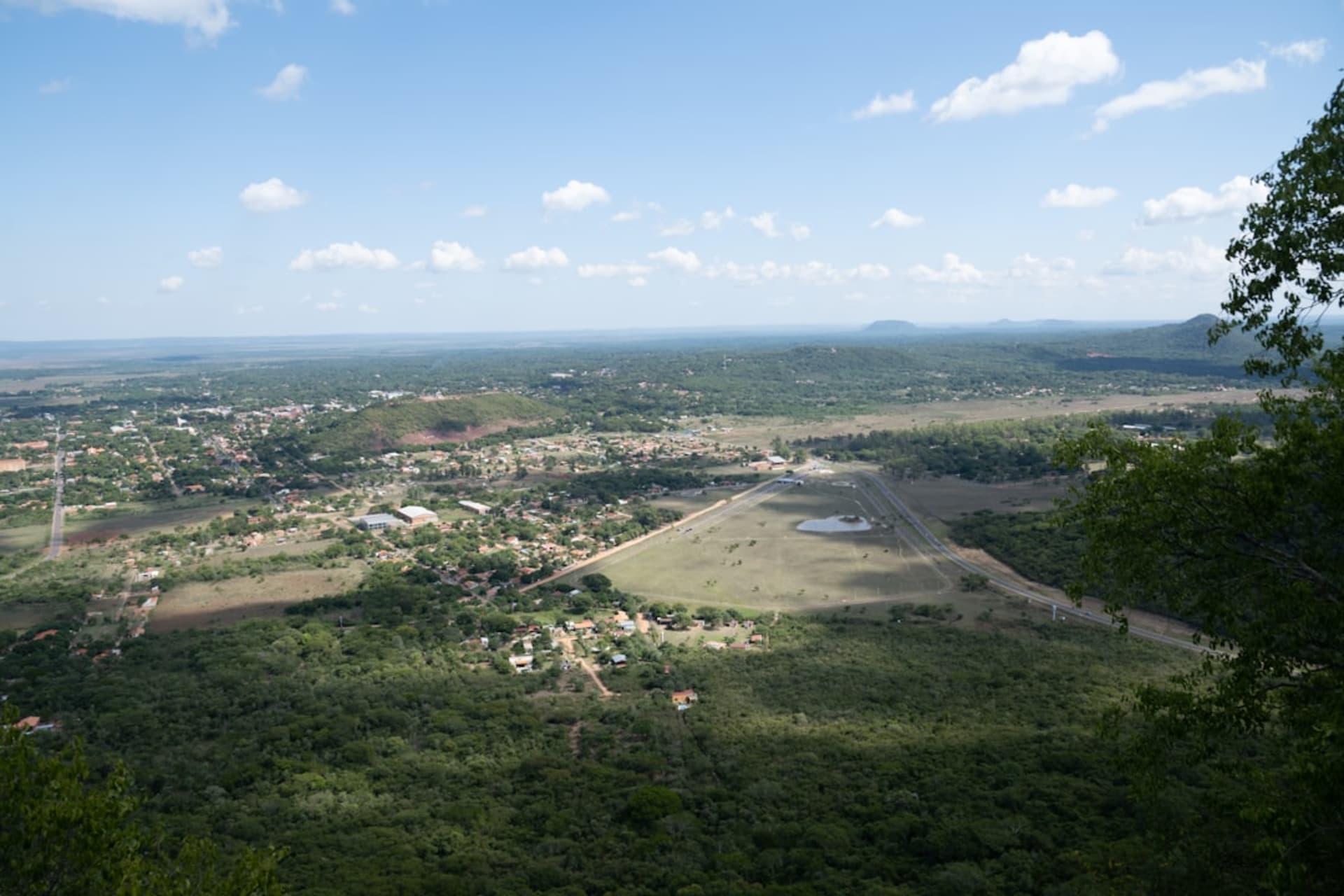
Jesus de Tavarangue
"This church was never finished, and somehow that makes it more moving, not less."
An unfinished Jesuit church whose three Moorish-arched doorways stand open to the sky, halted by expulsion before the roof was ever raised.
Jesús de Tavarangüé sits about ten kilometers from Trinidad, and the two ruins are usually visited together, but I found Jesús the more haunting of the pair precisely because of what it lacks. Construction on this mission church began in 1685 and was still underway when the Jesuits were expelled from Spanish territories in 1767 — so what stands today is a building frozen mid-thought, three enormous Moorish-influenced arched doorways on the facade opening onto nothing but sky and grass, the walls rising to varying, unequal heights depending on how far each section had gotten before the work simply stopped forever.
I walked through what would have been the nave with almost no one else around, sunlight falling directly onto the interior floor in a way it was never meant to, since a roof and vaulted ceiling had been planned but never built. There is something strange and moving about standing inside an interrupted intention this large — three centuries of grass growing up through a floor plan that was meant to hold a congregation and instead holds only weather. A groundskeeper named Ceferino, tending the grass with a machete in slow methodical strokes, told me the horseshoe-arched doorway design was unique among the reductions, likely borrowed from Islamic architectural influences carried to South America through Spain, another odd layer in the mission’s cultural mixing.
We sat for a while on a low stone wall at the edge of the site, watching swallows dive in and out of the empty window openings, nesting in walls that had waited two and a half centuries for a roof that would never come. Lia pointed out that the ruins felt less like a monument to something completed and more like a monument to interruption itself — every Jesuit mission in Paraguay tells a version of that story, but Jesús tells it with unusual literalness, since the building simply stopped becoming what it was meant to be.
When to go: Visit in the cooler morning hours and combine it with Trinidad, a short drive away, since both sites share a single regional entrance ticket.