Qumran
"Scrolls hidden in jars in a cave for two thousand years. I stood right below where they were found."
The arid cliffside site above the Dead Sea where the Dead Sea Scrolls were discovered in nearby caves, and the ruins of the community many scholars believe wrote them.

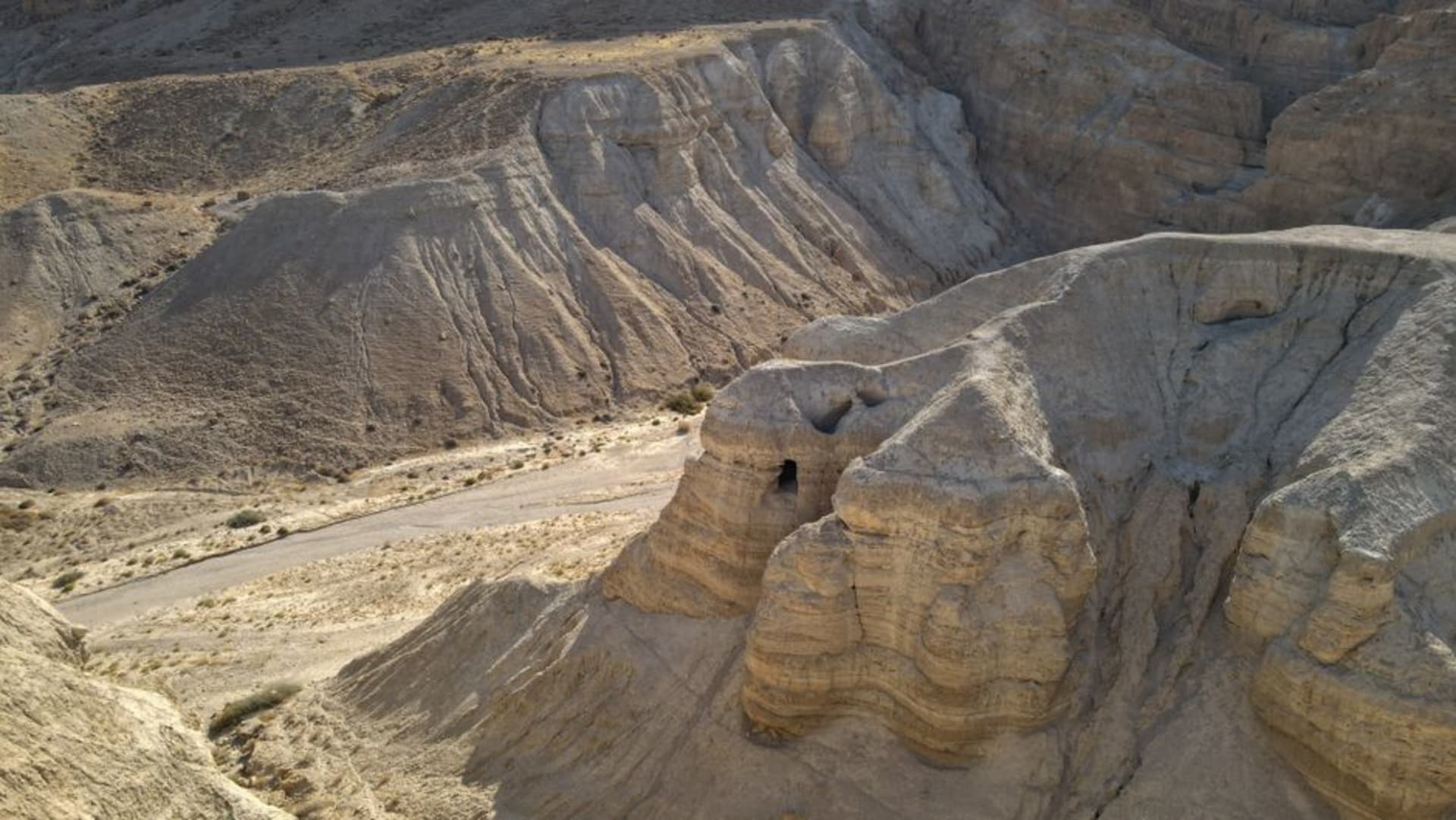
Qumran sits on a dry plateau above the northwestern shore of the Dead Sea, and the first thing that struck me, before I’d even reached the ruins themselves, was the cliffs — pale, riddled with dark cave openings, rising directly behind the site in a way that made the whole discovery story suddenly feel physically plausible rather than abstract. In 1947, a Bedouin shepherd looking for a stray goat threw a rock into one of those caves, heard it strike pottery, and climbed in to find clay jars containing scrolls that turned out to be among the most significant archaeological discoveries of the twentieth century: biblical texts a thousand years older than any previously known copies, along with sectarian religious writings from a community that most scholars associate with the Essenes, a Jewish sect that may have lived at Qumran itself.
The ruins on the plateau are modest in scale but carefully excavated — a scriptorium where researchers believe scribes copied texts, a communal dining hall, an extensive system of cisterns and stepped ritual baths that speaks to a community deeply preoccupied with ceremonial purity, and a cemetery on a nearby rise containing over a thousand burials, oriented and arranged in a way distinct from typical Jewish burial customs of the period. I walked the site with an audio guide and kept stopping to look back up at Cave 4, the most productive of the caves, visible from nearly every point on the site, its dark opening looking almost too ordinary to have held what it held.

There’s genuine scholarly debate about whether the people who lived here actually wrote the scrolls or whether the texts were brought from Jerusalem for safekeeping during the Jewish revolt against Rome, and the site’s small exhibition presents both theories fairly rather than picking a side, which I appreciated — it’s rare for a site this historically loaded to resist over-simplifying its own story for visitors.

I finished the visit at a small overlook facing the Dead Sea itself, flat and blindingly bright in the midday sun, and thought about how casually the whole discovery happened — a bored shepherd, a thrown rock, and then two thousand years of silence broken by accident.
When to go: Cooler months, October through April, are far more comfortable given the site’s total exposure and the valley’s extreme summer heat. Early morning gives the best light on the cave-pocked cliffs and the smallest crowds.
Keep exploring
More from Palestine
 palestine
Ramallah
The West Bank's most contradictory city — a buzzing restaurant and café scene held inside a place living under permanent provisional status.
Explore palestine
Sebastia
Ancient Samaria's ruins — Israelite palace, Hellenistic columns, a Crusader church converted to mosque — all in a village most visitors drive straight past.
Explore palestine
Taybeh
Palestine's only brewery sits in a hilltop Christian village that has been making wine and olive oil here since before anyone kept records.
Explore palestine
Tulkarm
A working agricultural city on the western edge of the West Bank, known for its citrus and olive trade and a refugee camp that has become an inseparable part of the city's fabric.
Explore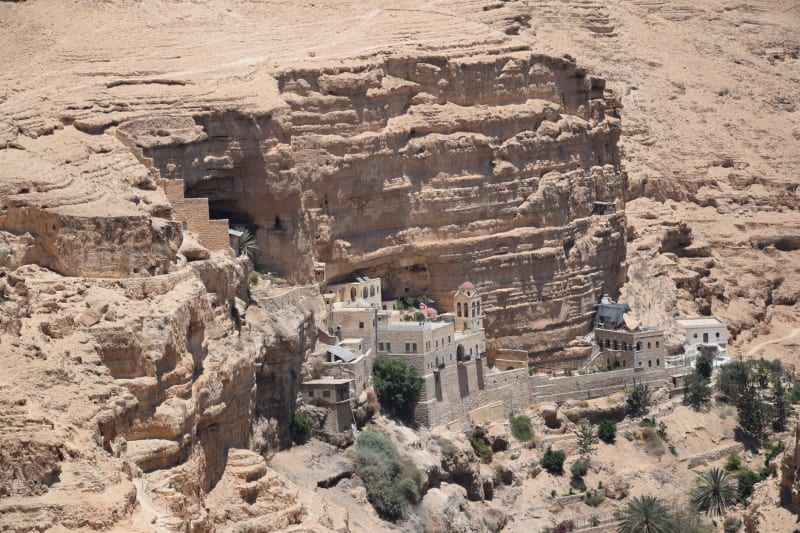 palestine
Wadi Qelt
A desert canyon cutting between Jerusalem and Jericho where a Byzantine monastery clings to a cliff face above a stream that has never stopped running.
Explore palestine
Artas
A small farming village near Bethlehem built around the ancient Solomon's Pools system, still celebrated for its terraced gardens and an annual lettuce festival that draws the whole valley.
Explore