Hike through palm-lined gorges to secret turquoise pools hidden inside a cave — Oman's most magical wadi.
I had been told about Wadi Shab the way people tell you about things they are not sure you deserve. A lowered voice. A specific instruction — bring water shoes, bring nothing you cannot get wet — and then a pause, as if the person was reconsidering whether to say anything at all. That was in Muscat, over a plate of shuwa at a restaurant near the Mutrah Corniche. By the next morning Lia and I were on the coastal highway heading south toward Sur, the Al Hajar mountains dropping into the sea on one side and the date palms of the Sharqiyah coast blurring past on the other.
The Walk In
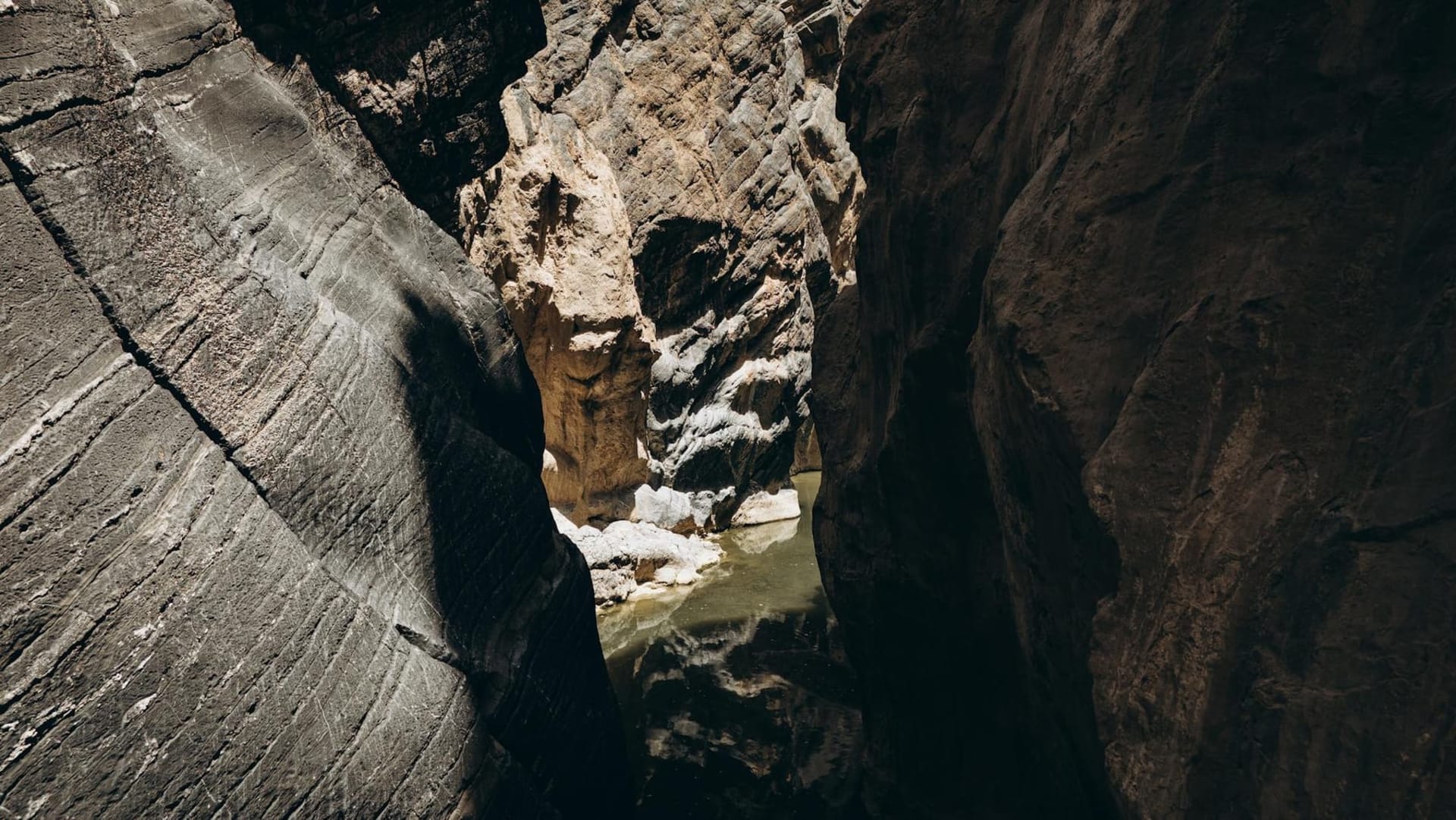
The trailhead sits just off the main road near the village of Tiwi, and you reach Wadi Shab itself by crossing a small inlet on a wooden rowboat — a two-minute crossing that costs a few hundred bais and feels disproportionately ceremonial, as if passage is being granted rather than simply transported. After that the wadi opens ahead of you: a corridor of pale limestone threaded with a seasonal stream, shaded in places by wild fig and acacia, the walls rising steeply on both sides until the sky becomes a thin blue seam above your head.
The walk to the pools takes roughly an hour. The path is not difficult but it is honest — you scramble over boulders, wade through ankle-deep stream crossings where the water runs chalky green, and at certain points the canyon narrows enough that you move single file with the rock close on both sides. The smell is mineral and cool even in October, when the sun outside is still brutal.
What the Cave Holds
The pools appear gradually, the water shifting from green to something that has no accurate name — turquoise is the word people reach for but it implies something tropical and warm, and this is neither. It is cold and luminous and the color seems lit from beneath. We swam through the last of the open pools and reached a low cave entrance where you have to push through the water into darkness. I went first, not sure what I was heading toward.
Inside the cave, a chamber. The ceiling opens slightly, and through a crack somewhere above, a narrow shaft of light enters the water at a precise angle and turns it the color of antifreeze, of a swimming pool in a film, of a thing too vivid to be geological. Lia appeared through the entrance a moment behind me, surfaced, and said nothing. That was the only appropriate response.
What to Know
The wadi is unguarded and largely undeveloped. There are no facilities past the boat crossing, no signage, no rescue infrastructure. The cave swim involves a short stretch without footing and requires confidence in the water. Go early in the morning to get the best light through the canyon and to avoid the groups that arrive from Muscat by midday.
When to go: October through March is ideal — temperatures are manageable and the winter rains occasionally refill the stream, deepening the pools. July and August are possible but the heat in the canyon is punishing and the main stream often runs dry.