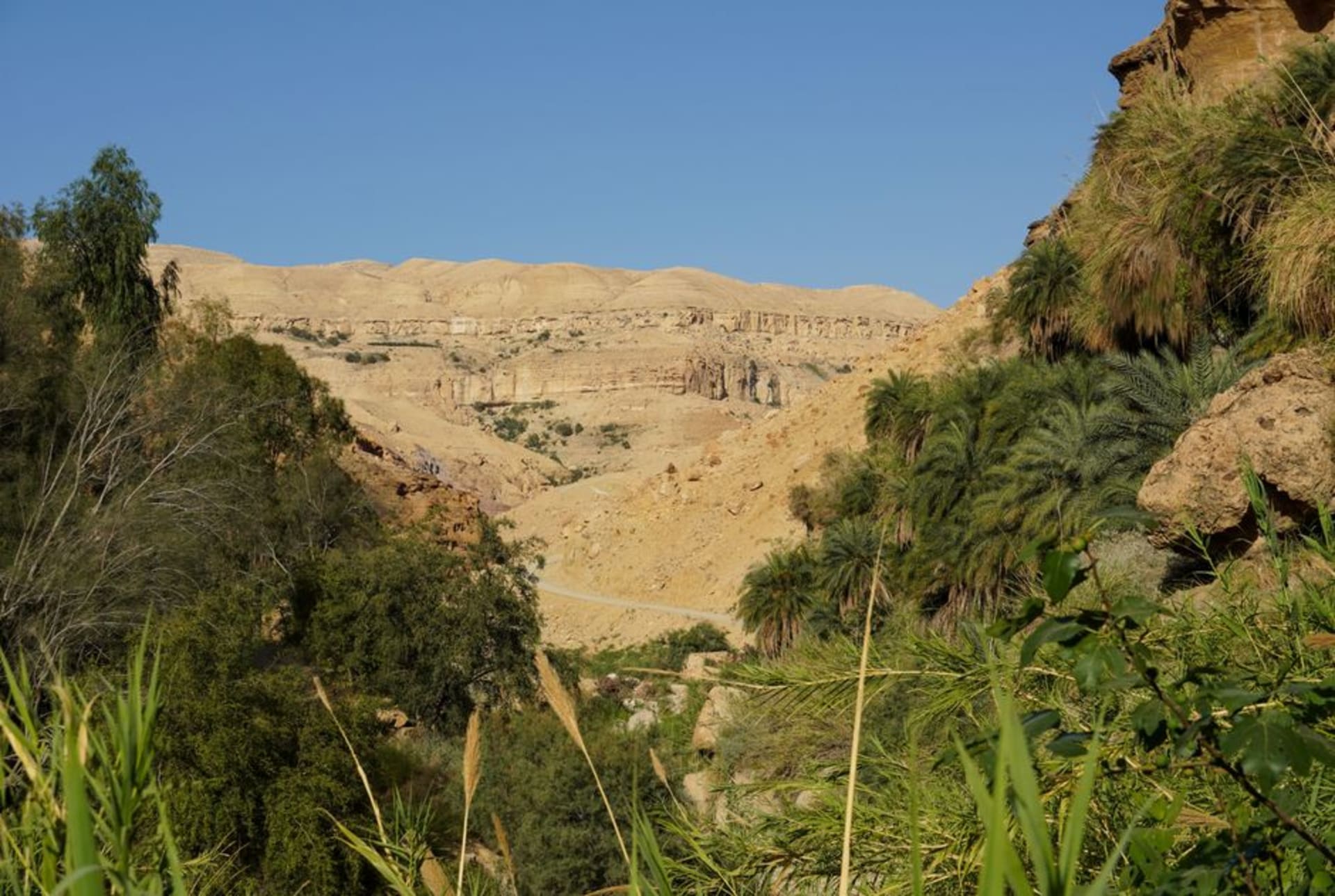
Wadi Nakhr
"The floor of the canyon is a rumor from up here. You just have to trust it exists."
The canyon below Jebel Shams that everyone calls Arabia's Grand Canyon, walked along a ledge trail carved into a cliff face with nothing but air on one side.
I’d read the comparison to the Grand Canyon of Arizona so many times before visiting Wadi Nakhr that I’d braced myself for disappointment — the kind that comes from a nickname doing too much promotional work. Standing at the rim after the drive up from Al Hamra, switchback after switchback in a rented 4x4 that groaned louder with every gear change, I put the comparison down. It isn’t accurate, exactly. It’s just the closest thing most people have to compare it to.
Getting to the Rim
The road up Jebel Shams from Al Hamra takes close to an hour, unpaved for the final stretch and steep enough that I was grateful for four-wheel drive even in dry conditions. It ends at a viewpoint that gives no warning before delivering its payload — the canyon simply opens beneath you, over a kilometer deep in places, its far wall a wash of ochre and grey terracing down into shadow long before the eye finds the bottom. Lia went quiet for a full minute, which for her is a significant data point.
Wadi Nakhr is the name for the canyon system that drops from below the Jebel Shams summit, and its rim path is one of the more genuinely exposed trails I’ve walked in Oman — the Balcony Walk, cut into the cliff face itself, wide enough for careful footing but with a drop on one side that doesn’t invite complacency.
The Balcony Walk
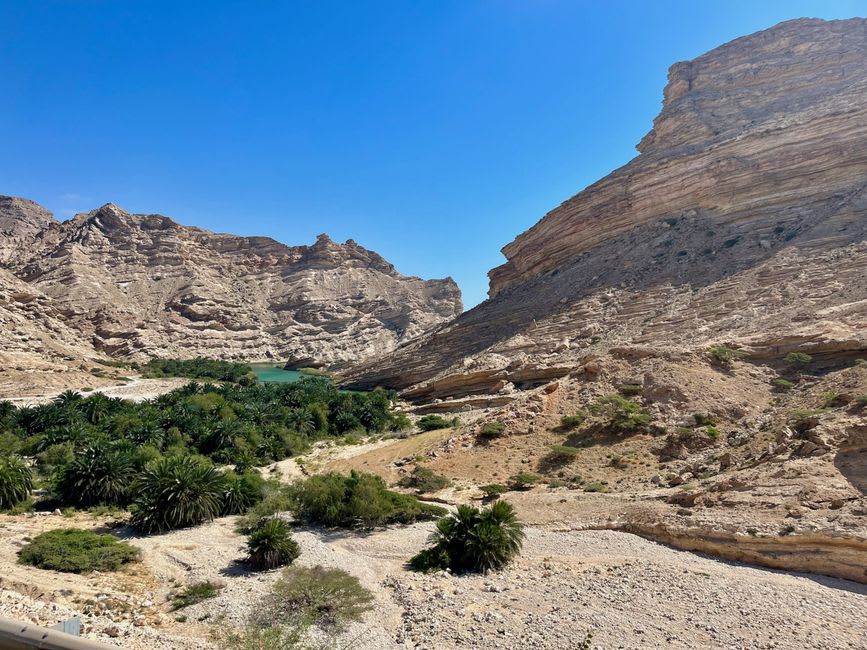
The trail follows an old aflaj route, built generations ago to connect the abandoned village of Sap Bani Khamis, which sits partway along the path, a set of ruined stone houses clinging to a ledge that seems to have been chosen specifically to test the builders’ nerve. The walk out to the village and back takes around three hours, mostly flat once you’re on the ledge itself, but every switchback delivers a new version of the same vertigo. I stopped counting how many times I said something under my breath that wasn’t really meant for anyone.
We passed a herd of goats moving along the same path with a confidence that made my own footing feel amateurish by comparison. One stopped to watch us pass, chewing, entirely unbothered by the thousand-meter drop six feet from its hooves.
What the Depth Does
There’s a stillness at the rim of Wadi Nakhr that I haven’t quite found anywhere else in Oman — not the intimate quiet of Misfat’s terraces, but something larger and colder, the kind of scale that makes conversation feel unnecessary. We ate lunch sitting with our legs over the edge of a flat outcrop, sandwiches from a shop in Al Hamra, and said very little for most of it.
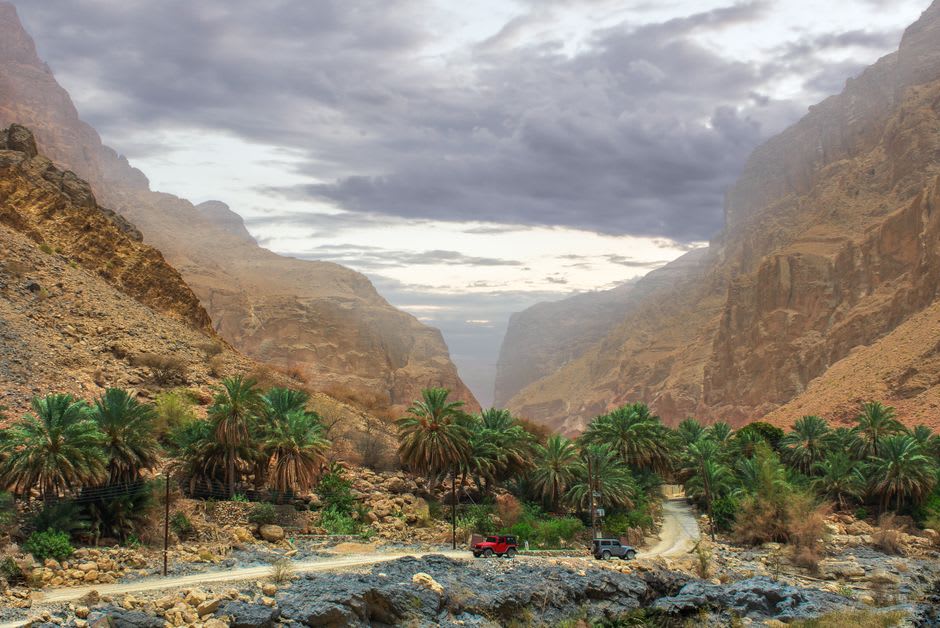
When to go: October through April — nights at this altitude get genuinely cold, so bring layers even if you’ve packed for coastal Oman heat. Summer daytime temperatures are more bearable here than in the lowlands, but the road and rim are best avoided after rain.