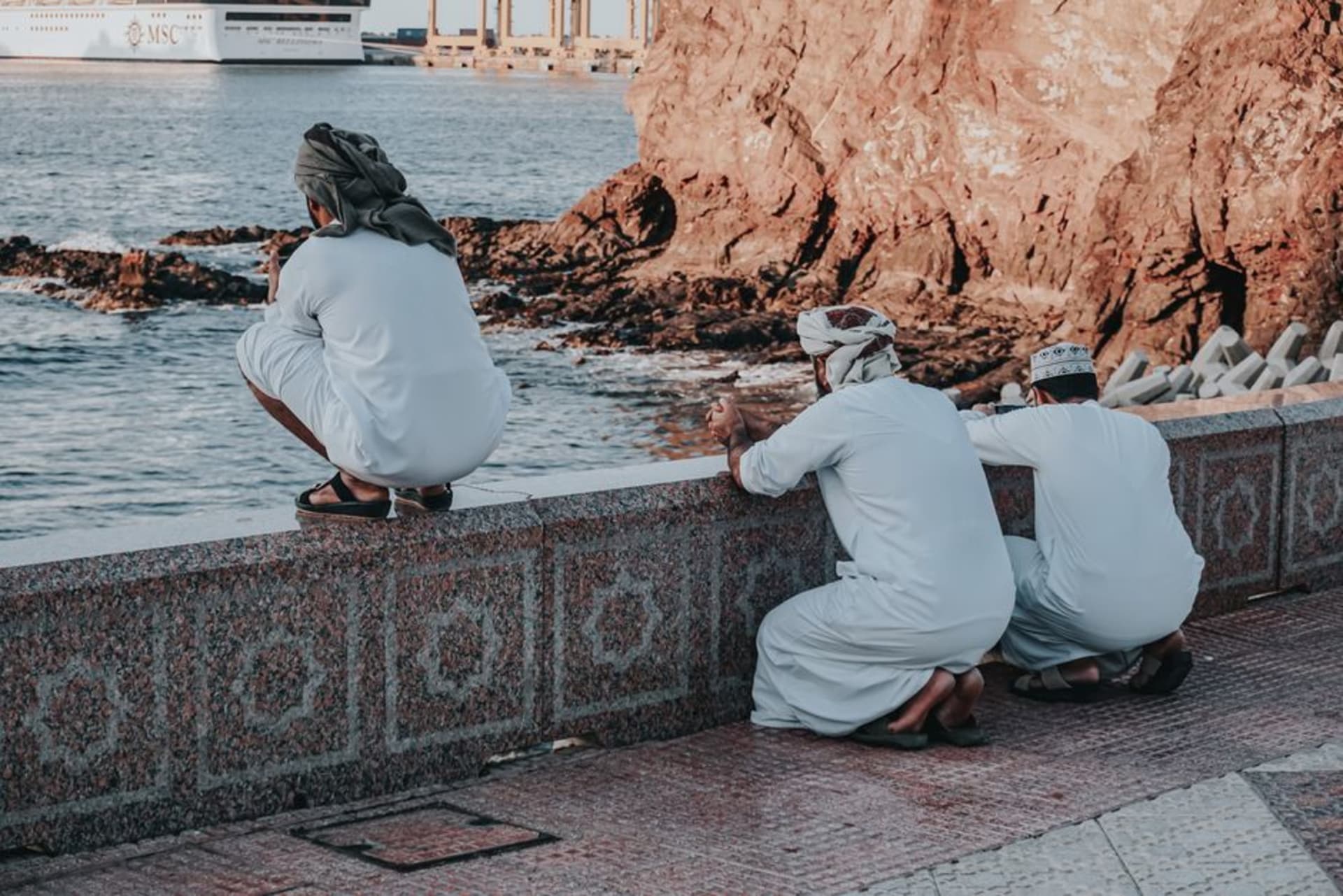
The mountain gap town that has controlled passage between coastal Oman and the interior for over a thousand years, its fort and falaj still marking the choke point.
I’d driven through Samail Gap probably four times before I actually stopped in the town itself, always focused on getting somewhere else — Nizwa, Bahla, the mountains further west. It took a slow puncture on the tyre to finally force the stop, and once I was standing still in the town rather than passing through it, the strategic logic of the place became obvious in a way it never had at seventy kilometers an hour.
The Gap That Divides Oman’s Mountains
Samail sits at the narrow break separating the Western and Eastern Al Hajar ranges, the single most important natural passage linking Muscat and the Batinah coast to the interior oases and, beyond them, the desert. Armies, traders, and eventually a highway have all funneled through this same gap for over a millennium, and Samail’s fort was built precisely to exploit that chokepoint — anyone controlling this town controlled who and what moved between two halves of the country.
The fort itself is smaller and less visited than Nizwa’s, its walls showing patchy restoration alongside sections left to weather naturally. I climbed to a low tower and watched a steady trickle of trucks pass through the gap below, doing exactly what caravans would have done centuries earlier, just faster and louder.
A Falaj Older Than the Road
Below the fort, Samail’s falaj system still irrigates a stretch of date gardens that has apparently been farmed continuously since well before the fort existed. I followed the water channel a short distance on foot, past a mosque and a scatter of older houses, until it disappeared under a garden wall and I lost the thread of it entirely. An elderly farmer working nearby noticed my confusion and, without much shared language between us, simply pointed toward where the channel resurfaced further down the slope.

Standing at the gap itself afterward, watching modern traffic stream through the same geographic bottleneck that has mattered for a thousand years, gave me a better sense of Oman’s interior geography than any map had managed.
When to go: October through March for comfortable walking around the fort and gardens. Samail also makes a natural, unhurried stop if you’re driving between Muscat and Nizwa and want to break up the journey with something more than a fuel station.