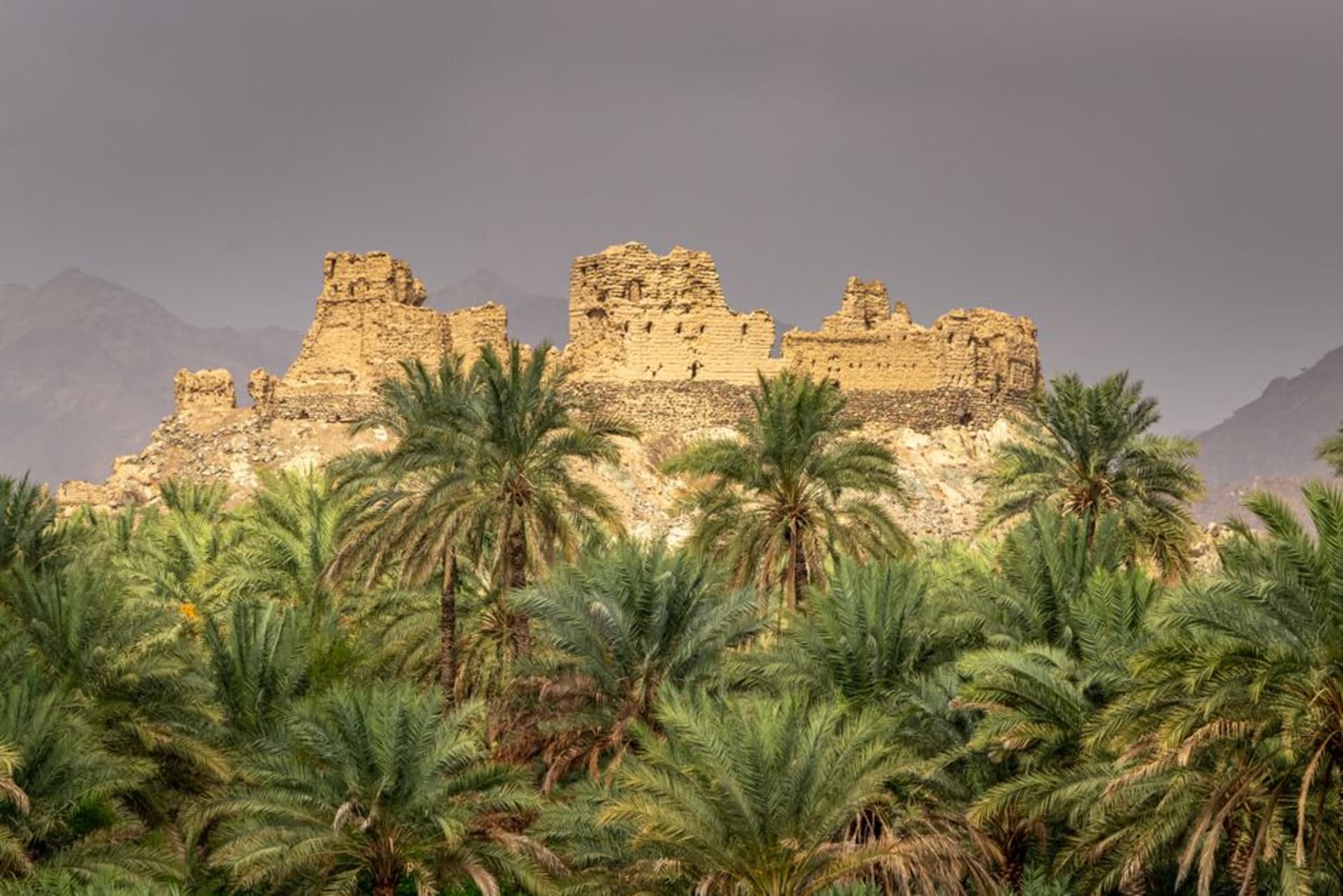
Khor Rori (Ancient Sumhuram)
"The port where a resin from a scraggly tree started a trade route to Rome."
Ruins of a 2,000-year-old frankincense port overlooking a lagoon, where the trade routes to Rome and India actually began.
Khor Rori sits above a lagoon a short drive east of Salalah, and it’s a strange thing to stand at the edge of ruins this old and realize the setting hasn’t really changed. The same turquoise inlet, the same limestone hills, the same channel to the open sea — this was Sumhuram, a fortified port city built around the first century BCE specifically to ship frankincense out of Dhofar to buyers as far away as Rome and the Mediterranean. Two thousand years later, the lagoon still looks like something worth building a city around.
Walking the Walls of a Frankincense Empire
The site is compact but dense — you can walk the perimeter walls, trace the outline of what was likely a temple to the Sabaean moon god Sin, and stand in storage rooms where archaeologists found frankincense residue still lodged in the stone. Excavations here, led over decades by an Italian mission, turned up South Arabian inscriptions, imported pottery from as far as the Mediterranean and India, and enough physical evidence to confirm what classical writers like Pliny the Elder had described secondhand: that this obscure stretch of Arabian coastline was, for centuries, one end of one of the ancient world’s most lucrative supply chains.
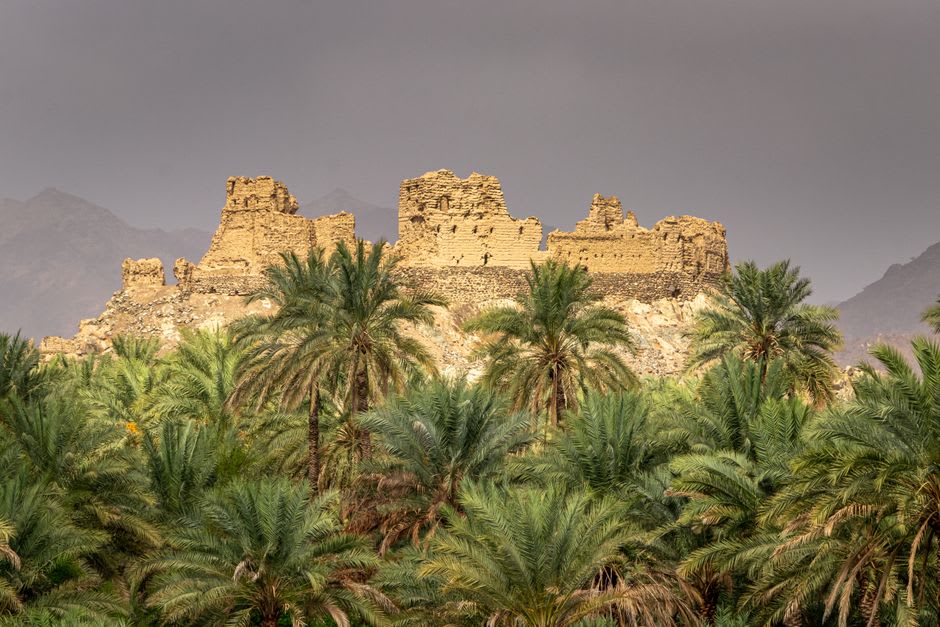
A Lagoon That Still Works for a Living
Below the ruins, the khor itself is a nature reserve now, separated from the Arabian Sea by a sandbar that breaks open seasonally. We walked down to the water’s edge in the late morning and found herons and ospreys working the shallows, plus a few local fishermen casting from the rocks, apparently unbothered that they were doing it directly beneath a UNESCO World Heritage site. Lia pointed out that this was probably the most literal example we’d seen of a place staying in continuous use for two thousand years — different tools, different cargo, same lagoon feeding the same kind of quiet economic life.
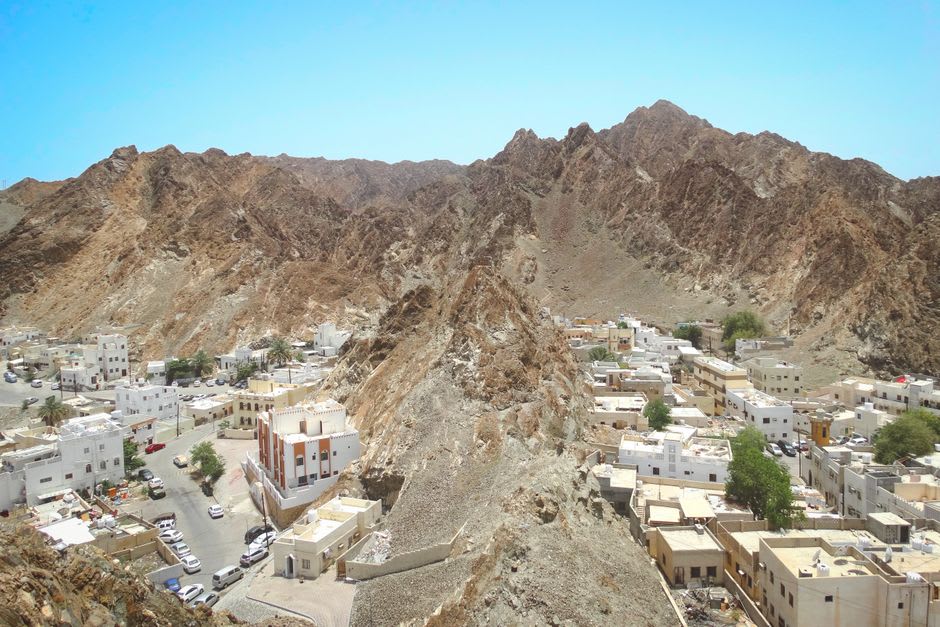
We stayed longer than planned, mostly because there was almost no one else there and the combination of ancient stone, working lagoon, and total silence made it hard to leave. It’s one of those sites that rewards slowness — read every panel, follow every wall, and the scale of the old trade network starts to feel less like a textbook fact and more like something you’re standing inside.
When to go: Year-round, though the cooler months from October to March make the exposed hilltop ruins far more comfortable to explore at a walking pace, and the lagoon’s birdlife is at its best.