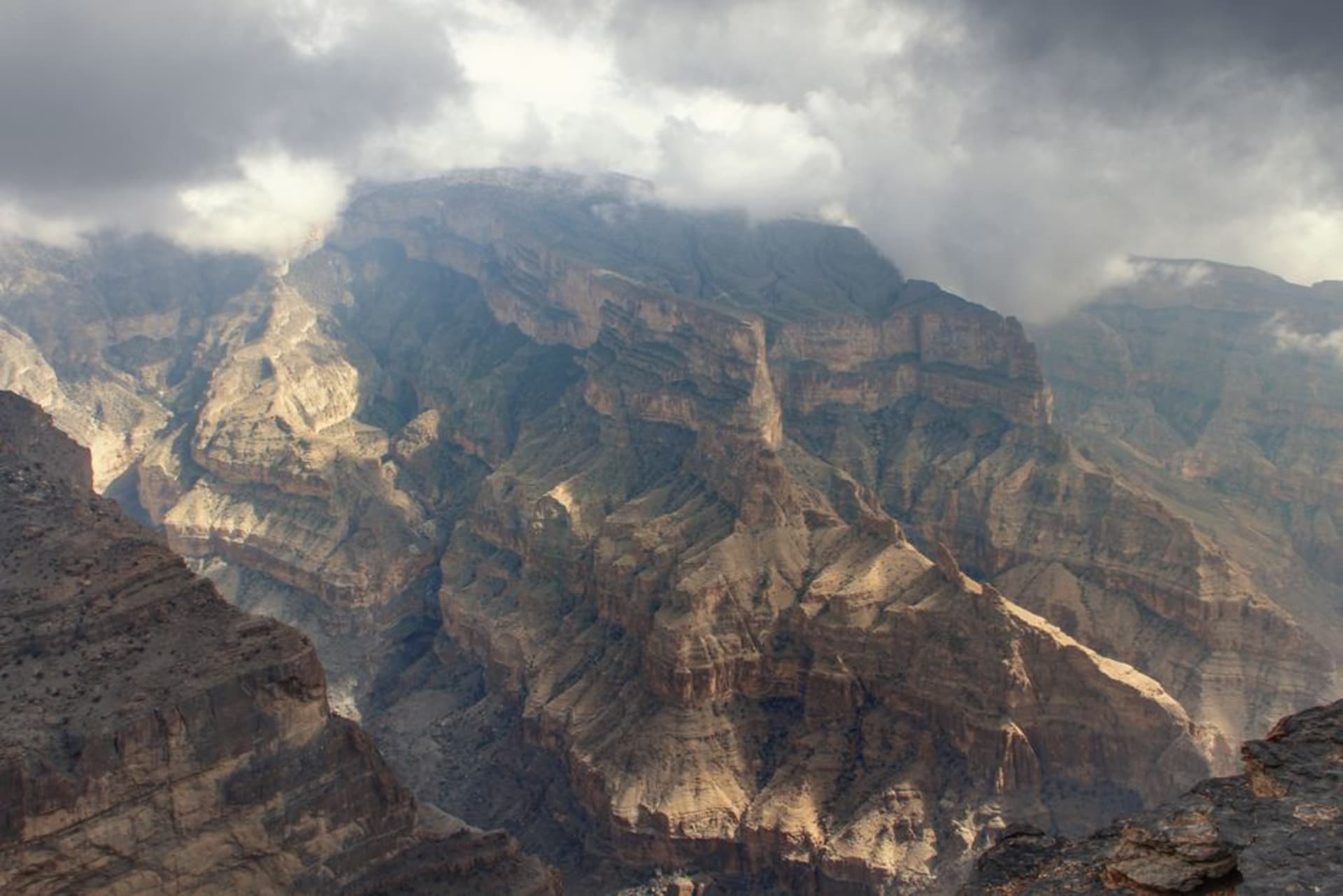
Al Hoota Cave
"The mountain outside is all glare and heat. Forty meters down, it forgets both."
A vast limestone cave system beneath Jebel Nakhal, with an underground lake, blind fish found nowhere else on earth, and a small train to get you there.
Al Hoota Cave sits under a nondescript hill near Al Hamra, at the base of Jebel Nakhal, and gives away nothing from the surface — a visitor center, a gift shop, a queue of Omani school groups. It is, structurally, the most touristy thing I did in the entire Al Hajar range: timed tickets, a guided walkway, a small electric train that shuttles you the four hundred meters from the ticket hall to the cave mouth because the walk in the sun would otherwise be unpleasant. I went in mildly skeptical of the packaging. I came out having entirely forgotten I’d been skeptical.
Four Kilometers Under the Mountain
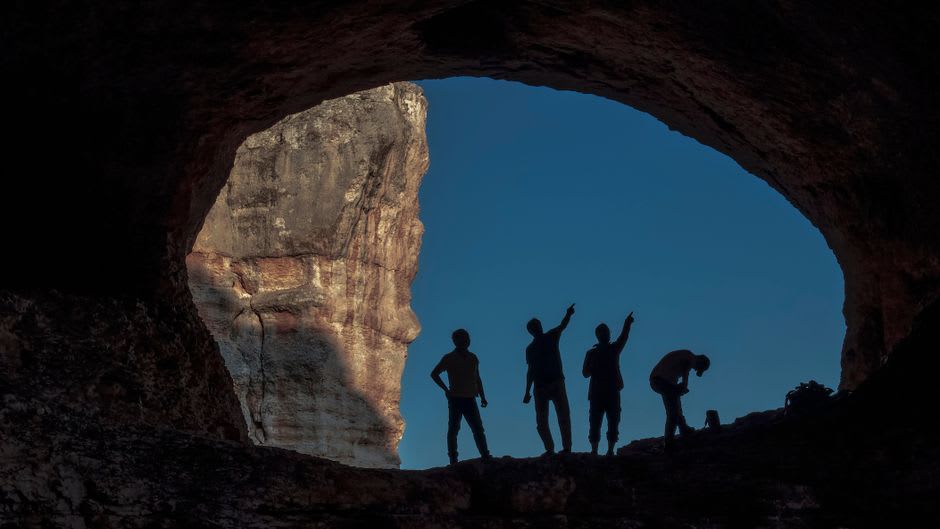
The cave system runs close to five kilometers, of which around half a kilometer is open to visitors along a lit concrete path that somehow doesn’t manage to kill the atmosphere. The chambers open up in stages — a narrow entrance passage giving way, without much warning, to a cathedral-sized hall where stalactites hang in formations that took hundreds of thousands of years to grow a few centimeters. The air inside sits at a near-constant temperature and close to full humidity, which after the dry heat of the Al Hajar foothills feels almost like stepping into a different climate entirely. Water still drips. The cave is, geologically speaking, still being built.
The Lake and the Blind Fish
The path ends at an underground lake, glass-still, lit just enough to make out the far wall. Our guide crouched at the edge and pointed out small pale shapes moving in the shallows — garra barreimiae, a blind cave fish found in only a handful of spots on the Arabian Peninsula, evolved past the point of needing eyes in a place where light has never mattered. Lia leaned in with her phone torch and the fish scattered, unbothered in the way that suggests they’ve had a few hundred thousand tourists do exactly the same thing. There’s something quietly humbling about a creature that gave up sight because the dark simply won, generation after generation, until eyes stopped being worth keeping.
Above Ground Again
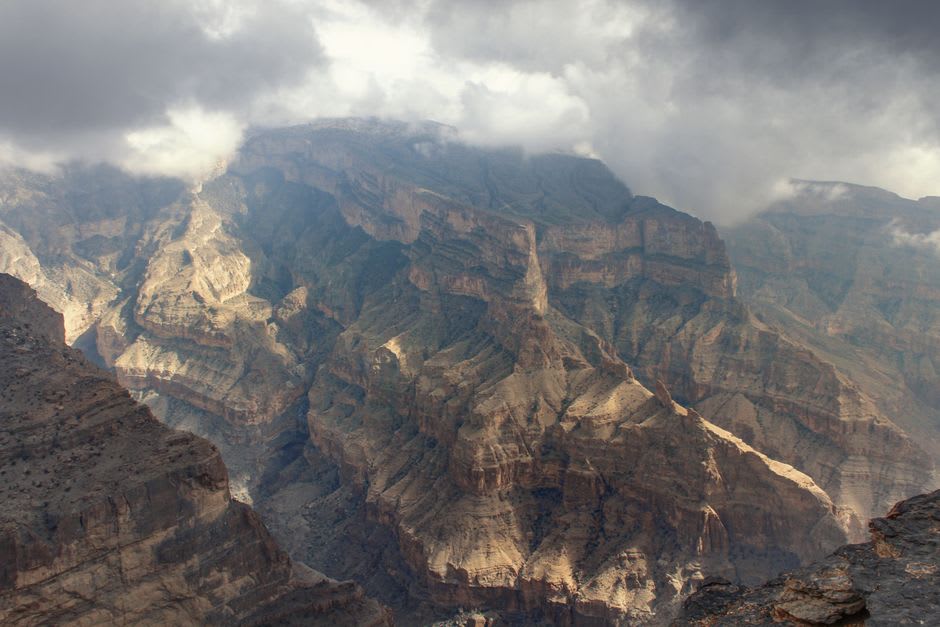
Coming back out into the Al Hajar sun after forty minutes underground is its own small shock — the heat lands like a wall, the light is aggressive after the cave’s managed dimness, and the little train ride back to the visitor center feels almost comically mundane after what you’ve just seen. We sat in the parking lot afterward drinking bottled water and neither of us said much. Some places don’t need a debrief.
When to go: Year-round, since the cave is a constant, comfortable temperature regardless of what’s happening outside. Book tickets a day ahead in peak season (October to March) — tour groups fill the timed slots quickly, and the cave limits numbers to protect the ecosystem.