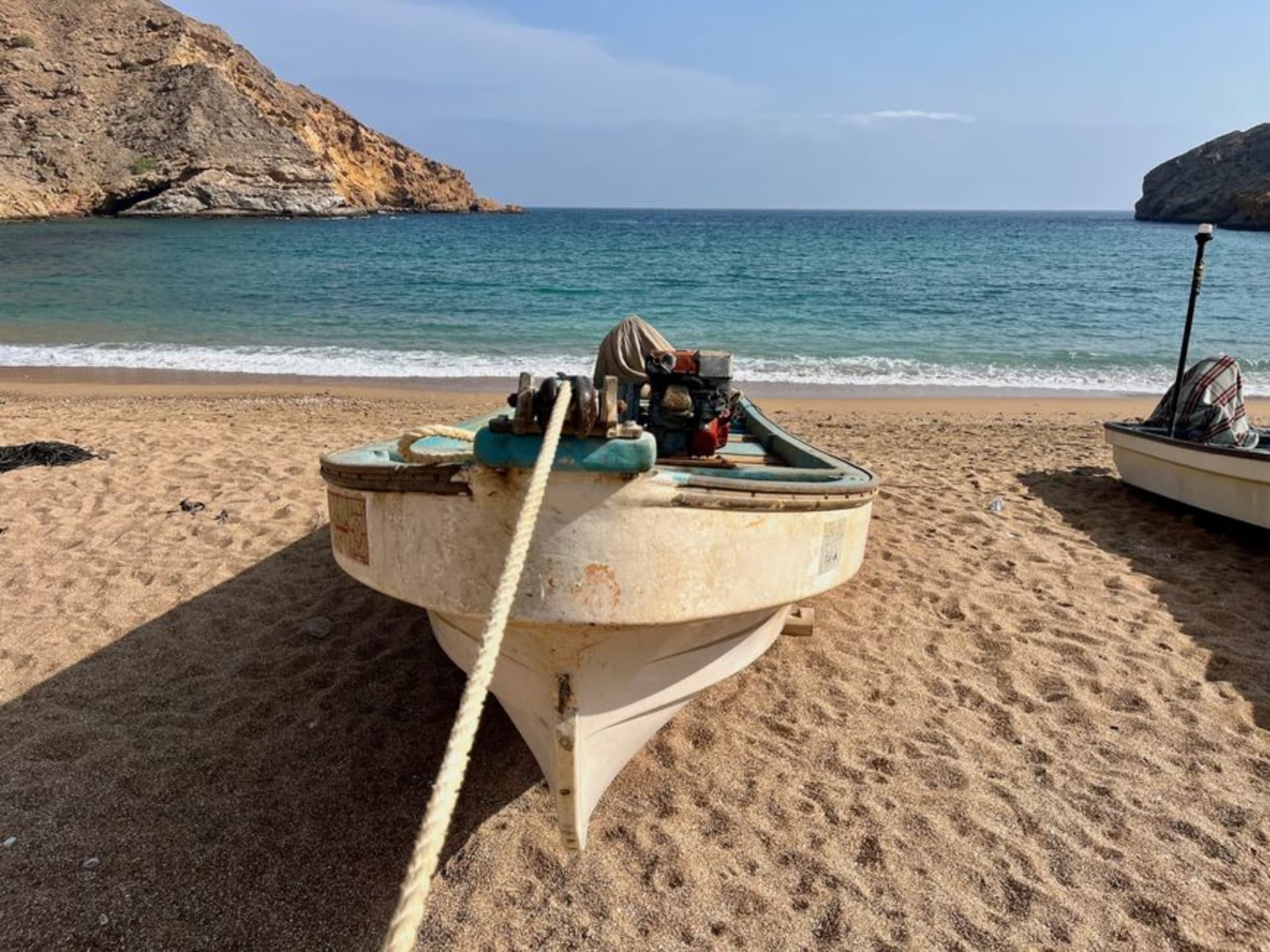
Al Fazayah Beach
"The road down is worse than the beach is good, and the beach is very good."
A crescent of white sand reached by a single hairpin road through the mountains, with almost nothing on it but coconut palms and camels.
Getting to Al Fazayah is most of the story. The road drops off the main coastal highway west of Salalah and switchbacks down through a mountain pass so tight and steep that I had both hands on the wheel and Lia had both hands braced against the dashboard for most of the descent. A local we’d asked for directions in Rakhyut had laughed, not unkindly, when we told him where we were headed, and I understood why about halfway down.
A Beach That Rewards the Descent
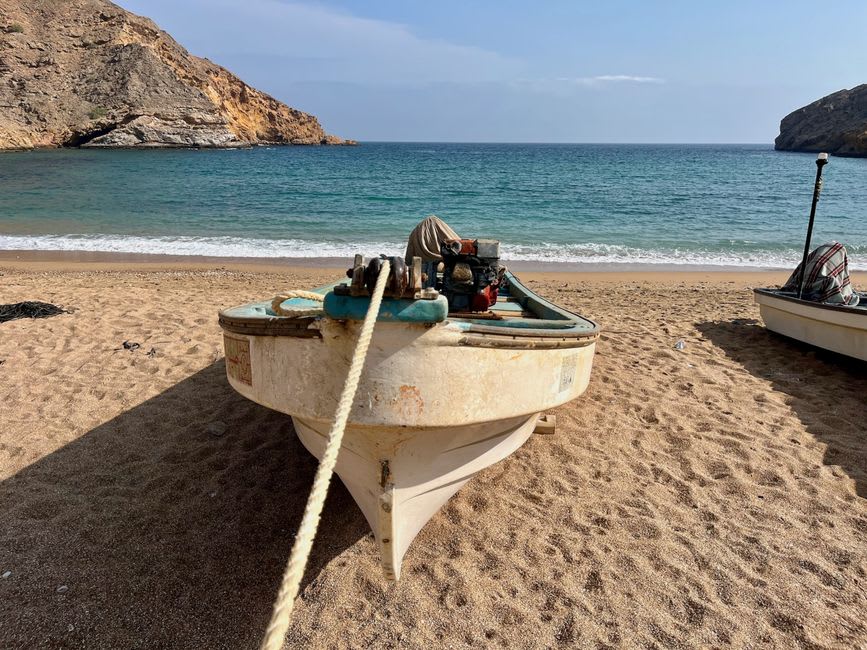
What waits at the bottom is a wide, near-empty crescent of pale sand framed by cliffs on both sides, backed by a scattering of coconut palms that feel almost transplanted from somewhere tropical rather than the edge of the Arabian Peninsula. There were maybe six other people on the entire beach when we arrived — a family from Muscat with a cooler and a folding table, two fishermen working a line from the rocks, and a handful of camels wandering the sand with the unhurried confidence of animals that clearly own the place. We swam in water clearer than anything we’d found closer to Salalah, no current to speak of on the day we visited, just a slow roll of small waves.
No Facilities, No Problem
There’s genuinely nothing here in terms of infrastructure — no shops, no lifeguards, no shade beyond what the palms or your own umbrella provide — which is either a dealbreaker or the entire point, depending on what you’re after. We’d packed water, food, and a beach umbrella from Salalah, and spent close to five hours doing nothing but swimming, reading, and watching the light shift on the cliffs at either end of the bay. A pair of Omani teenagers arrived on motorbikes in the late afternoon, stripped down to shorts, and spent an hour bodysurfing the small shore break with a joy that made the whole scene feel less like a postcard and more like an actual local beach that happened to be beautiful.
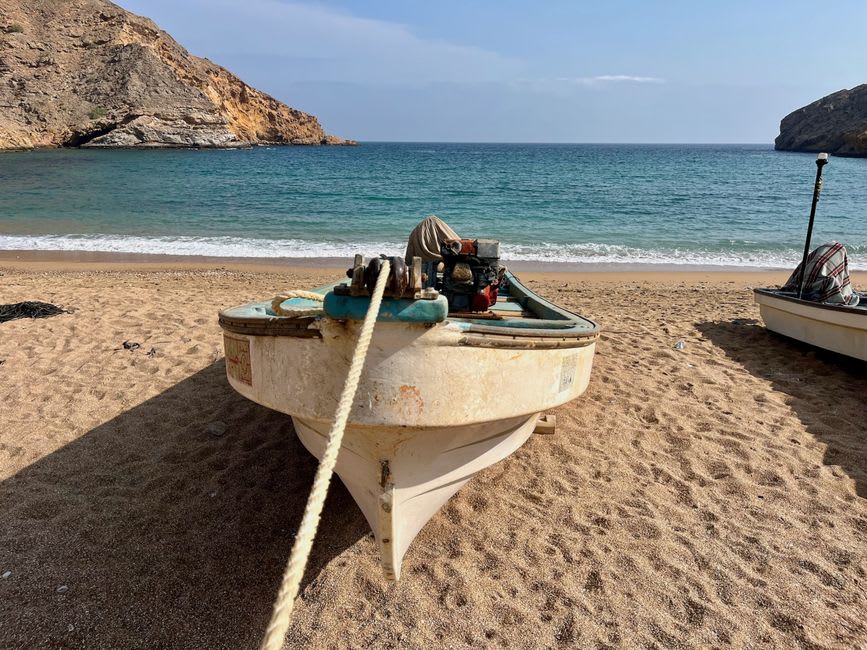
We left before dark, mostly out of caution about that road, but I thought about the drive back up the whole way — how a beach this good stays this empty simply because the access discourages casual visitors. It’s the same trade-off as half of Dhofar: the reward is directly proportional to how inconvenient it was to get there.
When to go: October to March for the calmest seas and most comfortable temperatures. Avoid the drive during or right after heavy khareef rain, when the mountain road can wash out or become dangerously slick. A 4x4 is recommended, though not always strictly necessary in dry conditions.
Keep exploring
More from Oman
 oman
oman Al Hamra
A 400-year-old mud-brick town at the foot of the Al Hajar mountains, where two-story merchant houses stand empty and unlocked, waiting for nobody in particular.
Explore oman
oman Al Hazm Fort
A fortress built without a single supporting pillar in its main hall, hidden in plain sight in the quiet Batinah town of As Suwayq.
Explore oman
oman Al Hoota Cave
A vast limestone cave system beneath Jebel Nakhal, with an underground lake, blind fish found nowhere else on earth, and a small train to get you there.
Explore oman
oman Al Jazir
A remote fishing village on Dhofar's eastern coast where lobster boats outnumber cars and the Arabian Sea does most of the talking.
Explore oman
oman Al Khaburah
The Batinah town best known for halwa production, dhow-lined beaches, and a fort slowly being reclaimed by the coastline around it.
Explore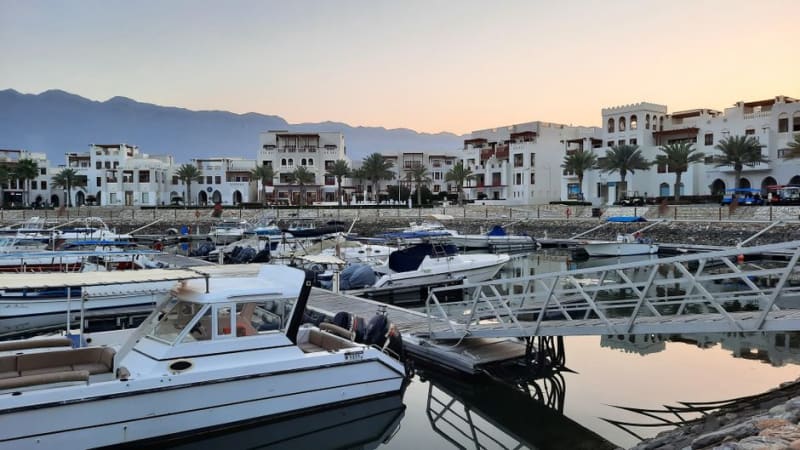 oman
oman Al Mouj Marina
Muscat's newest waterfront — yachts, waterside cafes, and a glimpse of the Gulf-style city Oman deliberately chose not to become everywhere else.
Explore