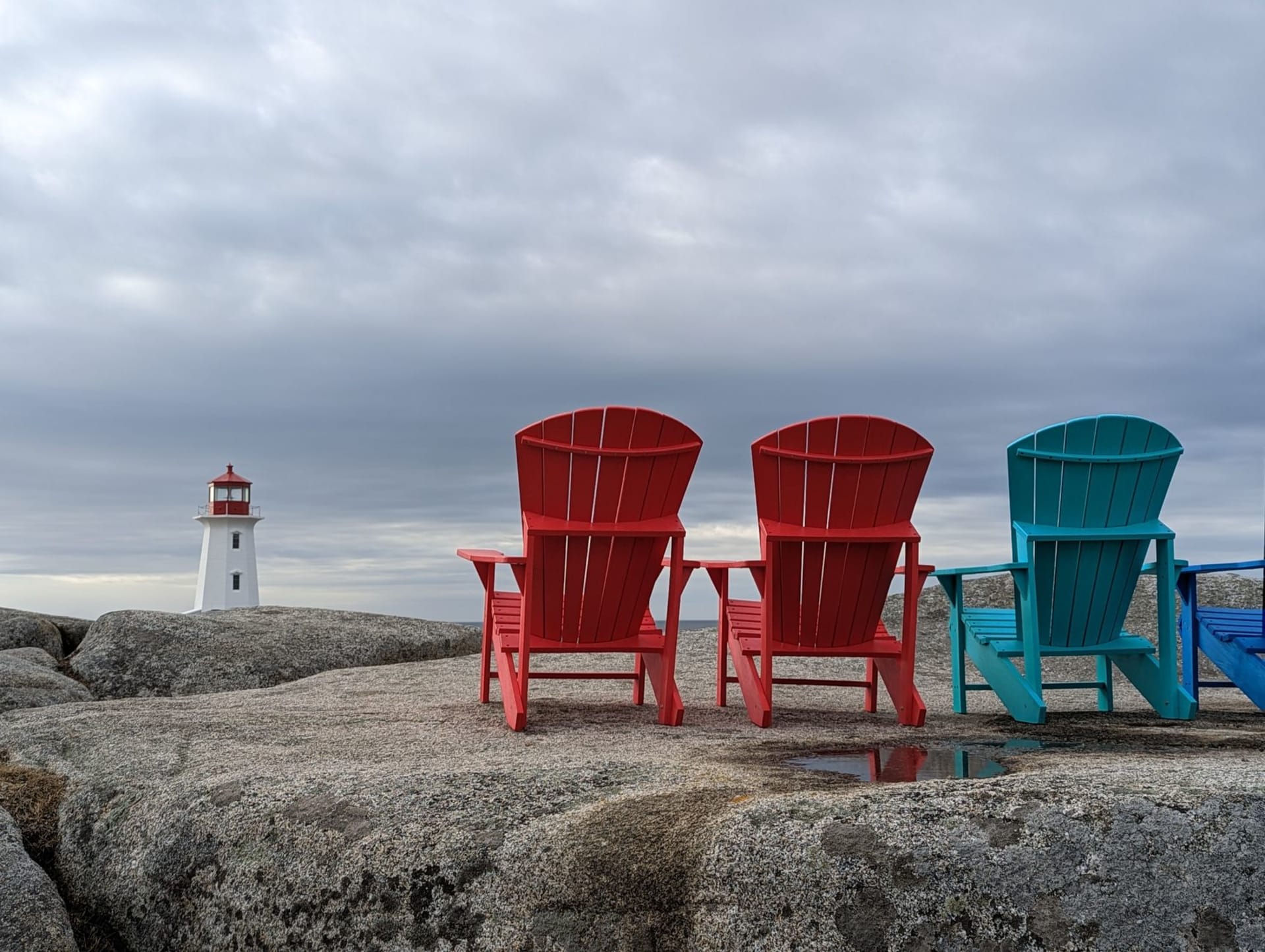
Peggy's Cove
"The rock here looks placed — like something left by a civilization that was very serious about composition."
I arrived at Peggy’s Cove at 5:30 in the morning, which is the only honest time to arrive. The tour buses begin at nine. In the pre-dawn the parking lot is empty and the only sound is the Atlantic working itself against the granite — not crashing, exactly, but insisting, a low continuous conversation between water and rock that sounds like something between breathing and patience. The lighthouse was dark. The fog was in. And the pink-grey granite swept in every direction, smoothed by millennia of ocean, spotted with orange and black lichen, with not a single sharp edge in sight. It looks like the surface of a planet that gave up on corners.
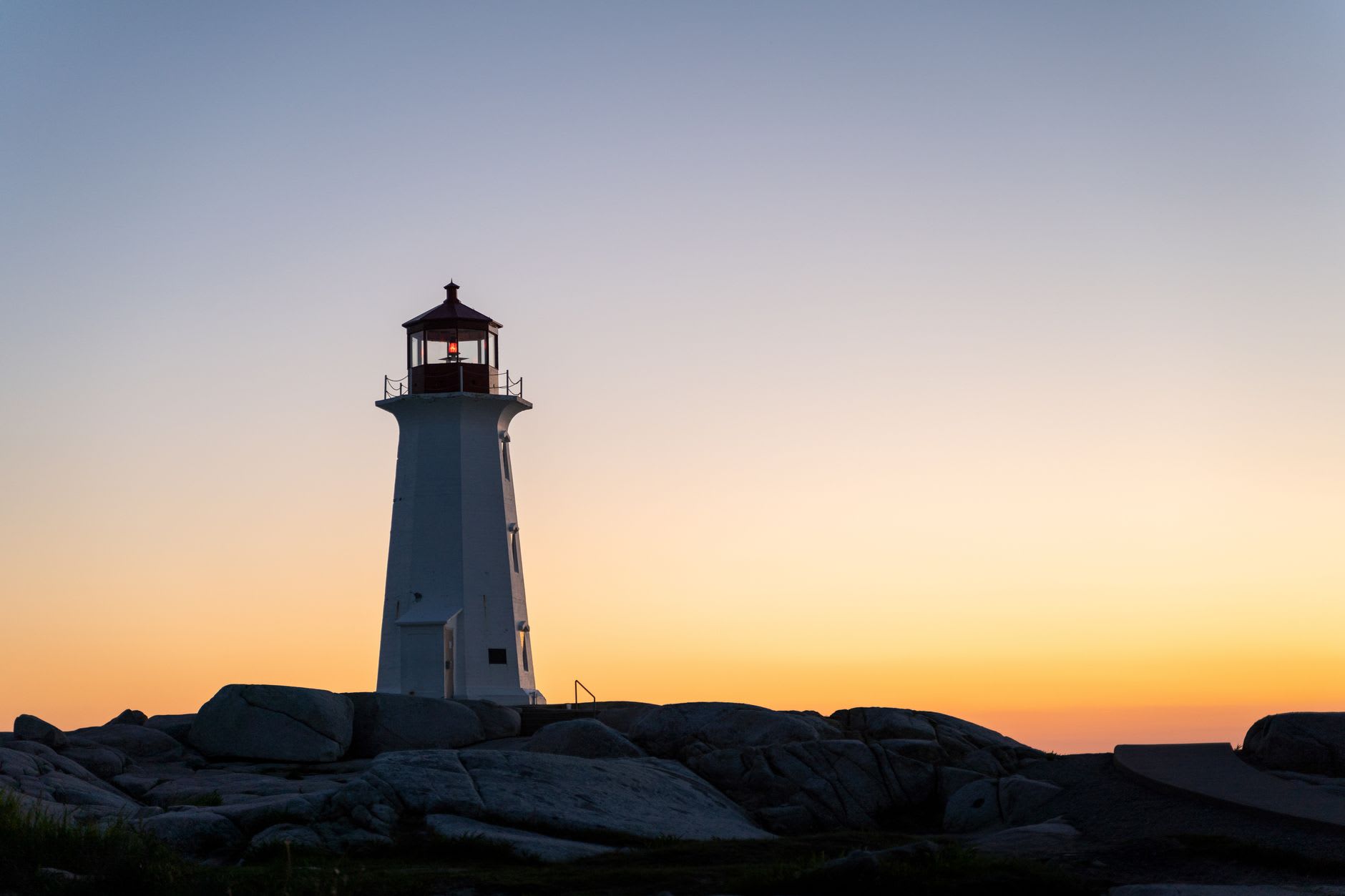
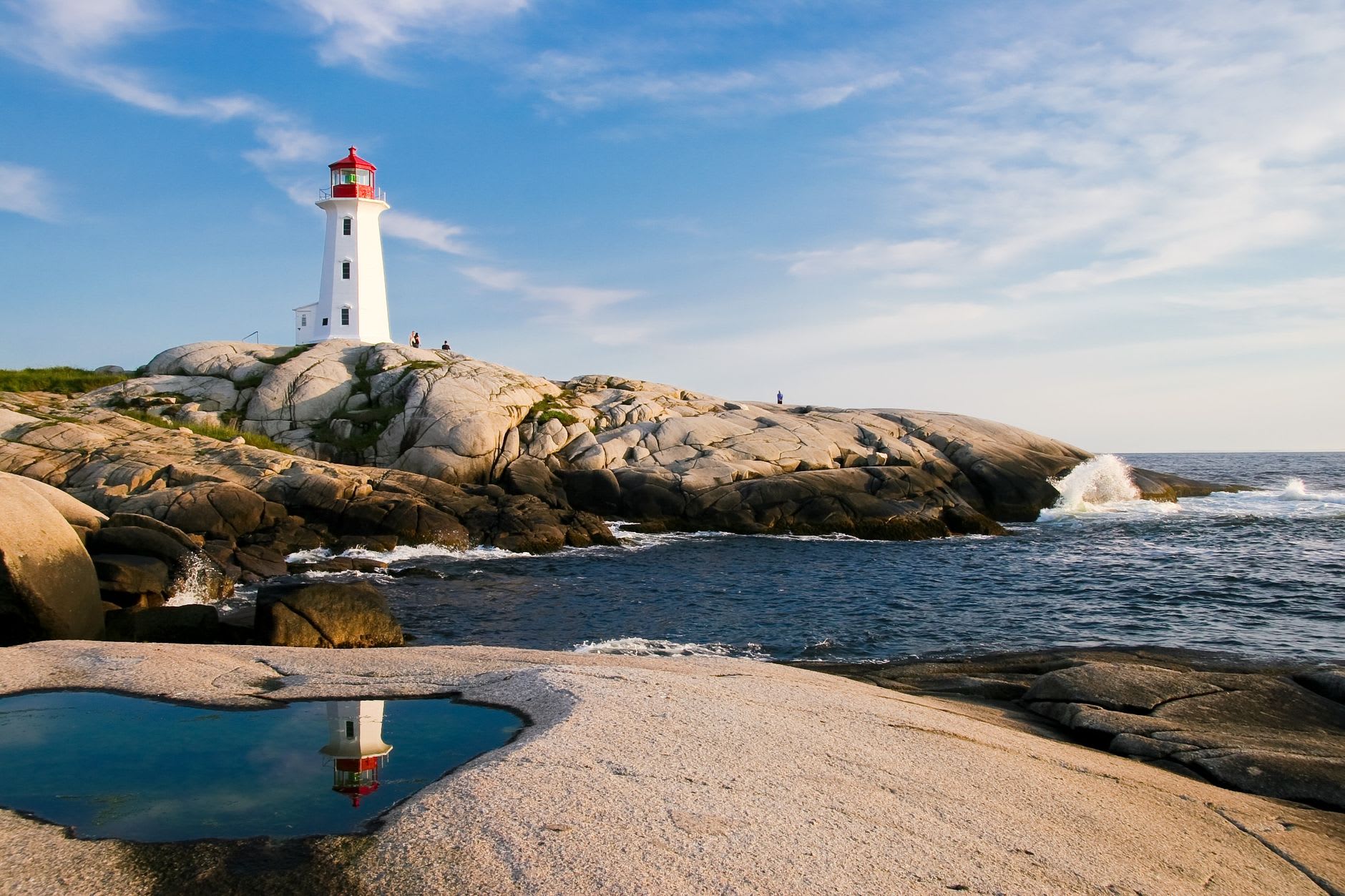
The rock is the thing here, more than the lighthouse. The lighthouse is iconic — red and white, squared, functional, postcard-perfect — and it earns its iconography. But the granite it sits on is the genuinely strange element: an enormous shelf of Devonian-age rock that the Atlantic has polished over 400 million years into something between sculpture and landscape. The boulders are round and enormous and they seem placed, like objects left by a civilization that was very serious about composition. Walking across them in the early morning, before any other person has arrived, before the gift shops open or the chowder restaurants begin their breakfast smells, is one of the quieter experiences I found in Nova Scotia, and Nova Scotia is not short on quiet experiences.
The fishing village behind the lighthouse is small and genuinely inhabited — perhaps 35 permanent residents, who have been living with the tourist infrastructure for decades and mostly wear the arrangement with good grace. The lobster traps stacked against the weathered shacks are not decoration, they are equipment, and the boats in the small harbour go out to work. There is a tension between the authentic fishing life and the postcard-industry that has grown up around it, but walking the village side rather than the lighthouse side, you feel the real thing underneath.
About two kilometres up the road from the lighthouse, there is a memorial to the passengers and crew of Swissair Flight 111, which crashed into the Atlantic near here in 1998 with 229 people aboard. I did not know about this before I came, and finding it changed the tone of the morning. The memorial is restrained and appropriate — a curved stone wall with the names inscribed, a viewing platform toward the sea, a garden tended by volunteers. After the almost-kitsch beauty of the lighthouse, it arrives as a correction. The ocean is not merely scenery. It takes things.
When to go: Go early morning, any time from May through October. June and July produce the most atmospheric fog — the lighthouse wrapped in white with the rocks emerging slowly as the morning lifts. Avoid arriving between 10am and 4pm in July and August unless you actively enjoy navigating through camera-wielding crowds. The off-season visits, particularly October, are often the most affecting.