
Runde Island
"I came for the puffins and left thinking about a shipwreck full of gold coins nobody found for 250 years."
A wind-scoured island of 500,000 seabirds and sunken gold, where puffins nest on cliffs above the cold Norwegian Sea.
We drove out to Runde on a whim, really. Lia had read about a bird island somewhere off Møre og Romsdal that you could reach by bridge, no ferry required, and that was enough to send us west from Ålesund with a thermos of coffee and zero real plan. I didn’t expect much beyond “some cliffs, some birds.” I did not expect to stand on a headland with the wind trying to take my hat and watch something like half a million seabirds wheel over the water at once — gannets folding into dives, guillemots packed onto ledges shoulder to shoulder, and everywhere, comically, puffins waddling around like they owned the place.
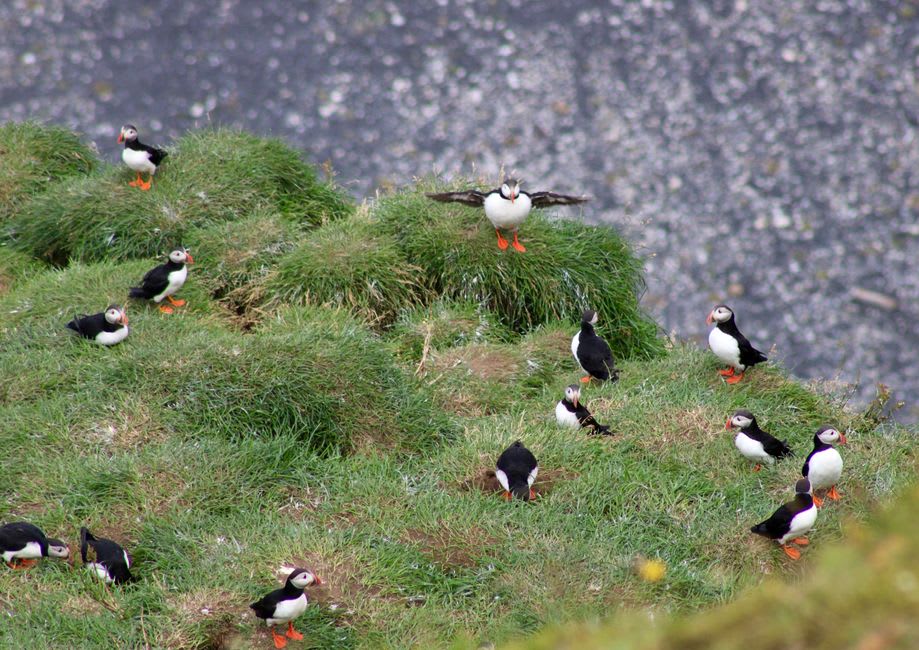
We’d timed it right without really trying — early June, right in the thick of the nesting season that runs April through August. A local guy at the small harbor told us May and June are the moment for puffins specifically, before some of the colonies start thinning out toward late summer. I remember lying flat on my stomach near the cliff edge, camera forgotten beside me for a good ten minutes, just watching one puffin make trip after trip with a beakful of sand eels for its burrow. Lia kept elbowing me every time one flew close enough to hear the wingbeats.
What I didn’t expect was the Runde Environmental Centre, tucked near the base of the island. We ducked in mostly to escape a rain shower and ended up spending an hour there — it’s a real research station, opened in 2007, where scientists track the colony’s health and study what’s happening to seabird populations more broadly. There’s a low-key but genuinely fascinating display about something wilder still: in 1972, divers found the wreck of the Akerendam, a Dutch East India Company ship that went down off Runde in 1725. Gold and silver coins, some of it still there for two and a half centuries, now sit in cases a short walk from where puffins burrow into the same cliffs the ship once passed.
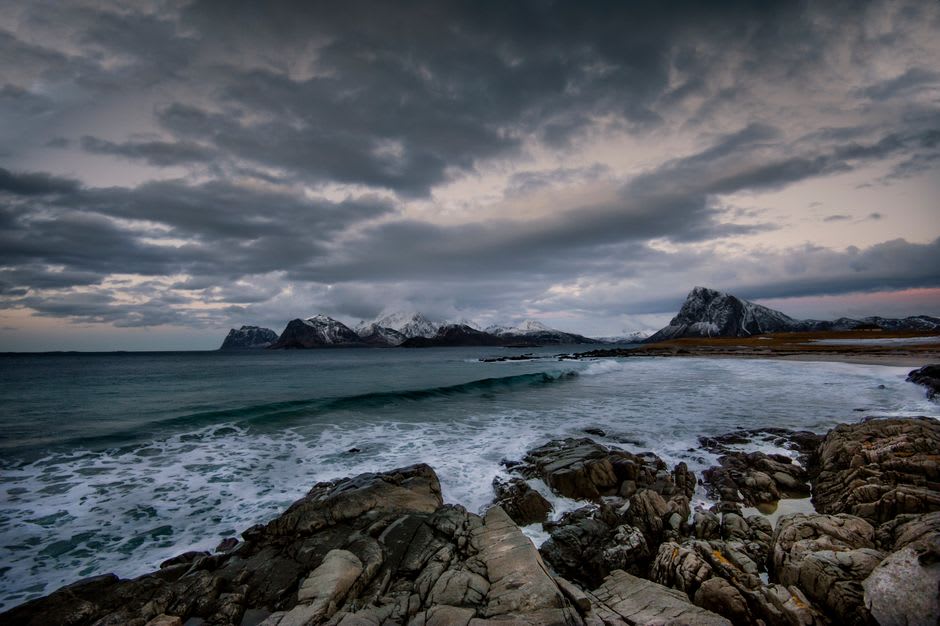
By the time we hiked back down toward the car, the light had gone that flat Norwegian evening gold that makes everything look slightly unreal, and the noise from the cliffs was still carrying across the whole hillside. Lia said it best — an island this small shouldn’t be able to hold that much life and that much history in the same square kilometer. I still think about the coins sitting quietly under the water for 250 years while gannets dove over the wreck every single spring.
When to go: April through August is prime seabird season on Runde, but if puffins are the whole reason you’re going, aim for May or June — that’s when the colony is at its liveliest and most reliably visible from the cliff paths.