
Bergen
"Bergen gets 240 days of rain a year and you can tell — the colours here are calibrated to fight back."
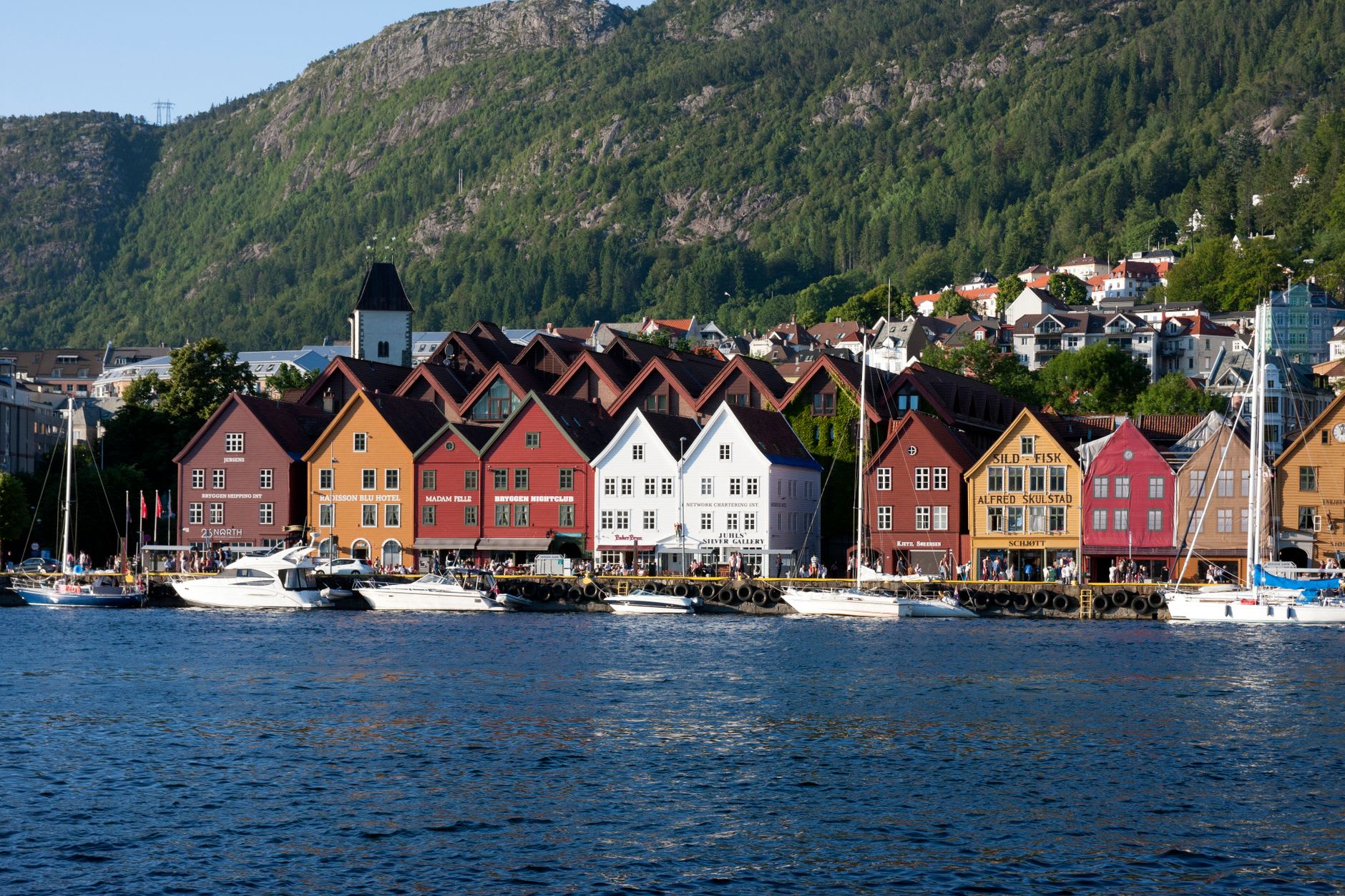
Bergen was raining when I arrived, which everyone had told me to expect, and which I had said I was fine with, and which I was genuinely not fine with after three hours of trying to read a map under a dripping umbrella. By evening, though, I understood the relationship between this city and its weather. The colours of the Bryggen wharf — the reds and yellows and ochres of the old Hanseatic warehouses — are calibrated for exactly this light. Under grey skies with rain on the water, they vibrate with a warmth that a sunny day might actually dilute. Bergen makes its weather work.
Bryggen is the reason most people come to Bergen first. The row of wooden buildings along the eastern harbour is a UNESCO World Heritage Site, what remains of the Hanseatic trading post that made Bergen one of Europe’s most important commercial centres between the fourteenth and sixteenth centuries. The buildings are not museums — they hold small shops, galleries, a restaurant in the end building that serves salt fish in its original form. I went into the back alleys between the facades, where the original timber construction is exposed, floors at various angles, wooden walls dark with age, the smell of old wood and something slightly maritime. It felt lived-in, not preserved.
The fish market at Torget has been selling fish here since 1276, which is the kind of continuity that makes European markets extraordinary. It now operates in a large covered hall and an outdoor section that runs from spring through autumn. I arrived early, when the vendors were still arranging their displays — crayfish, salmon sides, king crab legs as long as my arm, smoked mackerel in paper, pots of cloudberry jam at the edges. I ate a smoked salmon open sandwich standing at the counter, the salmon firm and cold, the cream cheese sharp, the bread dense enough to hold everything together without collapsing. It cost more than a sandwich has any right to cost and was worth every krone.
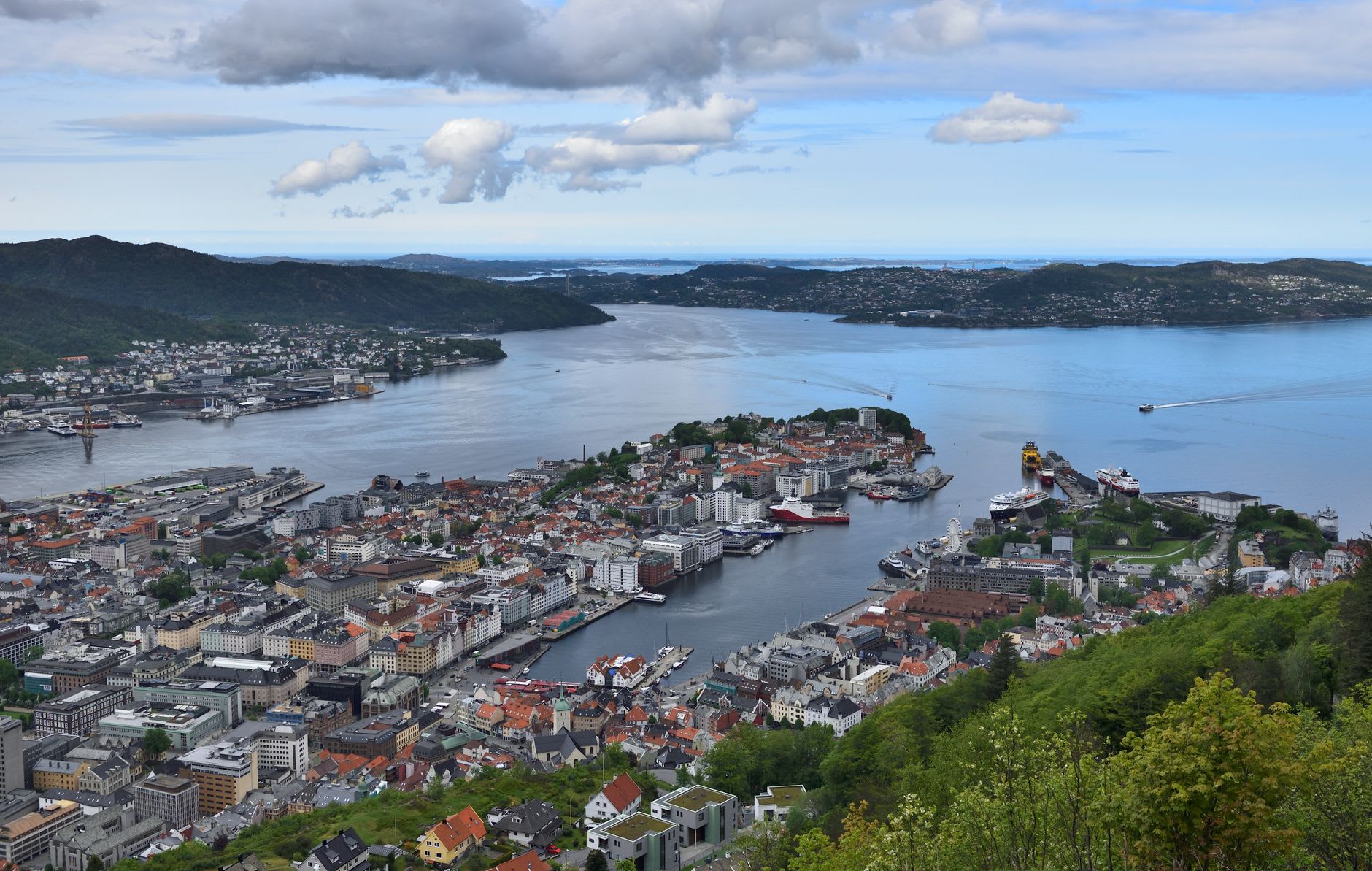
The Fløibanen funicular climbs from the city centre to Mount Fløyen in eight minutes and arrives at a viewpoint that explains Bergen’s position instantly: seven mountains surrounding the city on three sides, the harbour opening west to the archipelago and the open sea. I went up in the late afternoon and stayed until the lights of the city came on below, one by one, in the early dark. Then I walked back down on the path through the forest rather than taking the funicular, which takes forty minutes and smells of pine and wet earth and is entirely worth choosing over the faster option.
The neighbourhood of Nordnes occupies a peninsula across the water from Bryggen, and this is where Bergen is most itself — residential, water-facing, with painted wooden houses climbing the hillside in stacked terraces. The Nordnes Sjøbad, a floating outdoor pool on the fjord with separate sections for men and women in the old way, still operates. I swam there on an afternoon that was grey but not actually raining — by Bergen standards, a perfectly good day for a swim in the fjord.
When to go: May and June before the summer crowds fully arrive, when the days are very long and the rain is slightly less persistent. September is excellent for the fish market at full display and the Bergen International Festival runs in late May and early June if that aligns with your visit. Winter Bergen is underrated — the Christmas market in Torgallmenningen, dark and candlelit, is a specific pleasure.