
Mèo Vạc
"Mèo Vạc sits at the bottom of something enormous and doesn't seem bothered by it at all."
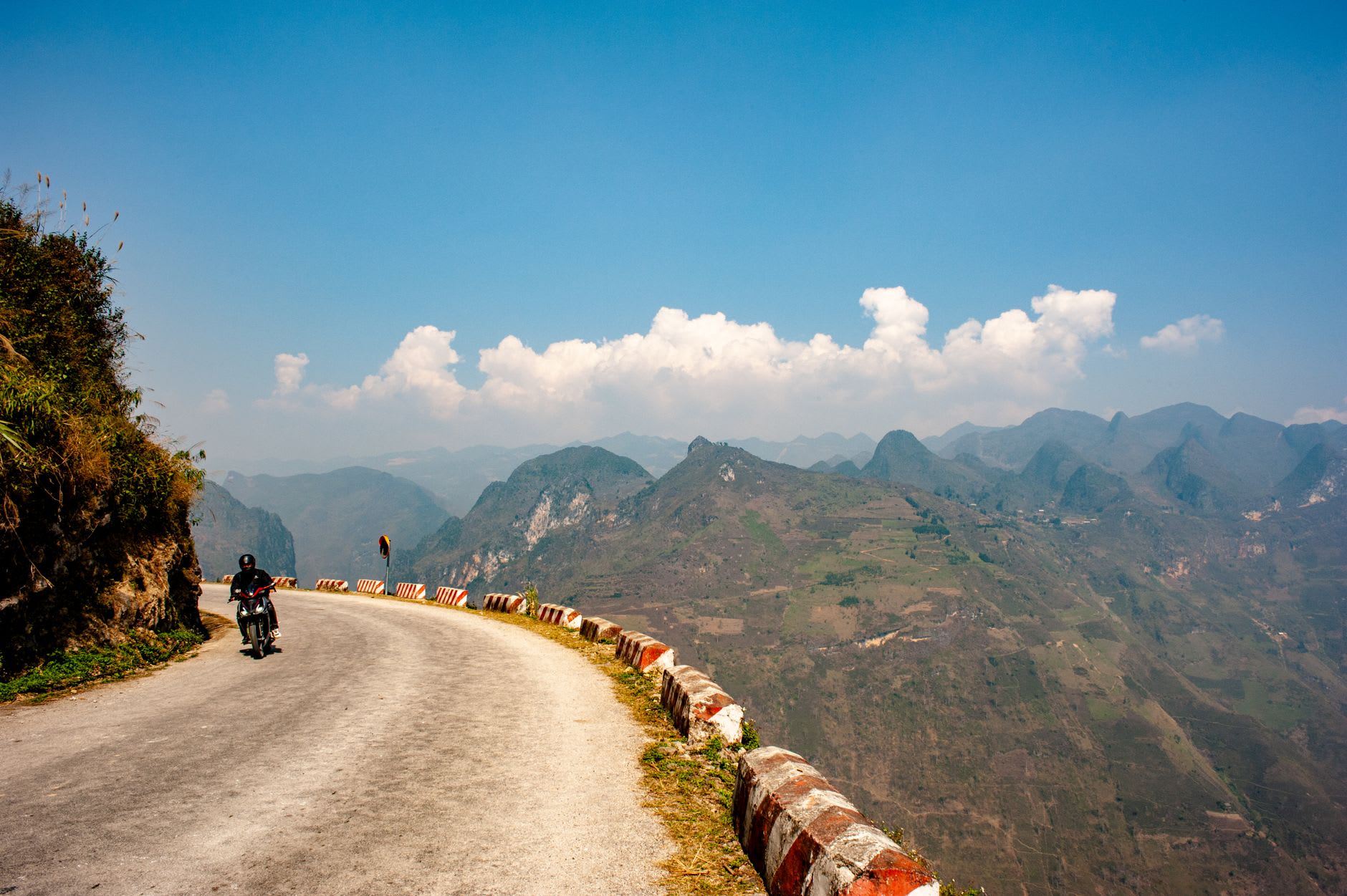
You arrive in Mèo Vạc having just survived Ma Pi Leng Pass, which means you arrive with a particular clarity of mind — the kind that comes from two hours of concentrated attention on a cliff road. The town appears in the valley below as you come down the last switchbacks: a modest cluster of buildings, a market hall, a river bend. After the drama of the pass, it looks almost gentle, which is either the relief of arrival or the way all destinations look slightly smaller than the journey to them.
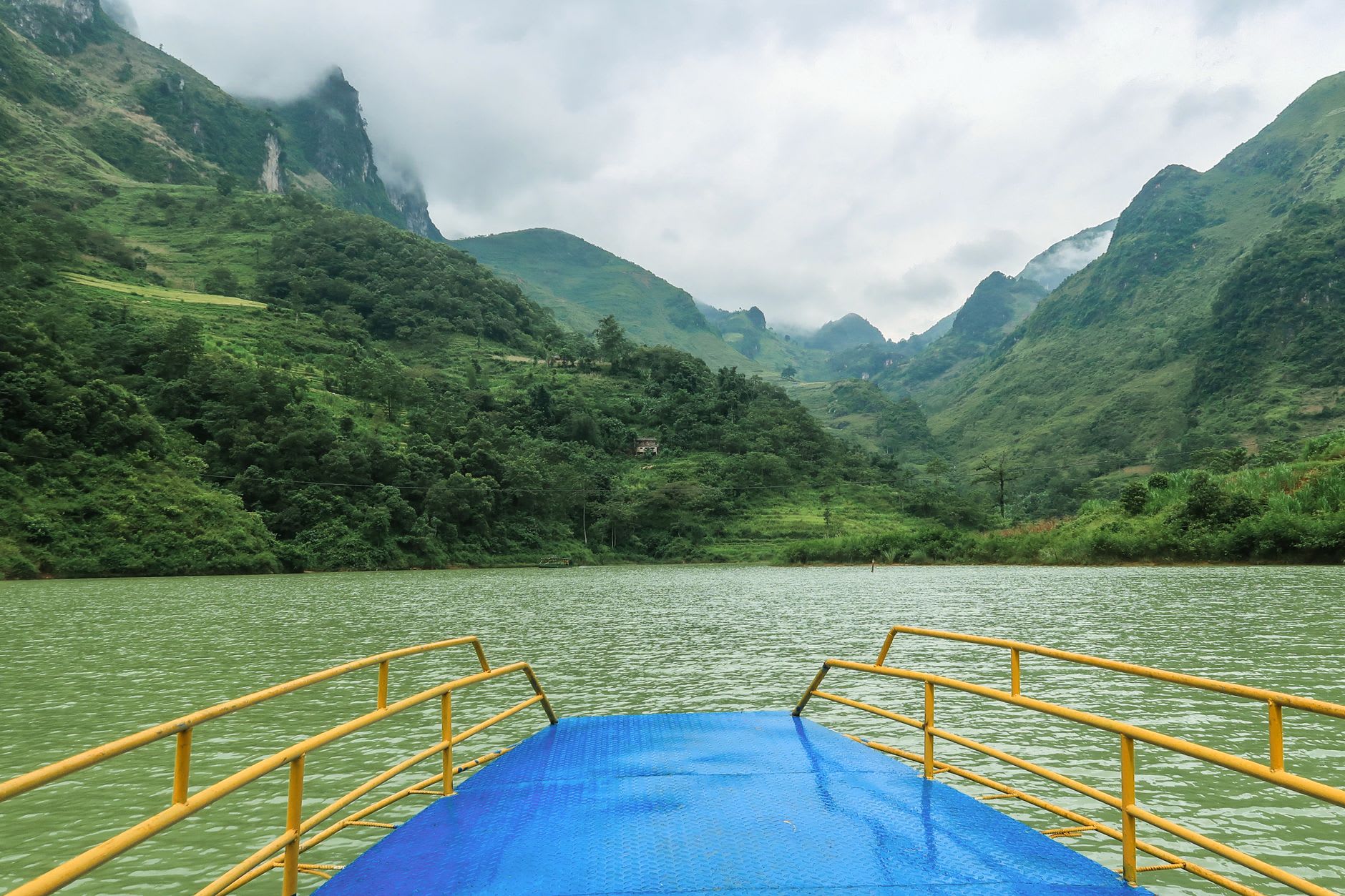
Mèo Vạc is a district town in Ha Giang province, surrounded by the full karst plateau on all sides and sitting in the canyon carved by the Nho Quế River. The river gives the town its most dramatic aspect — it runs an extraordinary shade of green that comes from mineral content and depth and the particular way the cliff walls filter the light that reaches it. From the canyon’s rim, hours earlier, I had seen it as a thread. Down here it is a real river, cold and fast in the middle, and the bamboo boats that push out from the bank to offer canyon tours move against it with some effort.
The Sunday market is the reason to time your arrival. It pulls in families from the surrounding karst plateau — H’Mong, Lô Lô, Pà Thẻn communities arriving on motorbikes stacked with produce, livestock walked in from the surrounding slopes, women carrying embroidery work in bundles across their backs. The market stalls occupy the covered building near the centre and overflow onto the surrounding streets, and the whole arrangement operates on a logic of long habit that moves efficiently without apparent organisation. I found thắng cố at the first table I sat at, ordered it without quite knowing the Vietnamese for what I wanted (pointing works; pointing and looking hungry works better), and ate it from a ceramic bowl with a wooden spoon while a goat was tied to the table leg beside me and regarded me with an expression I chose to interpret as non-judgmental.
The Lô Lô women who come down from the villages above town wear a costume distinct from the Hmong — bright geometric panels in red, black, and white, with elaborate headdresses that frame the face in a way that looks ancestral and considered. They tend to be less interested in tourist attention than some of the groups closer to the Sapa circuit, which means they move through the market on their own terms, talking to each other, conducting business, eating. The foreigners who appear are noted and filed and not particularly sought out. I appreciated this. It made the market feel more like a place and less like a performance.
The town has a few guesthouses along the main road — basic, clean, quiet after nine in the evening when the market is fully wound down and the streets empty with a completeness that feels deliberate, as if the town exhales. The pho shop that opens at five-thirty makes a broth that has clearly been running since before anyone currently alive started the fire, and the green onion is local and sharp and the meat is from something that was recently very much alive. You eat it watching the first light reach the karst peaks above the canyon walls and you feel like you have found the right speed for this particular place, which is slow and specific and not in any hurry at all.
When to go: Sunday for the market — plan your loop around it. September and October bring the clearest weather and the golden light that the canyon walls deserve. March is quieter and cooler. Avoid the rainy season months; the road from Đồng Văn to Mèo Vạc — Ma Pi Leng itself — can be treacherous when wet, and the canyon can be fully socked in with low cloud for days at a time.