Cao Bằng
"History accumulated here at a density that the landscape seems to hold in its bones."
Cao Bằng arrives as a surprise if you’ve come from Ha Giang — it is larger, more urban, with a market that takes up several city blocks and streets lined with the kind of government buildings that suggest a town that has been a centre of regional administration for a very long time. The Bằng Giang River runs through the eastern side and the karst hills close in from the north and west, giving the whole city the feeling of a place that has grown within a natural boundary it has chosen to respect rather than overflow. I arrived on a Tuesday afternoon by bus from Hanoi and spent a day in the city before heading out to the things that surround it, which is the right order: the town orients you, gives you a sense of the place’s character before the landscape takes over.
The revolutionary history of Cao Bằng province is not background noise here — it is the main text. Hồ Chí Minh returned to Vietnam via Cao Bằng in 1941, operating from the caves of Pác Bó in the far north of the province for years during the resistance against French colonial rule. The cave and its surroundings have been turned into a modest memorial site, about sixty-five kilometres north of the city, and the road there passes through karst landscape that has a particular quality of grey-green density in the morning mist. The cave itself is small and dark and clearly not designed for comfort — Hồ Chí Minh lived and worked in it for extended periods, and the mountain stream running past its entrance was named Lenin Stream by the man himself, which you are told and which lands differently when you’re standing beside actual running water in the middle of actual mountains.

The city market runs every day but reaches its maximum intensity in the early morning, when the vendors from outlying villages arrive with the freshest of everything. The section selling smoked and dried meat occupies one corner and the smell of woodsmoke and cured pork hangs over it in a way that is specifically appetising rather than overwhelming. I bought a length of smoked buffalo meat from a woman who sliced it with a knife that had been sharpened to the point of transparency and wrapped it in newspaper, and ate it an hour later on a bench by the river, tearing off pieces, watching an old man fish from the bank with a rod so long it bent almost to the water. The meat was dense and smoky and had a residual heat from dried chilies that made the skin of my upper lip aware of itself in the best way.
The province’s food generally runs to the sour and the fermented — sour pho, pickled vegetables, a rice wine distilled locally that is cleaner and more interesting than the tourist-facing rice wines you encounter elsewhere. Lẩu thả, a hotpot specific to the Tày people of the region, involves a broth made with fermented fish paste that smells significant and tastes complex, and is eaten communally in a way that makes you feel included even when you arrived alone. The restaurant that serves it best, in the opinion of the woman who ran my guesthouse, is the one her cousin runs three streets away. Her cousin’s restaurant was excellent.
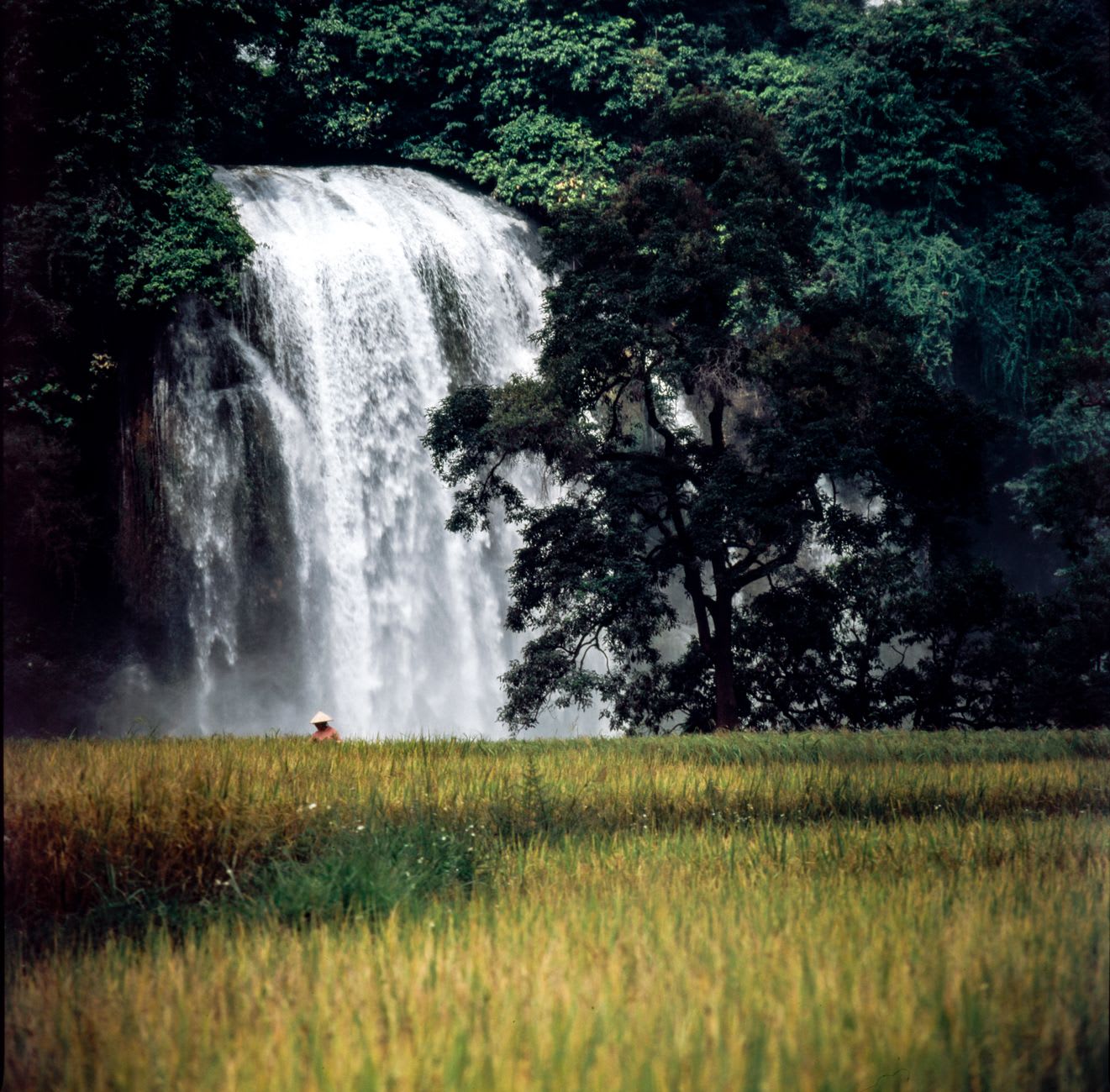
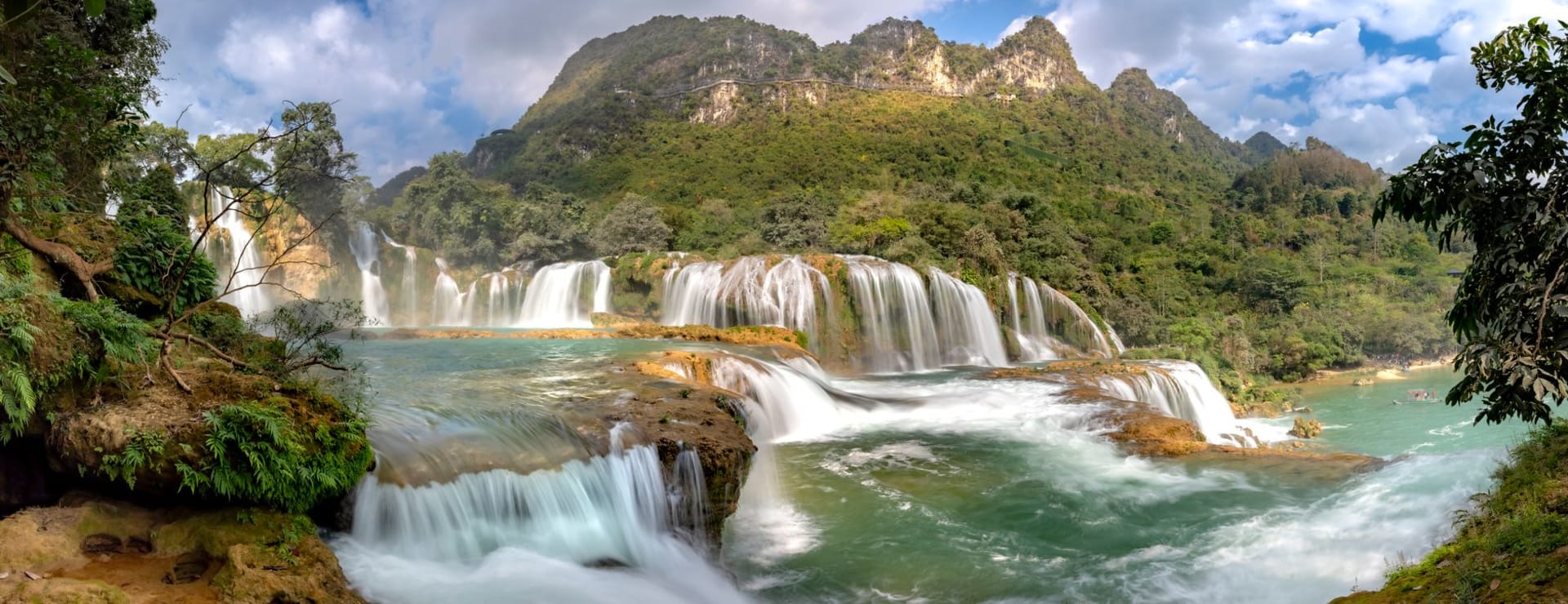
The drive from Cao Bằng to Bản Giốc waterfall takes about three hours on roads that are mostly paved and entirely scenic. The limestone karst landscape of Trùng Khánh district, through which the last hour passes, is among the most spectacular in the northeast — fields of rice in the valley floors, water buffalo grazing between limestone outcrops, the road rising and falling in a rhythm that feels choreographed. People drive it for the waterfall but the drive itself is worth more than the destination, which is saying something about the drive, not against the waterfall.
When to go: September and October for golden rice harvest in the valleys and the best visibility for both the karst landscape and Bản Giốc. April brings flowers and cooler weather. The winter months are cold but clear and the caves and historical sites have almost no visitors. Avoid July and August — rain, mist, and mud that makes cave visits genuinely slippery.