Bắc Hà
"I have been to markets on four continents and Bắc Hà on a Sunday morning is unlike any of them."
Bắc Hà on a Sunday is a reason to get up before five. The Saturday minibus from Sapa fills quickly and arrives before the market reaches full volume, which is worth it: the best hour is the one just after sunrise when the Flower Hmong women are setting up their stalls and the light hits their clothing at an angle that does something the afternoon sun can’t manage. The dresses are the first thing, always — an explosion of hand-embroidered colour that has no equivalent in anything I’ve encountered elsewhere. Flower Hmong embroidery runs to hot pinks and electric blues and deep maroons, layered over geometric patterns so dense that the effect reads from a distance as texture rather than colour, and only resolves into its individual elements up close.
The market occupies a central square and several surrounding streets and a covered building and what appears to be an overflow car park that also becomes market. It is organized less by design than by habit: the fabric sellers cluster near the entrance, the livestock in the back, the food stalls along the eastern wall, the corn wine vendors appearing everywhere with the confidence of people who know they are always welcome. I arrived at seven-thirty and within ten minutes had been gestured toward a table by a woman selling congee, eaten a bowl with pickled vegetables, and been handed something fermented in a glass without being asked if I wanted it. I wanted it.
The food section is where the market earns its reputation beyond the textiles. Bắc Hà is known for its thắng cố — the horse-and-offal stew that is the traditional dish of the Hmong highlands — served from large pots that have been going since the night before, the broth dark and complex, the meat tender and assertive. It is not a dish that apologises for itself. Alongside it: freshly killed pork sold in sections on low wooden tables, wild herbs in bundles that fill the surrounding air with something between mint and camphor, root vegetables I couldn’t name brought down from gardens at altitudes where the air thins to a quality that evidently concentrates flavour. I ate three different things for breakfast and felt no shame.
The Flower Hmong themselves — the market is theirs, run by them, for them, with visitors absorbed rather than catered to — move through it with an ease that reads as ownership because it is ownership. Women in their twenties negotiate prices on fabric while balancing infants. Older women sit with exact change ready and an expression that prices things fairly without discussion. Men appear less frequently and, when they do, tend to be at the corn wine tables discussing things that require corn wine. The social geography of the market is its own education if you watch it long enough.

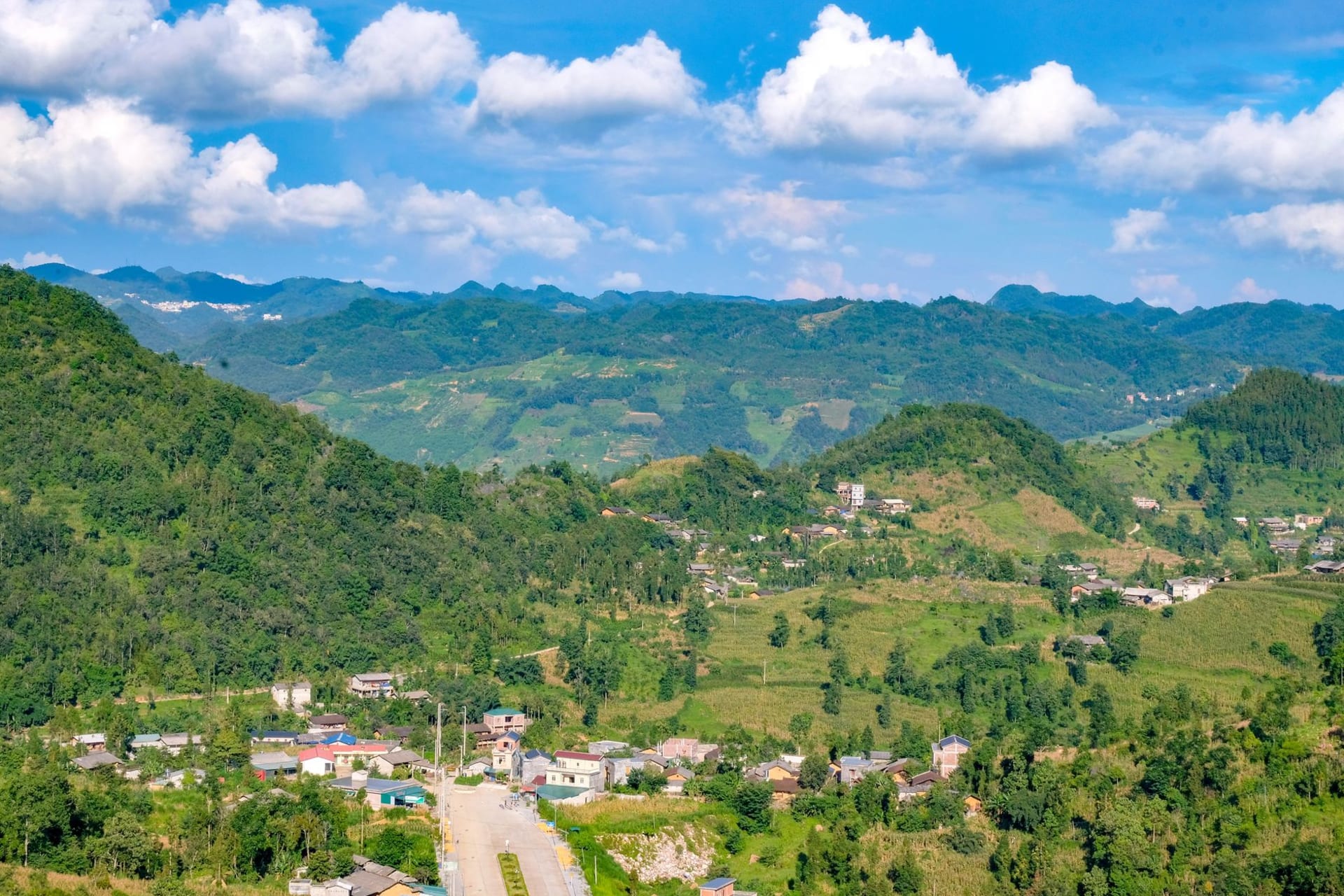
The town itself, outside market day, is small and unhurried — a few streets of houses, a guesthouse or two, a good view north toward the plateau. Can Cau, thirty kilometres north, runs its own Saturday market that draws fewer visitors and more Black Hmong, and is worth the early departure if you have the days to arrange it. The combination of both markets in a single weekend, overnighting in Bắc Hà between, gives you the full range of the region’s highland market culture without covering the same ground twice.
When to go: Sunday market runs every week year-round, but September through November gives the best weather — clear mornings, manageable temperatures, and the harvest period brings more produce and more vendors. The Chinese New Year period (January–February) sees a heightened festive atmosphere and specialty market items, but cold nights require real preparation. The market peaks around eight to ten in the morning and begins to wind down by noon.