Tahoua
"Tahoua is where Niger changes register — south of here is farmland, north is desert, and the market on Sunday holds both worlds at once."
I stopped in Tahoua by accident, which is the only way I ever want to stop somewhere. The bush taxi I’d taken from Niamey developed a problem with something in its rear axle — the driver diagnosed it with one hand under the wheel arch and a sound like someone sucking their teeth — and four hours of waiting turned into an afternoon that turned into a decision to stay. Tahoua had not been on my list. By the time the next bush taxi north left the following morning, I was sorry to go.
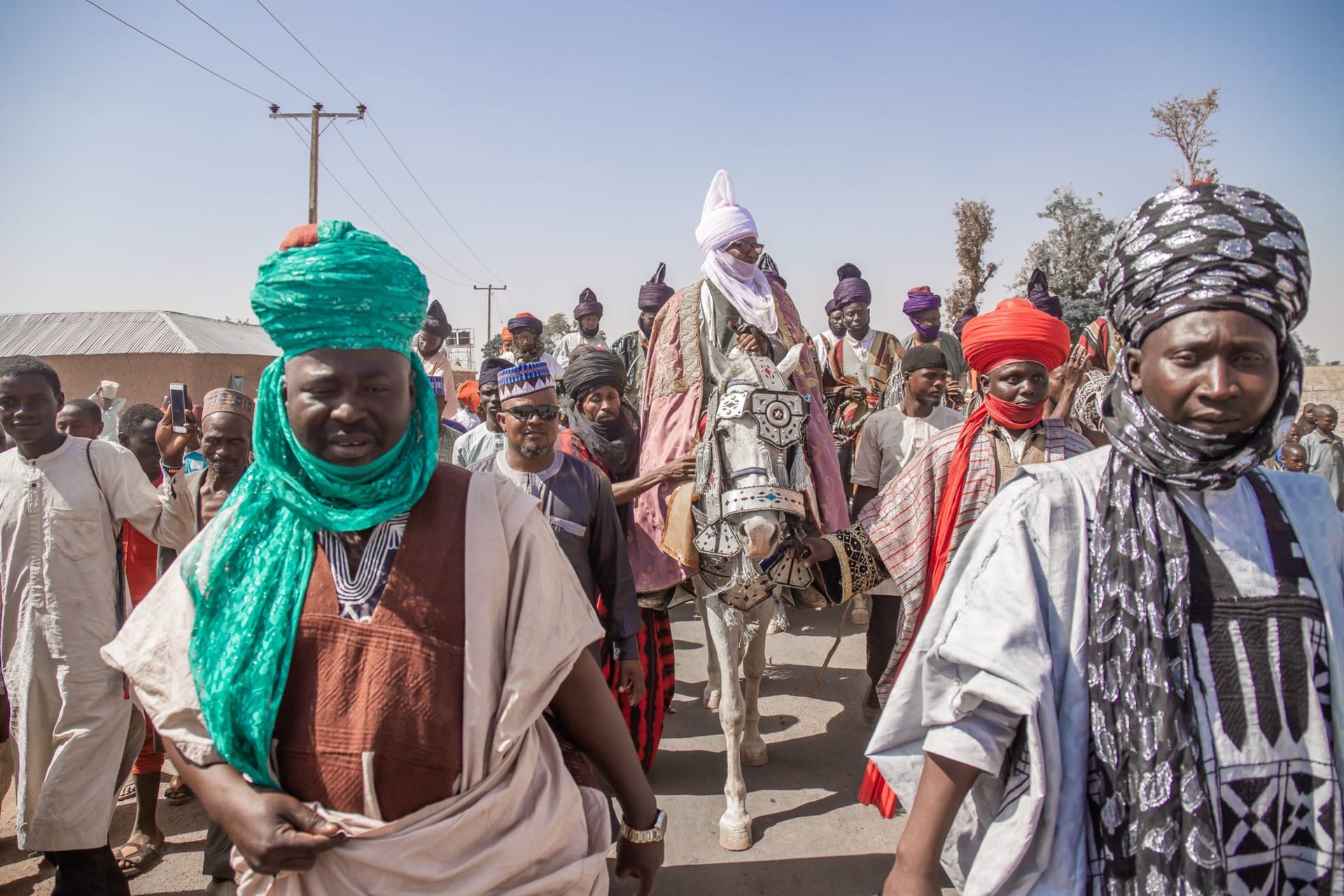
The weekly market happens on Sundays and covers half the town center in a way that makes the permanent buildings look temporary by comparison. The Hausa traders come in from the garden zones south of here — Tahoua’s region is Niger’s main onion-growing area, and during the dry season the stalls hold mountains of small, sharp, sweet onions that go into everything — and the Tuareg traders come down from the north with silver, dried cheese made from camel’s milk, and the kind of carved wooden saddles and tent poles that imply ongoing desert life rather than its nostalgia. The two communities negotiate across a shared commercial language that seems to require no interpreter.

The silver here is worth your time. Tuareg jewelry — worked into crosses, pendants, amulets, elaborate headdress pieces — carries its own visual language. Each region has its own cross form: the cross of Agadez is the most famous, but Tahoua sits between the Agadez and Tahoua cross traditions and you can find both, along with pieces I couldn’t attribute to any specific origin that were more interesting for it. The silversmiths sit in a particular section of the market under a corrugated iron shade and work while selling, the small hammers tapping at silver in a rhythm that you hear before you see them.
I ate at a woman’s stall near the far edge of the market — a bowl of groundnut soup so thick it could hold a spoon upright, served with millet balls called tô that you tear and dip. She added a side of dried baobab leaves that I hadn’t asked for and didn’t charge me for either, as if it were an obviously necessary thing. The soup was smoky from the wood fire below the pot. My fingers were orange from the oil by the time I’d finished.

The town itself is not beautiful in any conventional sense. The streets away from the market are quiet and functional, the architecture is practical rather than ornamented, the mosque is recent and cement. But there is a quality to Tahoua that comes from its position — it genuinely sits at the point where two Nigers overlap, and that overlap is more interesting than either part on its own. The north wind, when it comes in November, carries something cold and mineral that the south wind does not.
When to go: November through March. The Sunday market is the main draw and worth organizing your travel schedule around. Tahoua is a transit point for those heading north to Agadez, so it fits naturally into a Niamey-to-Agadez itinerary with a Sunday stop. The town is hotter than Niamey in summer and more exposed to the harmattan in February-March, but neither makes it unmanageable within the dry season window.