Africa
Niger
"The Sahara here doesn't perform for you. It just is."
I landed in Niamey on a Wednesday afternoon in late October, and by the time I stepped off the tarmac the heat had already rearranged my expectations. This wasn’t the dramatic desert entrance I’d half-imagined. It was a city of dust-coated motos, women selling groundnuts under tarps dyed indigo, and a river — the Niger itself — slipping through it all with an indifference that felt almost philosophical. I’d spent years reading about West Africa, and still nothing prepared me for how ordinary and extraordinary Niamey managed to be at the same time.
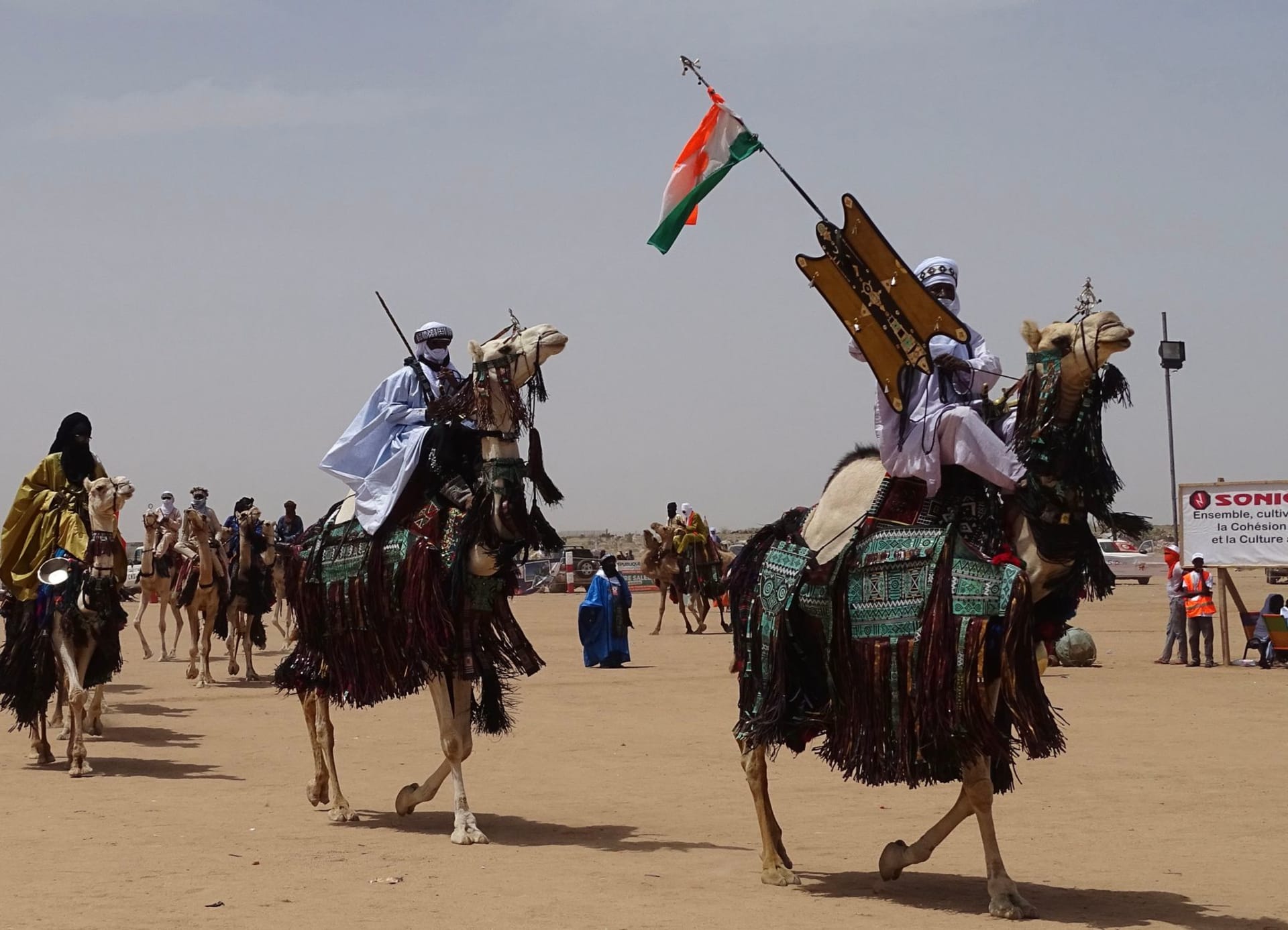
What stays with me is Agadez. You take a long road north — properly long, the kind where you start counting telegraph poles — and then suddenly there it is: a mud-brick minaret rising out of nowhere like something the desert decided to keep. The Sultanate of Agadez has been here since the 15th century, and the old city still functions as a living thing, not a heritage project. I ate brochettes of camel meat beside men who’d just come in off a caravan route I couldn’t find on Google Maps. The Tuareg saddle-makers in the souk weren’t performing tradition — they were just working. That distinction matters more than it sounds.
The Ténéré is the part that breaks your sense of proportion. East of Agadez, the landscape empties out into something so absolute it stops feeling like geography and starts feeling like an argument. I went with a small group, camped two nights under stars so dense they seemed structural, and woke once at 3am to hear nothing — genuinely nothing — for the first time I could remember. Niger doesn’t sell you that silence. It just leaves it out, available, for whoever shows up.
The food was a running surprise. Riz au gras — rice cooked in a rich meat broth with tomatoes — was everywhere and almost always good. So was dambou, a kind of millet dish that sounds austere but hits differently with a side of fresh baobab leaves. I ate well here. Cheap, communal, unapologetically local.
When to go: November through February is the window. October is workable on the edges — hot but bearable. From March the harmattan dust and then the heat close in hard. The Cure Salée festival near In-Gall usually falls in September, and if the security situation allows, it’s worth organizing a trip around it: camel races, Tuareg music, thousands of Wodaabe nomads in full dress.
What most guides get wrong: They lead with the warnings and end up describing a country too dangerous to visit. The reality is more nuanced and more interesting — Niger has genuine security concerns in specific border regions, yes, but Niamey and the corridor to Agadez have hosted travelers for generations and the hospitality infrastructure, while minimal, is functional. The bigger mistake is treating Niger as an extreme-travel credential rather than a place with one of the most distinct cultures in the Sahel. Come for that, not the bragging rights.