
Dosso
"Dosso is what Niger looks like when there has been enough rain — which turns out to be a completely different country."
A quietly dignified emirate town in Niger's green southwest where the Djerma-Sonrai culture runs deep and the road to Benin passes through a different kind of Sahel.

The road south from Niamey to Dosso passes through a Niger I hadn’t expected. The country opens out into something greener, the red laterite giving way to darker soil where millet grows head-high and women carry head-loads of firewood through fields that have actual shade in them. It is still the Sahel — dry season will reduce all of this — but in November, two months after the rains have ended, the landscape holds enough residual green to feel generous. Dosso sits at the center of this, a town of perhaps 90,000 people that has never figured prominently in any travel itinerary I’d read and was, as a consequence, completely itself when I arrived.
The Emirate of Dosso is one of Niger’s traditional kingdoms, and the emir’s palace sits in the center of town with the undemonstrative solidity of an institution that has no need to explain itself. The building is white-painted mud brick decorated with geometric reliefs in the Hausa tradition, but Dosso’s dominant culture is Djerma-Sonrai — the ethnolinguistic group that comprises a major part of southwestern Niger’s population, distinct in their history, their language, and their relationship with the river. The palace is a synthesis of this history: a Hausa architectural form built on Songhay political tradition in a Djerma region. West Africa rarely lets you simplify.

The market town spreads out from the palace area in a way that is unhurried even by Nigerien standards. I walked the outer market one morning and spent most of my time at the livestock section, which is the most honest economy I know — animals assessed with specific expertise, prices negotiated by people who understand exactly what they are buying, no theater. A man sold me a piece of grilled goat from a rack above a fire of millet stalks, and the smoke of millet stalk is nothing like wood smoke — it is higher, slightly sweet, and it gets into the meat in a way that I kept thinking about two days later.
The town is also a transit point for trucks heading south to Benin, and the parking area near the highway has a certain border-trade energy despite the fact that the actual frontier is still over 100 kilometers south. Men repair motorcycle tires under trees. Boys sell sachets of water and phone credit from shoulder bags. There is a gendarme post where the proceedings are conducted with a formality that is genuinely impressive given the heat. Dosso reminds you that this is a country where logistics are still a solved problem that has to be re-solved every day.

In the evening I sat outside the guesthouse and watched the town arrange itself for night: the bread sellers arriving with baskets of fried dough still warm, the teenagers on motorcycles doing the West African equivalent of the Italian passeggiata, the muezzin at two different mosques creating a brief, beautiful overlap that sorted itself out in about thirty seconds. Nobody seemed to notice it but me.
When to go: October through March. Dosso is at its greenest in October and November, when the aftermath of the rains still shows in the fields. December through February is cooler and drier — the landscape has browned but the air is pleasant and the nights are cold enough for a light jacket. It works as an easy day trip or overnight from Niamey (about 130km south on the main road), or as a comfortable first night when heading overland toward Benin.
Keep exploring
More from Niger
 niger
niger In-Gall
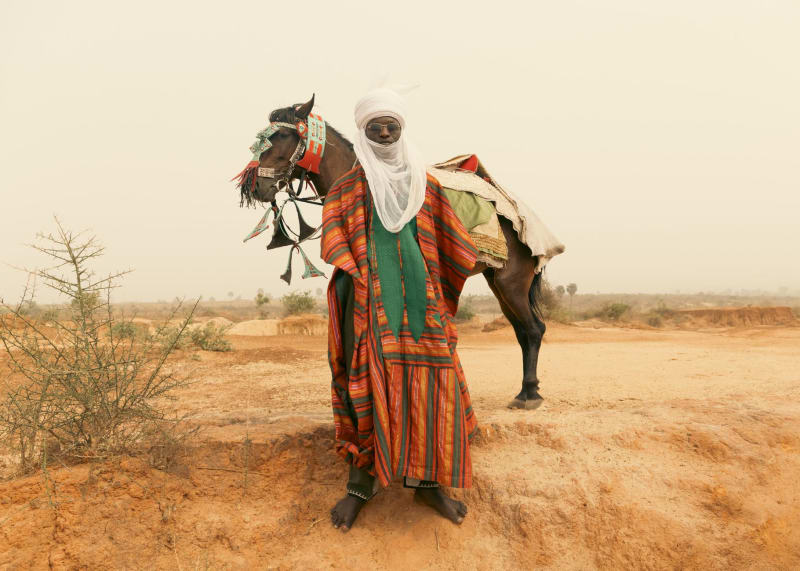
A small desert town that swells once a year into one of the Sahel's great nomadic gatherings — the Cure Salée festival of the Tuareg and Wodaabe.
Explore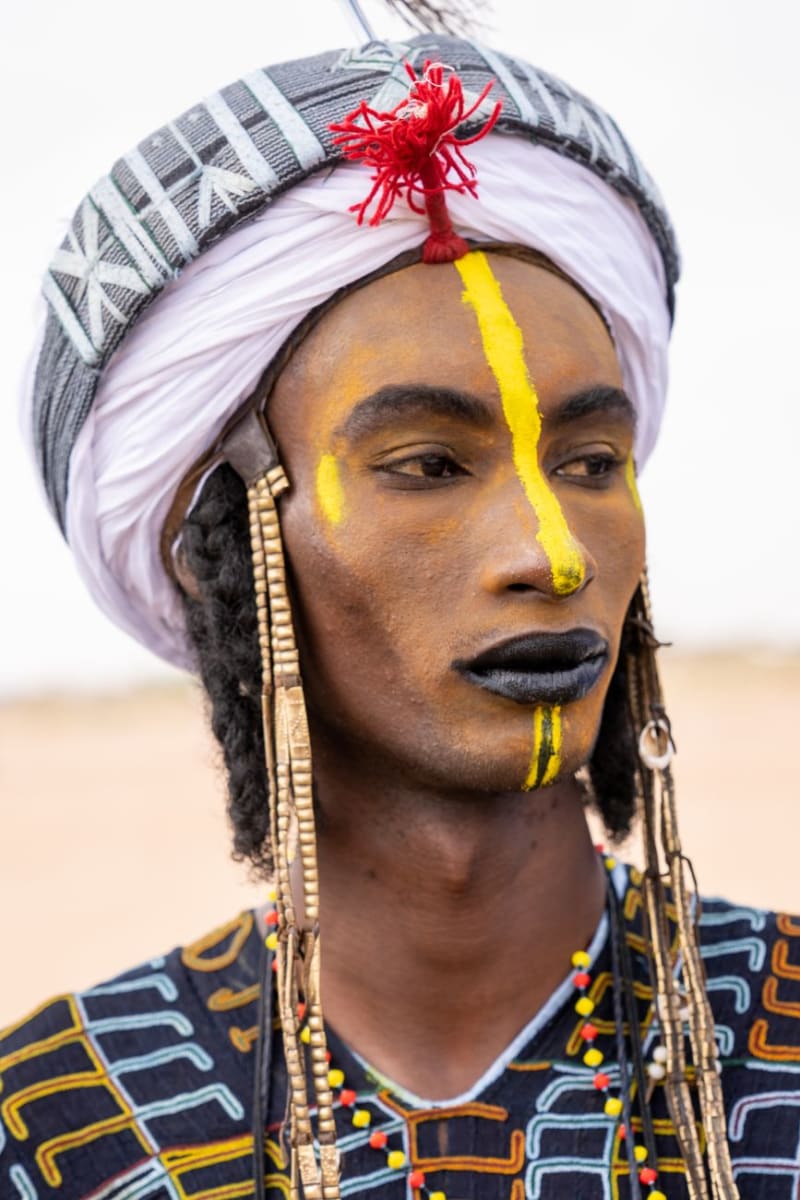 niger
niger Kouré
A stretch of dry bush an hour south of Niamey where the last wild giraffes in West Africa drift between the thorn trees as if they own the place — which, in fairness, they do.
Explore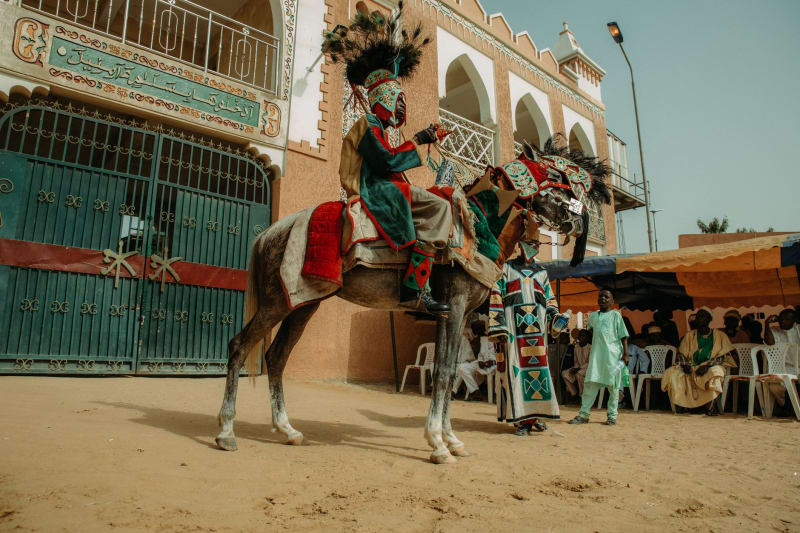 niger
niger Maradi
Niger's commercial engine — a Hausa border city where Nigerian traders, groundnut sacks, and the smell of peanut oil frying define the street-level tempo.
Explore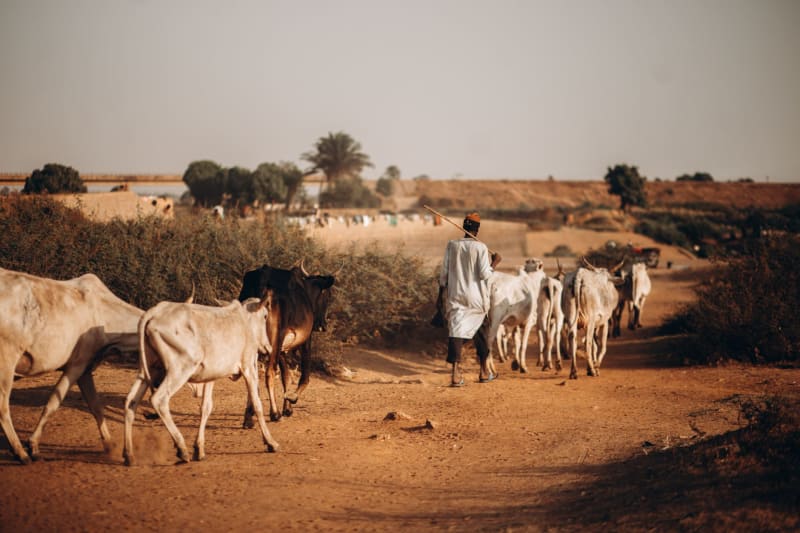 niger
niger Niamey
A river capital where the Niger flows past indigo traders and dust-coated motos in stubborn, ordinary splendor.
Explore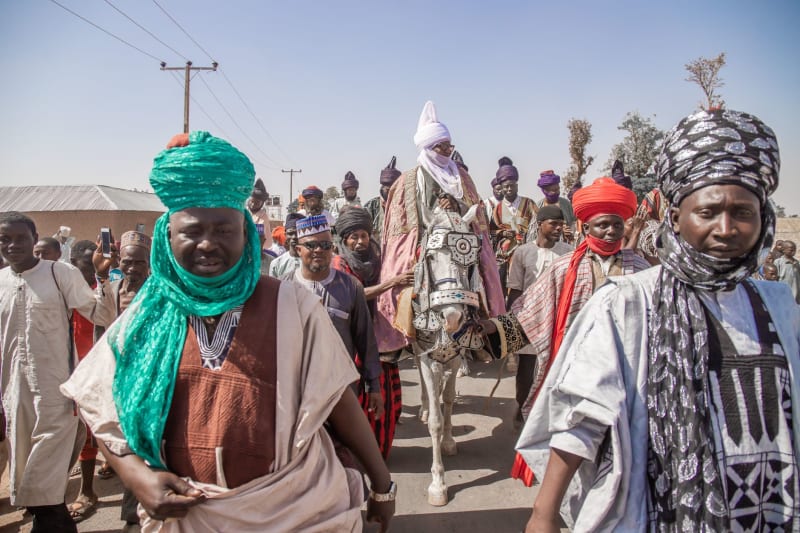 niger
niger Tahoua
A crossroads market town where the Sahel meets the Saharan edge and Tuareg silversmiths work beside Hausa onion traders in the same sun-baked square.
Explore niger
niger Ténéré Desert
The emptiest place I have ever stood — a sand sea so vast it breaks your sense of proportion and then gives you a new one.
Explore