
Ometepe is a figure-eight island formed by two volcanic cones rising from the centre of Lake Nicaragua — Concepción, active and symmetrical, and Maderas, dormant and cloud-forested. The island is accessible by a one-hour ferry from San Jorge, and the moment it appears on the horizon — two perfect peaks reflected in the lake’s surface — you understand why the indigenous Nahuatl people considered it sacred.
I took the early morning ferry from the mainland, standing on the upper deck with a cup of terrible coffee, watching the island materialize from the haze. It is one of those sights that photography cannot capture — the scale, the symmetry, the improbability of two volcanoes rising from a freshwater lake in a near-perfect figure eight. The Nahuatl called it Ome Tepetl — two mountains — and the name is the description is the experience. The island is its volcanoes, and the volcanoes are the island, and everything else — the farms, the villages, the tourists on rented scooters — is temporary.
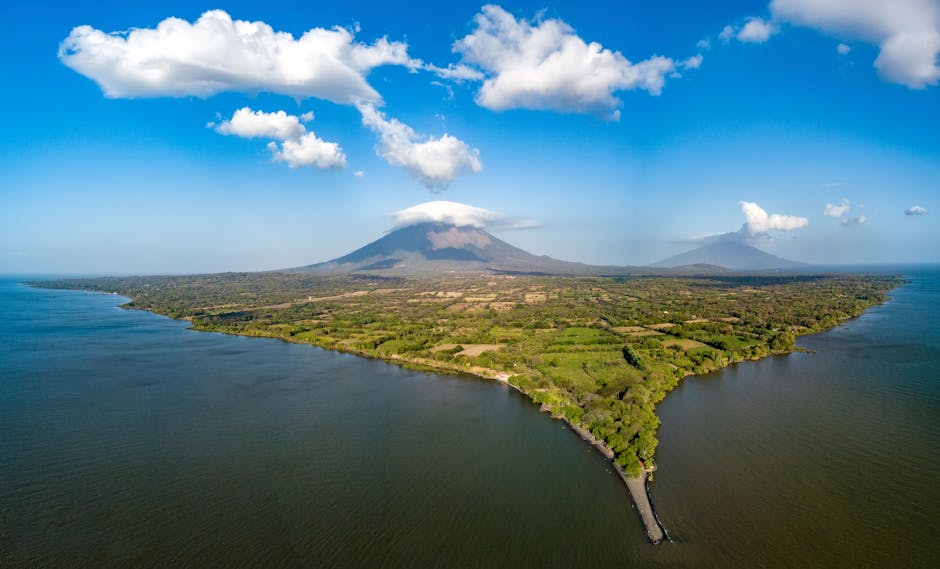
The island is rural, undeveloped, and beautiful in a way that feels almost prehistoric. Howler monkeys roar from the trees. Pre-Columbian petroglyphs are scattered in fields and along trails, largely unguarded and uninterpreted. The roads are rough, the infrastructure is basic, and the reward for accepting both is an island experience that has not been packaged, branded, or commodified. I rented a scooter and spent two days circling the island — the road is mostly paved on the Concepción side, mostly unpaved on the Maderas side, and entirely spectacular throughout.
Volcán Concepción is the more challenging hike — eight to ten hours round-trip to the 1,610-meter summit, with a guide mandatory (the upper slopes are steep, loose, and exposed). Clear-day views from the top encompass the entire lake, the mainland, and, on exceptional days, both oceans. I made it about two-thirds of the way up before the clouds closed in and the wind made the upper scree feel inadvisable. The guide, who had summited hundreds of times, shrugged and said the mountain decides. We descended. I was not disappointed — the forest sections of the climb, with their monkeys and butterflies and views over the lake, were reward enough.
Volcán Maderas is gentler — six to eight hours through cloud forest to a crater lake at the summit. The trail passes through monkey habitat, and the forest drips with epiphytes and orchids. The crater lake at the top is dark and still, surrounded by cloud forest, and the feeling of having climbed into a lost world is genuine and unrehearsed.
Ojo de Agua — a natural spring-fed pool at the base of Maderas — is the island’s best swimming spot: crystal-clear water at a constant temperature, surrounded by trees, with rope swings and a canopy of branches. After a morning of hiking, the cold water is a religious experience. I stayed for two hours, alternating between the pool and the hammocks strung between the trees, and I understood why every traveler I had met in Granada told me not to skip Ometepe.
The beaches on the Santo Domingo isthmus — the narrow strip connecting the two volcanoes — have dark volcanic sand and views of both peaks simultaneously. The swimming is pleasant, the waves gentle, and the sunset — with Concepción silhouetted against the sky and the lake reflecting the colours — is the kind of scene that makes you set down your phone and simply look.
The petroglyphs scattered around the island deserve more attention than they receive. Carved into volcanic boulders by pre-Columbian cultures, they depict spirals, animals, human figures, and abstract patterns whose meaning has been largely lost. They sit in fields, alongside trails, in people’s backyards — unprotected and unlabeled, which is both their charm and their vulnerability. A local guide can show you the best sites and provide what interpretation exists.
When to go: November to April. The ferry runs year-round but can be rough in the wet season. Bring cash — there are no ATMs on the island. The Concepción hike is best attempted in the dry season for clearer views; the Maderas hike is feasible year-round but muddier in the rains.