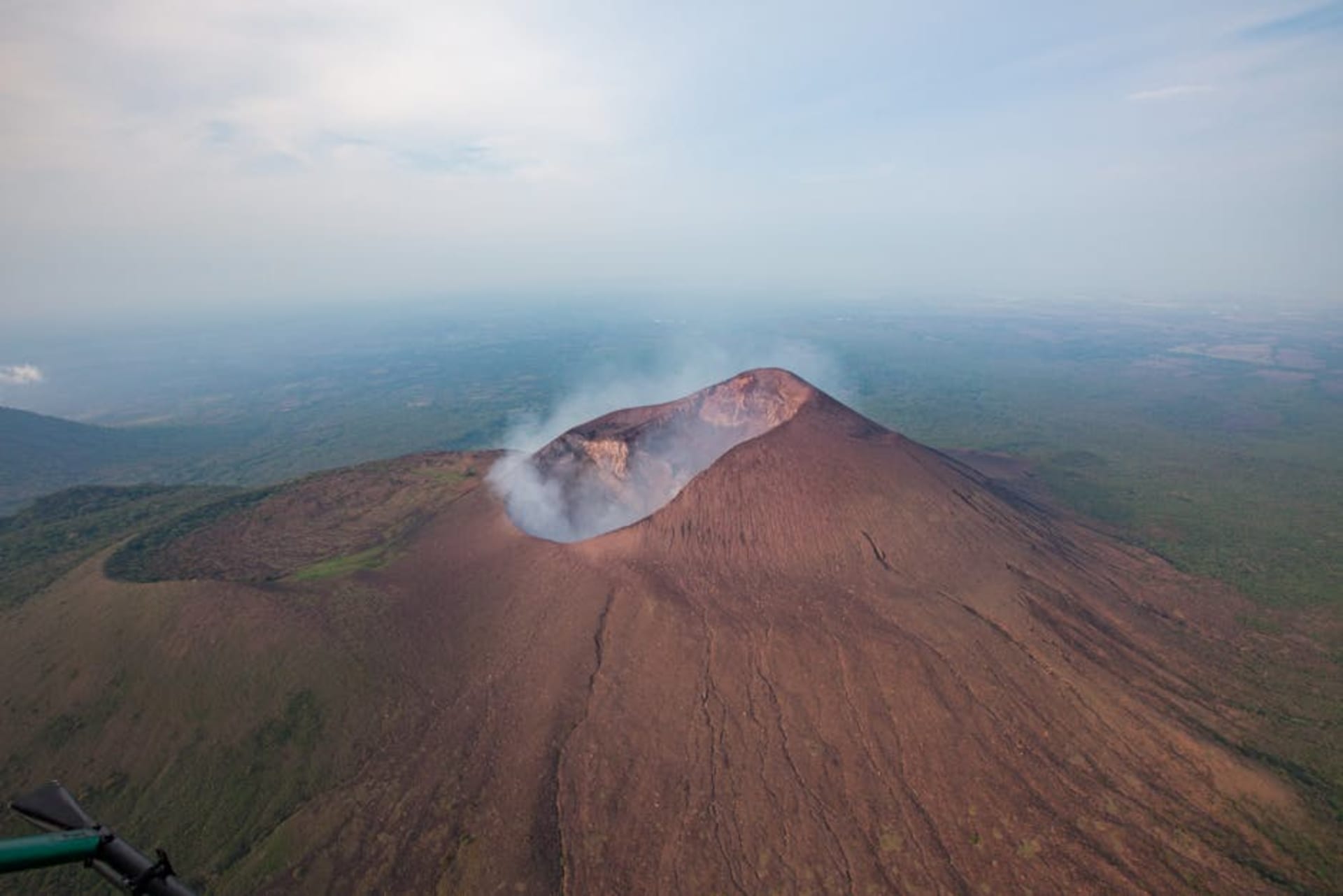
Masaya is a thirty-minute drive from both Managua and Granada, and it offers two experiences that are each, on their own, worth the trip. The first is the volcano. The second is the market. Together they make Masaya one of the essential stops in Nicaragua, and one of the most underrated — most travelers visit as a half-day excursion and miss the depth of both.
Volcan Masaya is one of the very few places on earth where you can drive to the rim of an active volcanic crater and look directly into the magma below. The national park opens for night visits on Thursday through Sunday evenings, and the experience is almost hallucinatory: you park at the crater’s edge, walk to the viewing platform, and there it is — a lake of glowing lava, churning and cracking, the heat rising in waves, the sulfur thick in the air. The indigenous Chorotega people called this the mouth of hell. The Spanish priests planted a cross at the rim to ward off demons. Standing there at night, watching the orange glow pulse against the dark, you understand both impulses. It is terrifying and beautiful in equal measure.
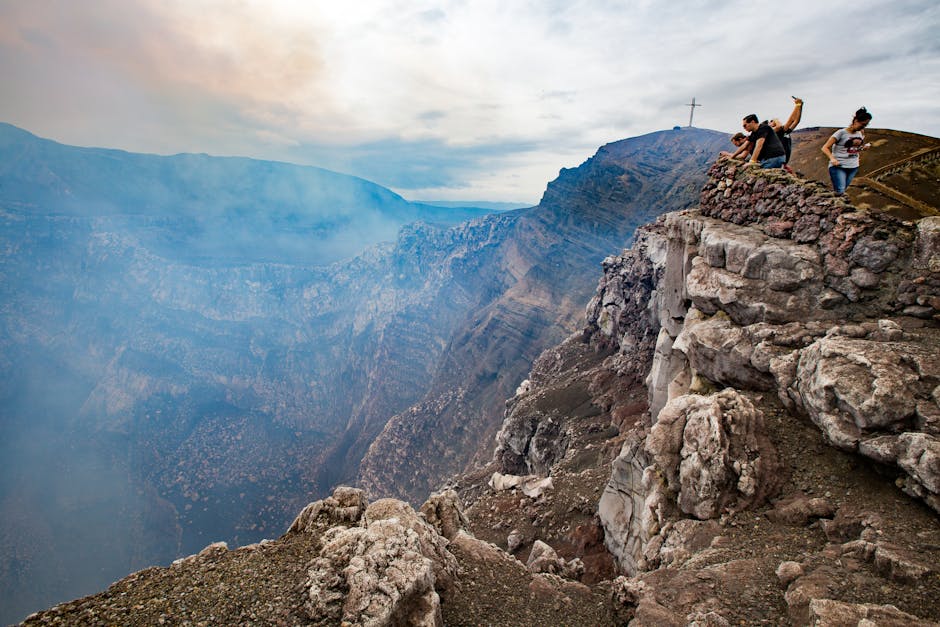
The daytime visits are different but equally compelling — you can hike the trails around the crater complex, visit the bat caves (home to a colony that has adapted to the volcanic gases), and see the multiple craters in full sunlight. The Cruz de Bobadilla — the stone cross planted by the Spanish in the sixteenth century — still stands at the crater’s edge, now a historical monument rather than a spiritual defense.
Mercado de Artesanias de Masaya — housed in the Mercado Viejo, a gorgeous nineteenth-century market building with thick stone walls and arched ceilings — is the finest craft market in Nicaragua and possibly in Central America. The hammocks here are legendary: hand-woven cotton in every color, the quality evident in the tightness of the weave and the strength of the cords. The leather goods, the pottery, the wooden furniture, the embroidered textiles — everything is made locally, by artisans whose families have been working these trades for generations. Bargaining is expected but gentle. I bought a hammock that I still sleep in three years later.
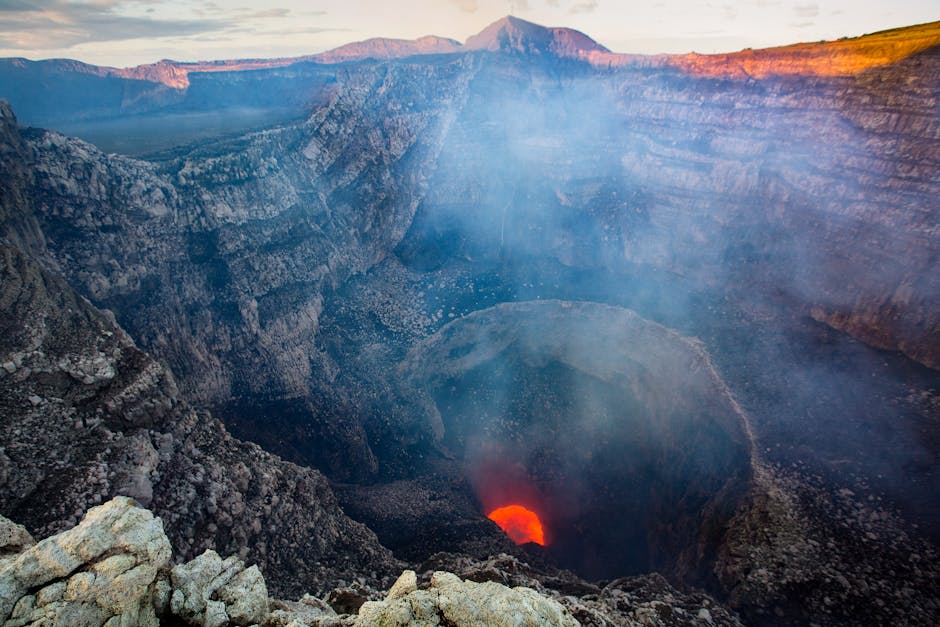
The town of Masaya itself is worth exploring beyond the market. The Malecon, overlooking the Laguna de Masaya (a crater lake below the volcano), has a promenade with views that are genuinely dramatic — the lagoon below, the volcano smoking above, and the city tucked between the two. The Barrio de Monimbo, an indigenous Chorotega neighbourhood, played a central role in the revolution and retains a distinct cultural identity. The food vendors here sell the best vigoron in the country — some would say better than Granada’s, which is fighting words.
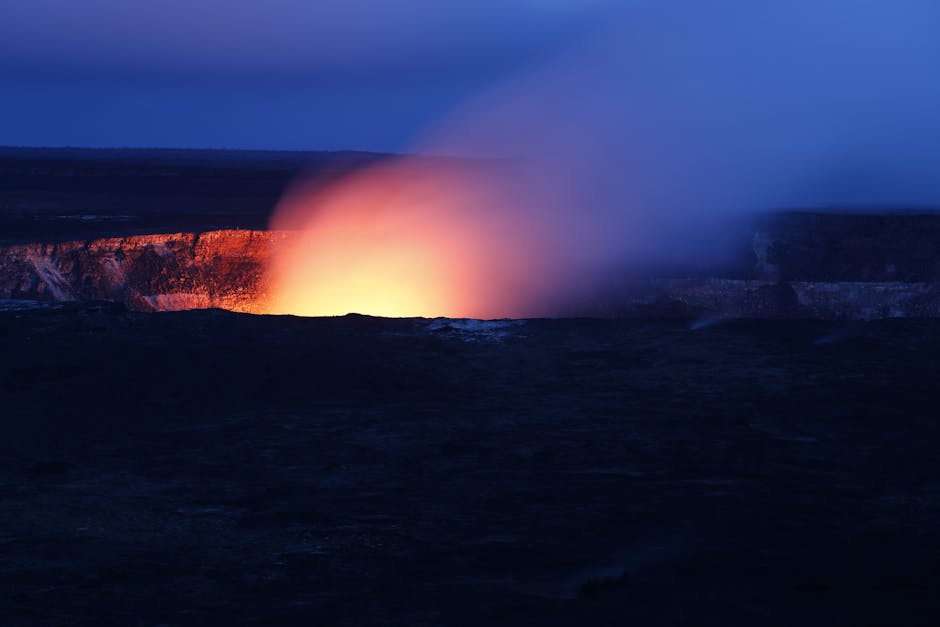
When to go: The night volcano visits operate Thursday to Sunday, typically from 5:30 PM. Dry season (November to April) offers clearer views. The market operates daily but is liveliest on Thursday and Sunday. The volcano can close without notice due to increased activity — check before you go.