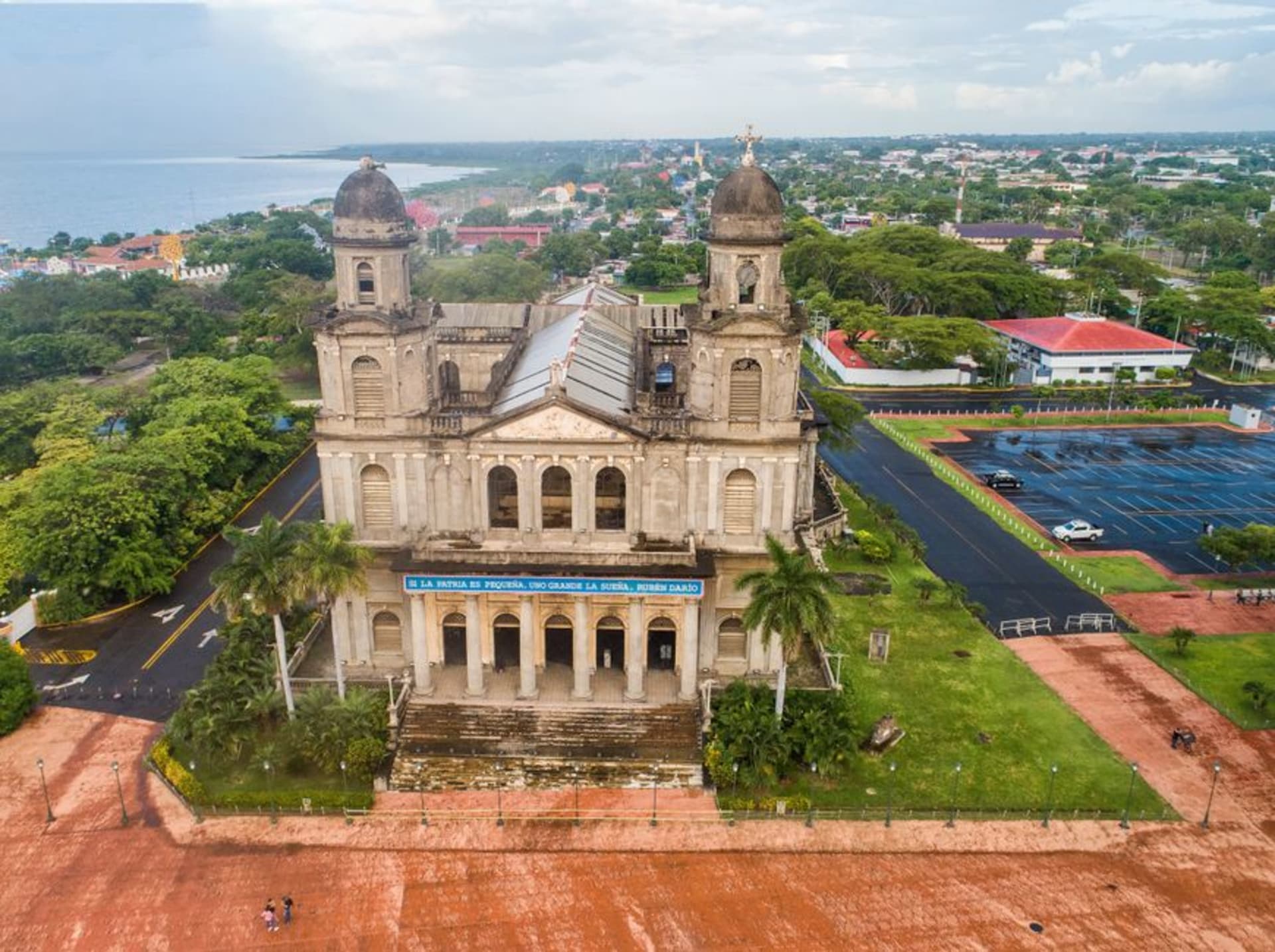
The buried ruins of Nicaragua's first colonial capital, abandoned to earthquakes and ash in 1610 and rediscovered three centuries later at the foot of a volcano.
I almost skipped León Viejo. It is an hour past modern León on roads that get worse the closer you get, and I had already seen enough colonial churches in this country to think I knew what “ruins” meant. I did not. What is left here is not a church with a crumbling facade — it is a city cut off mid-sentence, foundations of a cathedral and a governor’s house laid out in low stone walls under open sky, with Volcán Momotombo standing directly behind it, close enough that you understand immediately why nobody lives here anymore.
A capital nobody chose to leave
León Viejo was founded in 1524, Nicaragua’s original seat of Spanish colonial power, built right at the base of Momotombo because whoever chose the site apparently did not think a live volcano was a design flaw. For nearly a century the city functioned — a cathedral, a fort, houses, the whole colonial apparatus — until the ground itself objected. A series of earthquakes and Momotombo’s own eruptions battered the city through the early 1600s, and in 1610 the Spanish gave up and relocated the capital to where modern León stands today. The old city was abandoned, and Momotombo’s ash did the rest, burying León Viejo so completely that for over three hundred years it was little more than a rumor with a general location. Archaeologists only rediscovered and began excavating the site in the 1960s, which means most of what you are looking at has been back in daylight for less time than my own parents have been alive.
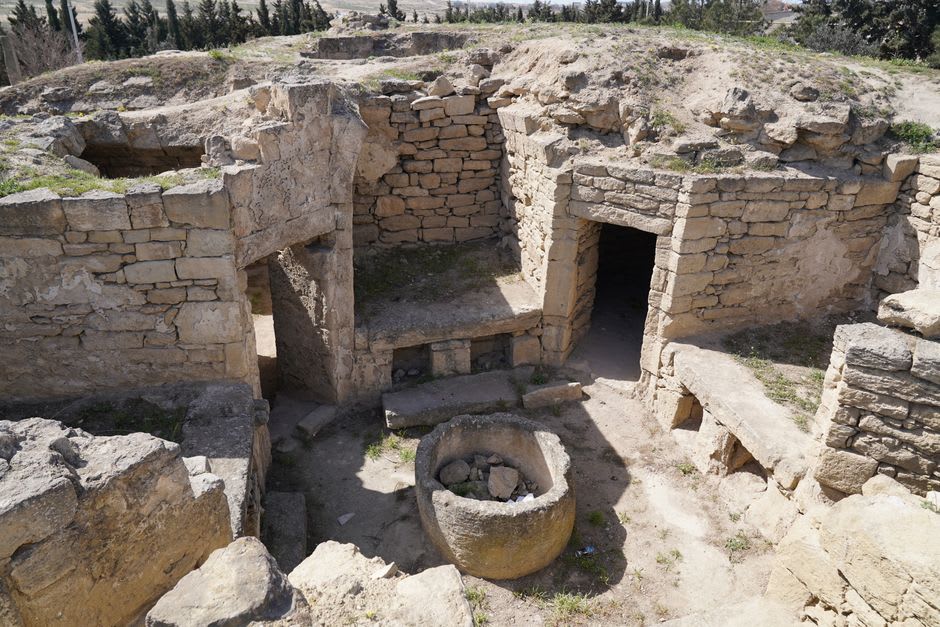
Walking the site with a local guide, a wiry man who has worked here for over twenty years, I kept expecting him to gesture at reconstructions. He didn’t need to. He pointed at a low stone rectangle and said, flatly, “cathedral,” and then walked me to the spot believed to hold the remains of Pedrarias Dávila — the conquistador who founded the city and by most accounts was a genuinely brutal figure — buried more or less at the foot of the altar he built for himself. There is something quietly satisfying about a man that ruthless ending up under three centuries of volcanic ash, in a city that no longer exists, visited mostly by strangers who have to ask a guide who he even was.
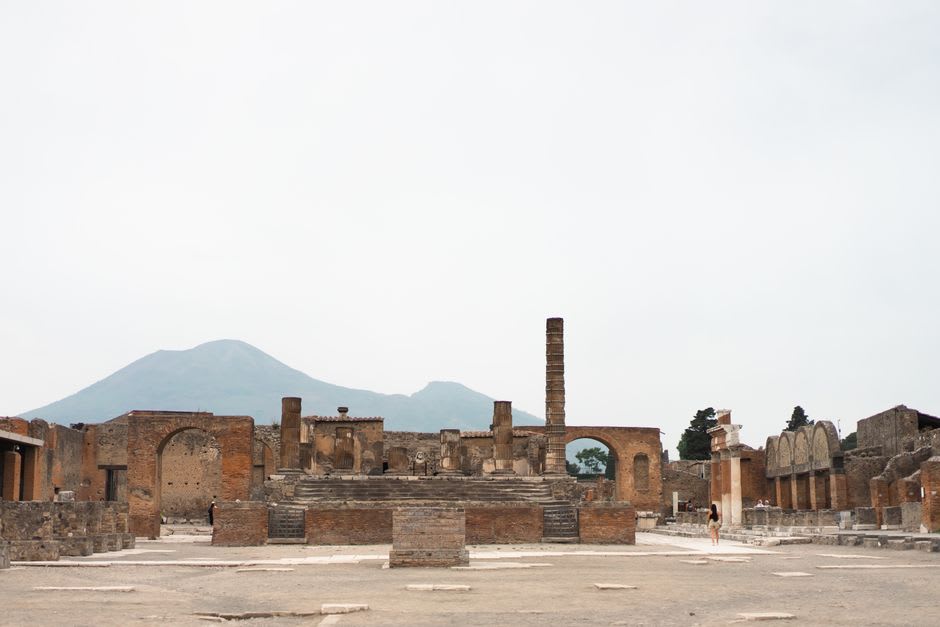
Standing where the ground gave the order
What stayed with me was less the archaeology than the geography. UNESCO listed León Viejo as a World Heritage Site in 2000, and the citation leans hard on exactly what I felt standing there: this is one of the only places in the Americas where you can see, in the same sightline, the ruins of an abandoned Spanish colonial capital and the specific volcano that ended it. Most ruined cities fall to war, or neglect, or time. This one fell because the land underneath it made a decision. Momotombo still smokes occasionally. Nobody has tried to rebuild.
When to go: Visit in the dry season, November to April, when the unpaved approach road is passable and the heat is at least somewhat manageable in the morning. Go early — there is almost no shade across the site, and by midday the black volcanic soil radiates heat back at you like a stovetop.