Granada Nicaragua
"Granada doesn't hustle — it sits in the heat and lets the lake breeze do all the work."
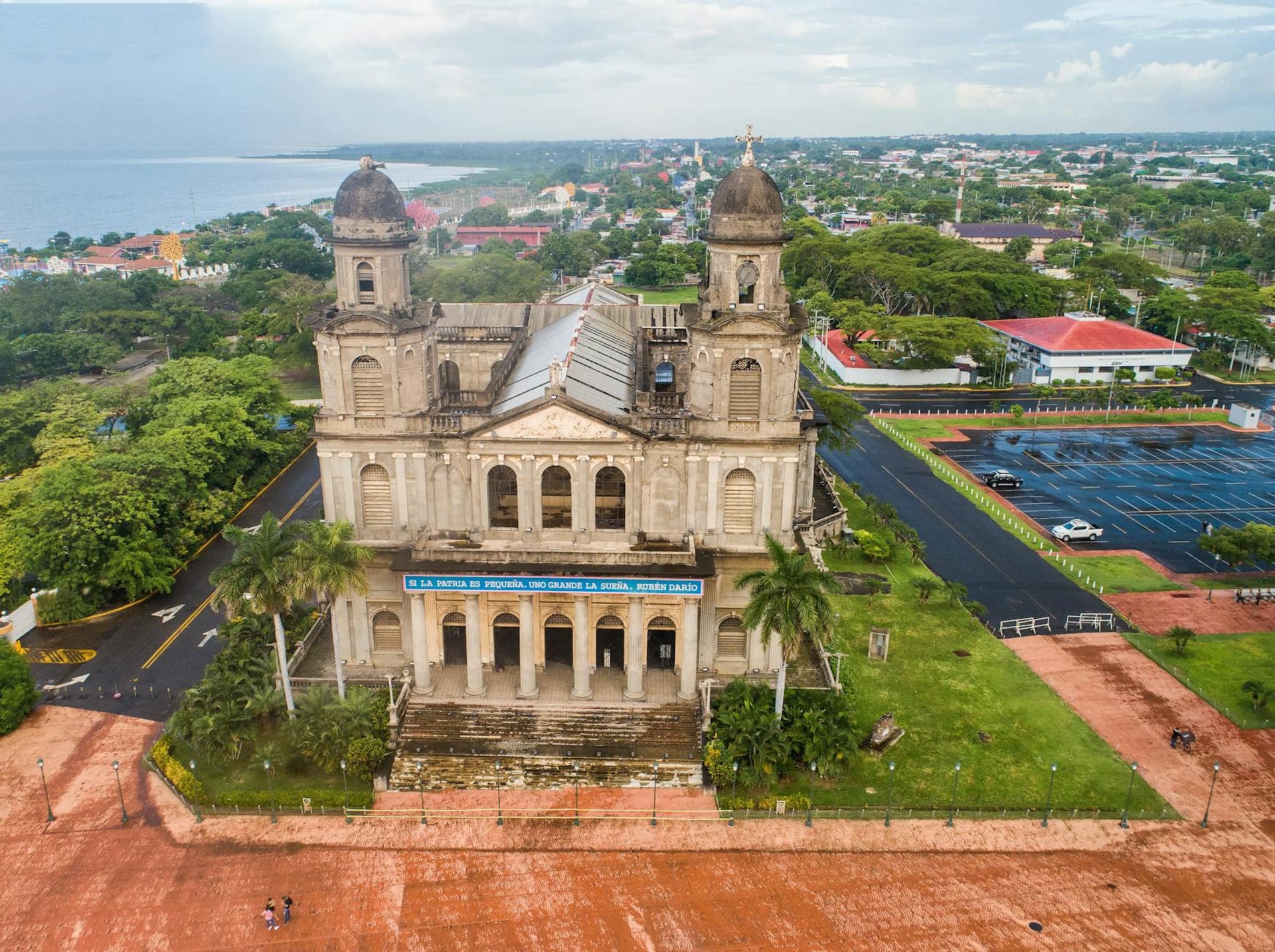
Central America's oldest colonial city sits languid on Lake Nicaragua, its cathedral a landmark of faded grandeur.
There is a particular kind of stillness that only very old cities carry — not emptiness, but density, as if centuries of accumulated heat have pressed everything close to the ground. Granada has that. The moment the bus from Managua deposits you on Calle La Calzada, the air changes quality. Thicker. Slower. Scented with woodsmoke and overripe mango and something underneath both, something mineral, the lake breathing a kilometre away.
The Cathedral and the Hours It Owns
The Catedral de Granada doesn’t dominate the central park so much as anchor it. I walked around it three times the first morning, which felt ridiculous and also necessary. The yellow facade goes through a dozen shades between dawn and noon — ochre, then pale gold, then something close to white in the direct midday sun. Lia sketched it from a bench on Parque Central while I drank black coffee from a thermos a woman sold from a wheeled cart. She charged fifteen córdobas. I gave her fifty and felt like I’d still underpaid.
The cathedral’s interior surprised me. I expected elaborate colonial grandeur. What I found was austere, almost Romanesque in its bare nave, a few devotional candles guttering near a side chapel. A man was mopping the stone floor with a mop that looked older than the republic. The sound of it — the rhythmic scrape — echoed up into the vaulted ceiling and disappeared.
Eating Along La Calzada
The traveller corridor of Calle La Calzada gets a bad reputation from people who prefer their colonial cities without menus in English. They are not wrong, exactly, but they miss the good spots by leaving too fast. Two blocks off La Calzada toward the lake, a family runs a comedor out of their front room — no sign, four plastic tables, a hand-lettered chalk menu. I ate vigorón there: yuca boiled soft beneath a tangle of curtido and chicharrón, served on a banana leaf. The sourness of the cabbage against the fat of the pork is a combination that should be exported everywhere and somehow hasn’t been.
The genuine surprise came late, at dusk. Walking toward the Malecón, I stumbled into a basketball court where a full game was running, lit by a single floodlight, the lake black and vast behind the chain-link fence. The players were moving fast, the crowd was loud, and beyond them the outline of Volcán Mombacho sat in silhouette against the last orange strip of sky. Nothing about it was on any itinerary. It was just Tuesday in Granada.
When to go: The dry season runs November through April — cooler nights, no afternoon downpours, and the lake surface calm enough to see the Islets by boat without getting drenched. Avoid Semana Santa unless you want the whole country sharing the same four streets with you.