Ninety Mile Beach
"The beach goes on long enough to make the horizon feel negotiable."
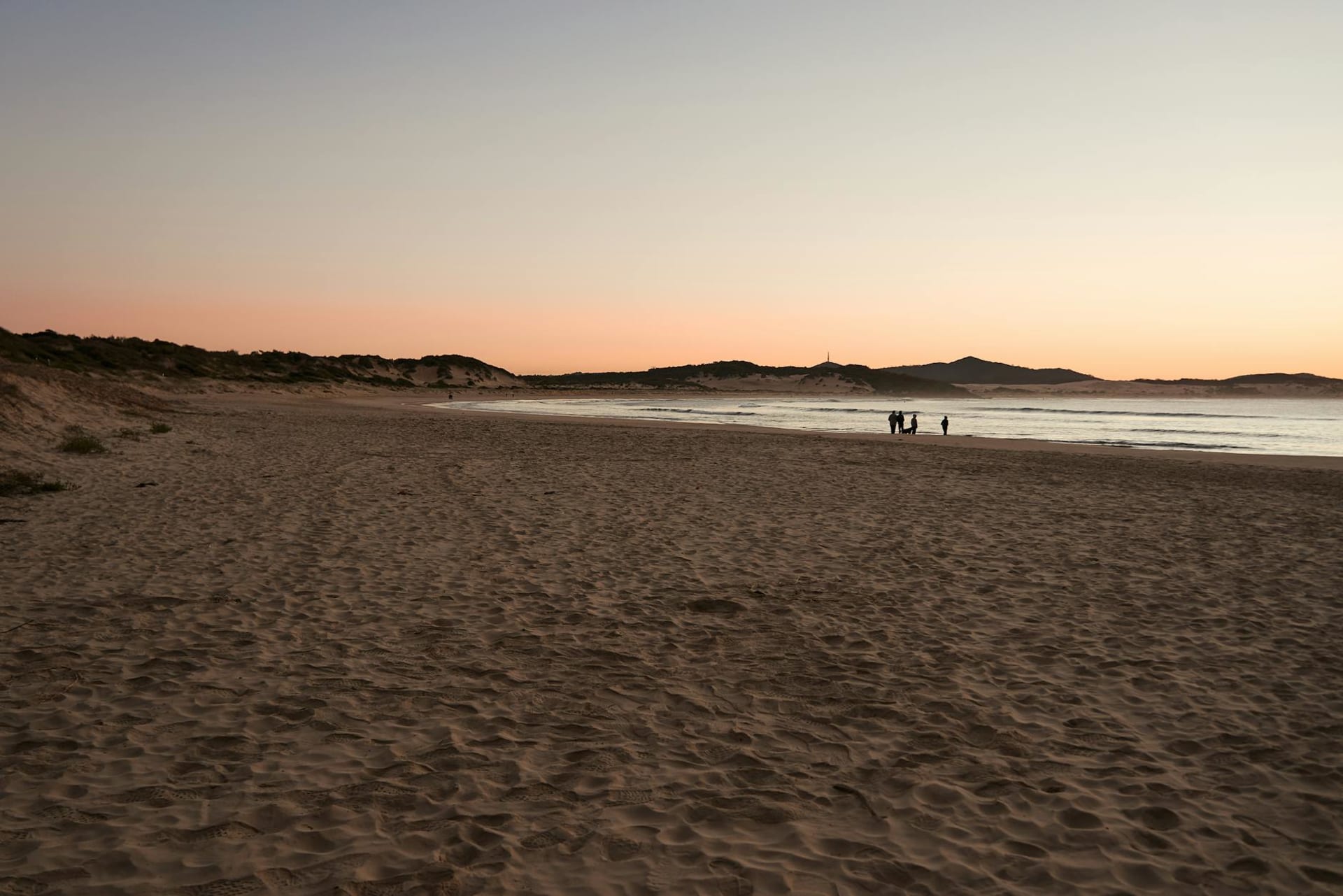
An arrow-straight beach stretching to the horizon at the tip of Northland, where sand dunes meet the Tasman.
I had been told the scale would be disorienting. I had not believed it. We drove the last stretch of State Highway 1 north past Kaitaia, the road narrowing through farmland and scrub, until we crested a low rise and the Tasman Sea appeared below — and with it, the beach. Not a beach. The beach. A single unbroken band of pale sand running southwest from the tip of Northland as far as the atmosphere would allow, ruler-straight, as though someone had taken a level to the entire coast.
The Weight of That Much Sand
Ninety Mile Beach is not, technically, ninety miles long. It is closer to sixty. The Maori name, Te Oneroa-a-Tohe — the long beach of Tohe — is more honest and considerably more poetic. By either measure it is too much to comprehend from any one point. We parked near the Te Paki Stream outlet and walked toward the surf. The sand underfoot was the colour of unbleached linen and fine enough to pack no memory of footprints. The Tasman came in at an angle, heavy and green, and broke in long parallel lines that hissed as they dragged back. There were no buildings visible in either direction. No headlands. Nothing to triangulate against. Just the arc of the earth closing the distance at both ends.
What I had not expected was the silence beneath the sound. The surf was constant but low-frequency, almost below hearing. Lia stood at the water’s edge for a long time without saying anything, which is the most reliable sign I know that a place has done something to her.
The Dunes and the Thing I Got Wrong
The Te Paki sand dunes sit at the northern end of the beach, enormous shifting hills of quartz sand that have blown inland from the Tasman over thousands of years. I had assumed they would feel like a novelty — a desert backdrop pasted onto a coastal scene. Instead they felt inevitable, like the beach had simply accumulated too much of itself and spilled upward. We climbed the steepest face on foot, each step sinking to the ankle. From the ridge the view opened in two directions: Tasman west, Pacific northeast, the thin neck of the Far North between them. A handful of people were sandboarding the main slope, carving tracks that the wind was already filling in.
The surprise was the light. Late afternoon on the dunes turned the sand amber and then almost copper, and the shadows cast by the ridgelines became deep enough to read. It was the same quality of light I have only otherwise seen in deserts — the kind that makes ordinary objects appear to have been thought about.
Driving and the Logic of the Place
The beach itself is a legal public road, and coaches from Kaitaia drive it at low tide to reach Cape Reinga at the northern tip. This is the practical logic of Ninety Mile Beach: it has always been infrastructure as much as landscape, a corridor the Maori used for centuries on the way to Te Rerenga Wairua, the leaping place of souls, where the Tasman and the Pacific meet in visible collision. The cape is worth the detour. Standing at the lighthouse watching two seas argue over the same patch of water, I thought about what it meant to be at the end of something — how different that feels from the middle.
When to go: November through April for warm temperatures and stable surf conditions. The dunes and beach are accessible year-round, but tidal schedules determine when the beach road is driveable — always check before attempting it by vehicle.