Coromandel Peninsula
"You bring a spade to the beach. The ocean fills it with hot water."
A North Island beach where thermal water pushes through the sand at low tide and you dig your own hot pool.
The man at the surf hire shop in Whitianga had said it plainly: turn up at the wrong tide and it’s just a beach. Lia and I had timed it almost right — we arrived at Hot Water Beach two hours before low tide, spades rented for five dollars each, and found a hundred people already there doing something I had never seen anyone do at the ocean. They were digging.
What the Earth Is Doing Here
Beneath a narrow strip of sand, two geothermal vents push water up through the seabed at temperatures that can reach 64 degrees Celsius. At low tide, when the Pacific retreats far enough, that water seeps to the surface. You feel it first in your feet — the sand warm in a way sand should not be, almost uncomfortable, then unmistakably alive. You dig down twenty, thirty centimetres, pile a berm on three sides, and let the cold seawater trickle in to temper what would otherwise cook you. The whole thing requires calibration. It requires patience. It feels, somehow, like an act of negotiation with the ground.
Lia was better at it than I was. She read the sand’s temperature before committing to a site, pressed her palm down, rejected two patches before choosing a spot near the bluff where the warmth was steady rather than scalding. Within twenty minutes we had a pool that held us both, hip-deep, while the surf crashed fifty metres away and steam rose in the late-afternoon light.
The Road That Brings You Here
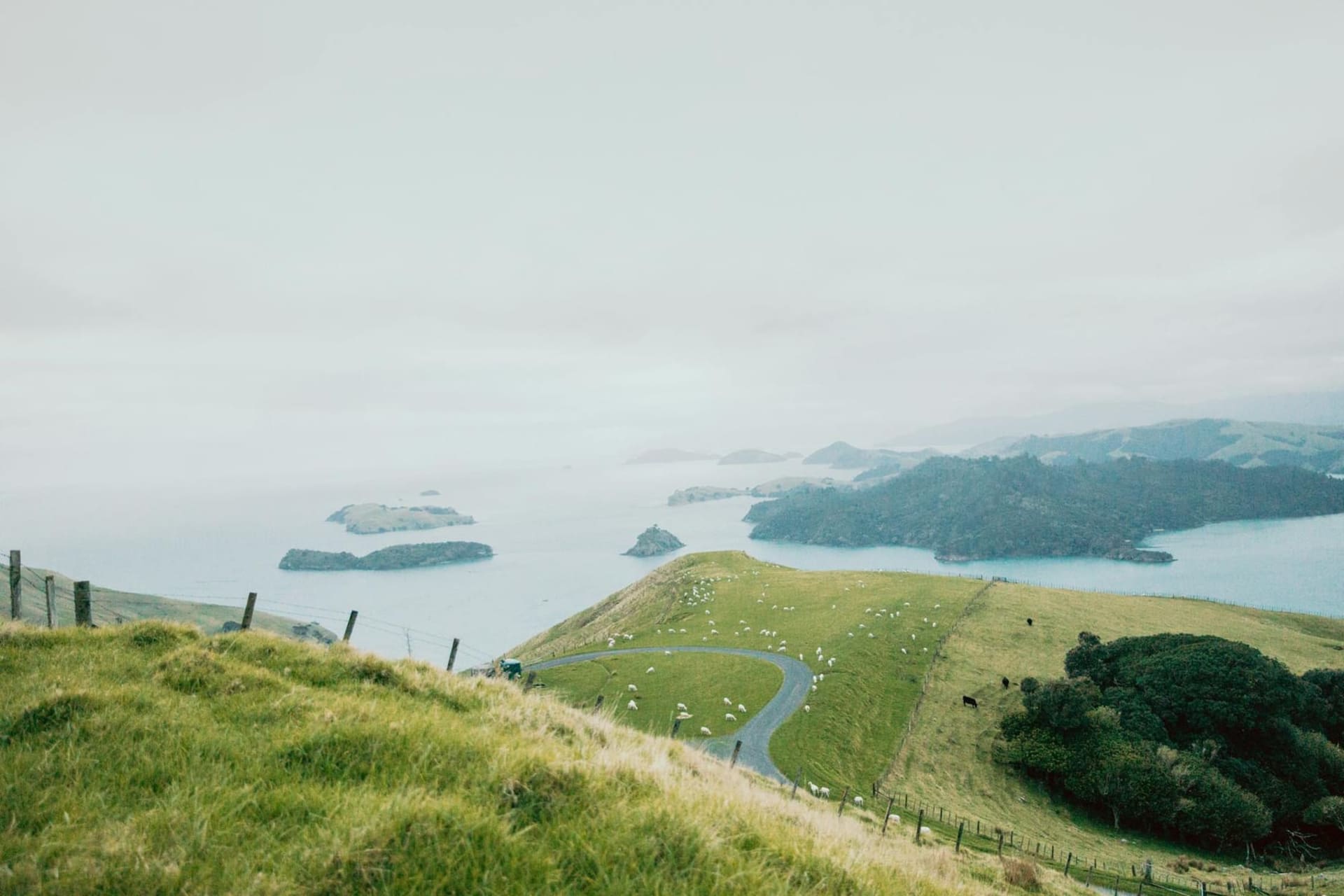
Hot Water Beach sits on the east coast of the Coromandel Peninsula, accessed via State Highway 25 south from Whitianga — a road that narrows past the Kuaotunu general store and eventually becomes the kind of single-lane switchback where you pull over for oncoming campervans and stare at nothing but kauri forest and water. The drive from Thames, at the peninsula’s southern entry, takes around two hours and includes the Coromandel township itself: one main street, a bakery that sells whitebait fritters before noon, and a hand-painted sign advertising alternative pottery classes that I photographed because I was sure no one would believe me.
Cathedral Cove is eight kilometres north of Hot Water Beach, a sea arch accessible by a forty-five-minute walking track through coastal forest. I had expected a postcard. I got one, but the walk — pohutukawa trees hanging over the cliff edge, the smell of salt and damp earth, the track dropping steeply to a cove of white sand — earns it.
The Thing Nobody Told Me
What I hadn’t anticipated was how social the whole enterprise is. Hot Water Beach in those two hours before low tide becomes a small, temporary village. The German couple to our left shared a berm wall with us. A Kiwi family to the right were on their fourth visit that month — the daughter, maybe eight years old, was already the most skilled excavator on the beach. A man in his sixties arrived alone with a proper garden spade, positioned himself with the precision of someone who had done this forty times, and didn’t speak to anyone. I found all of it — the steam, the digging, the absurd normalcy of it — genuinely moving in a way I couldn’t explain to Lia at the time and still can’t quite explain now.
When to go: The two hours either side of low tide are essential — check the tide tables before driving in. November to March brings the warmest air temperatures and the most light, but the thermal activity is year-round.