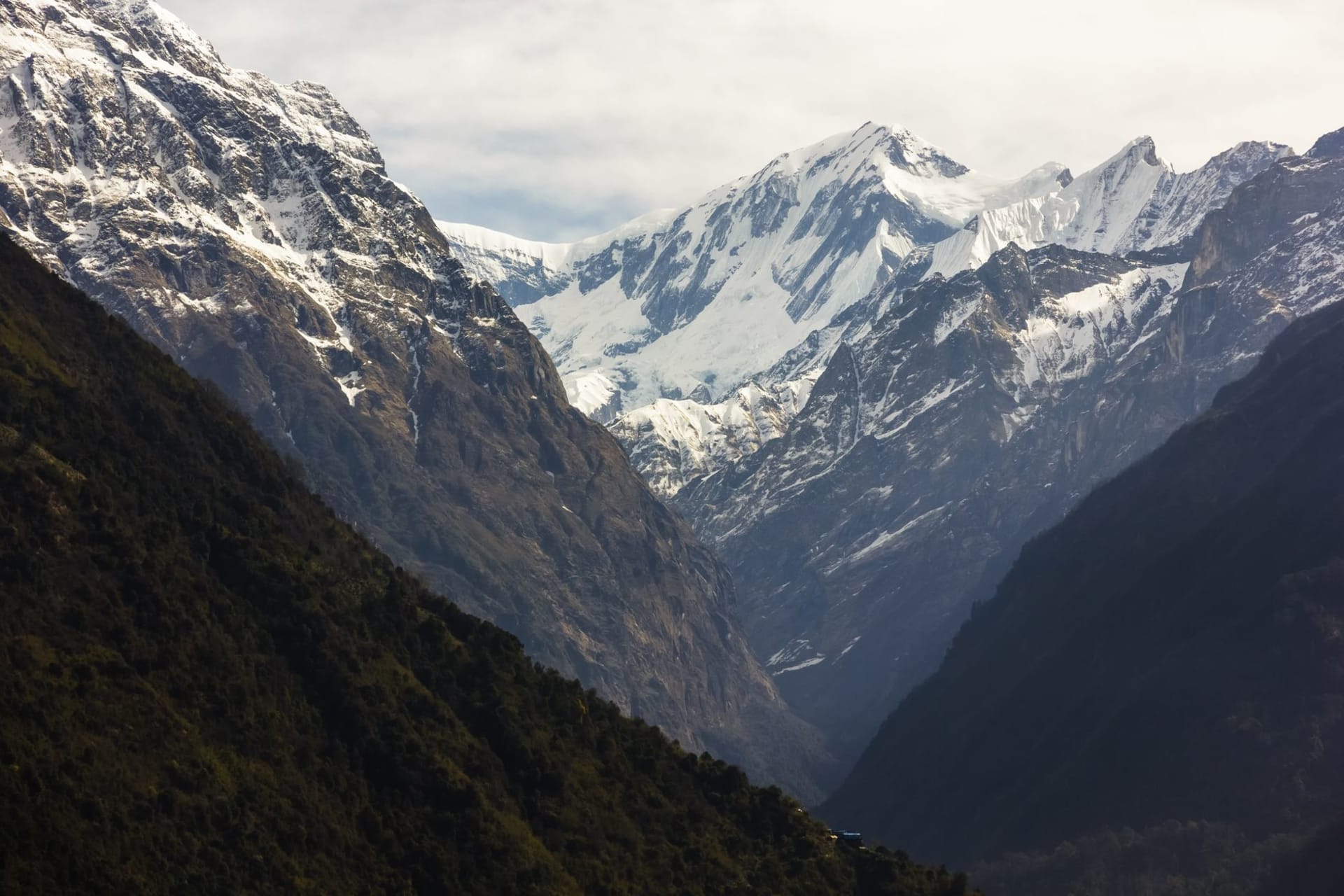
Langtang Valley
"Every trekking region has a reputation. Langtang's is that it's second-best. I'd argue it's just the most honest."
Everyone who’s spent time in Nepal has an opinion about which trek is best. Everest Base Camp is the brand. Annapurna Circuit is the classic. Langtang, people say, is the good one that nobody does. I went in November with a head cold and low expectations and came back with the conviction that the conventional hierarchy is mostly wrong.
Getting There
The trailhead at Syabrubesi is four to six hours from Kathmandu by bus — a route that winds through the Trishuli River gorge and deposits you in a small trading town on the Tibetan border corridor. The ascent into the valley begins immediately and commits you to the logic of altitude: you walk up, you sleep where you land, you repeat. No cable cars, no shortcuts. The trail passes through rhododendron forest that in November is stripped back to structure — branches like black ink against fog — and the Langtang River below roars through the gorge with a cold authority.
The Valley After the Earthquake
The 2015 earthquake killed over 300 people in Langtang village when a seismic landslide buried most of it in minutes. The rebuilt village that stands now is new construction on the same ground. It’s worth saying plainly: the absence is still legible if you know where to look. There’s a memorial stupa just above the village. The people who live here chose to stay and rebuild, which is its own kind of fact about this place.
The rebuilt teahouses are clean and the food is good — yak stew, tsampa porridge at altitude, ginger tea that starts every morning at every elevation. The hospitality feels earned rather than transactional, which I’ve come to think is Langtang’s defining quality.
Kyanjin Gompa and the Upper Valley
Most trekkers push to Kyanjin Gompa at 3,870 meters, where a small monastery and a cheese factory share the plateau beneath the Langtang Lirung glacier. The cheese is made from yak milk and tastes like something between gruyère and fresh mountain air, which is an imprecise description but the best I have. I bought 300 grams and ate most of it that afternoon sitting on a rock watching clouds dissolve over the glacier face.
From Kyanjin, day hikes up to Tserko Ri (4,984 meters) or the moraine above give you the kind of 360-degree Himalayan panorama that makes every overused superlative technically accurate. Langtang Lirung at 7,227 meters is almost too close — a wall of ice and rock that fills the northern horizon like a geological argument.
Why It Matters
Langtang receives a fraction of the trekking traffic that the Everest and Annapurna corridors do. What that means practically: teahouse owners remember you, trails aren’t excavated by foot traffic, and the moments of genuine solitude — above 4,000 meters with only the sound of wind off the glacier — are available without hiking four days from the nearest road. For a trekking region this accessible to Kathmandu, that’s remarkable.
I came down from Kyanjin with cleaner lungs, a finished notebook, and the specific calm that comes from a week spent walking the same direction every day. Langtang is that kind of place.
When to go: October and November are peak season — clear skies, dry trails, cold nights above 3,500 meters. March and April offer blooming rhododendrons and fewer people. Avoid December through February unless you’re comfortable with serious cold and possible snow closure above 3,000 meters. The monsoon (June–September) makes trails muddy and views rare.