Mrauk U
"Mrauk U is what Bagan would be if history had been less kind and the tour buses had never arrived."
A forgotten medieval kingdom with more temples than tourists, buried in mist on the Rakhine plateau.
There is a particular quality of silence that belongs only to places the world has largely forgotten. I found it in Mrauk U on the second morning, standing barefoot on the uppermost terrace of Kothaung Temple while the Rakhine plateau was still submerged in mist below me, the stone still cold under my feet, not another soul in any direction.
Getting to the Edge of the Map
Reaching Mrauk U requires a commitment the casual traveler rarely makes. From Sittwe, the Kaladan River ferry takes five to six hours depending on the season, threading past fishing villages where children wave from bamboo platforms built directly over the water. Lia spent most of the journey at the bow, watching the riverbanks thicken with mangrove. By the time the pale silhouettes of temple towers appeared above the treeline, we had already begun to understand we were somewhere genuinely apart.
The town itself is low and unhurried. The main market near the central clock tower sells dried fish, thanaka bark, and mangoes the color of sunset. In the early morning the smell of woodsmoke from cooking fires mixes with the damp green exhale of the surrounding hills. Nothing is signposted in English. This is not a performance of authenticity — it is simply a place that has not reorganized itself around the expectation of foreign eyes.
The Temples Themselves
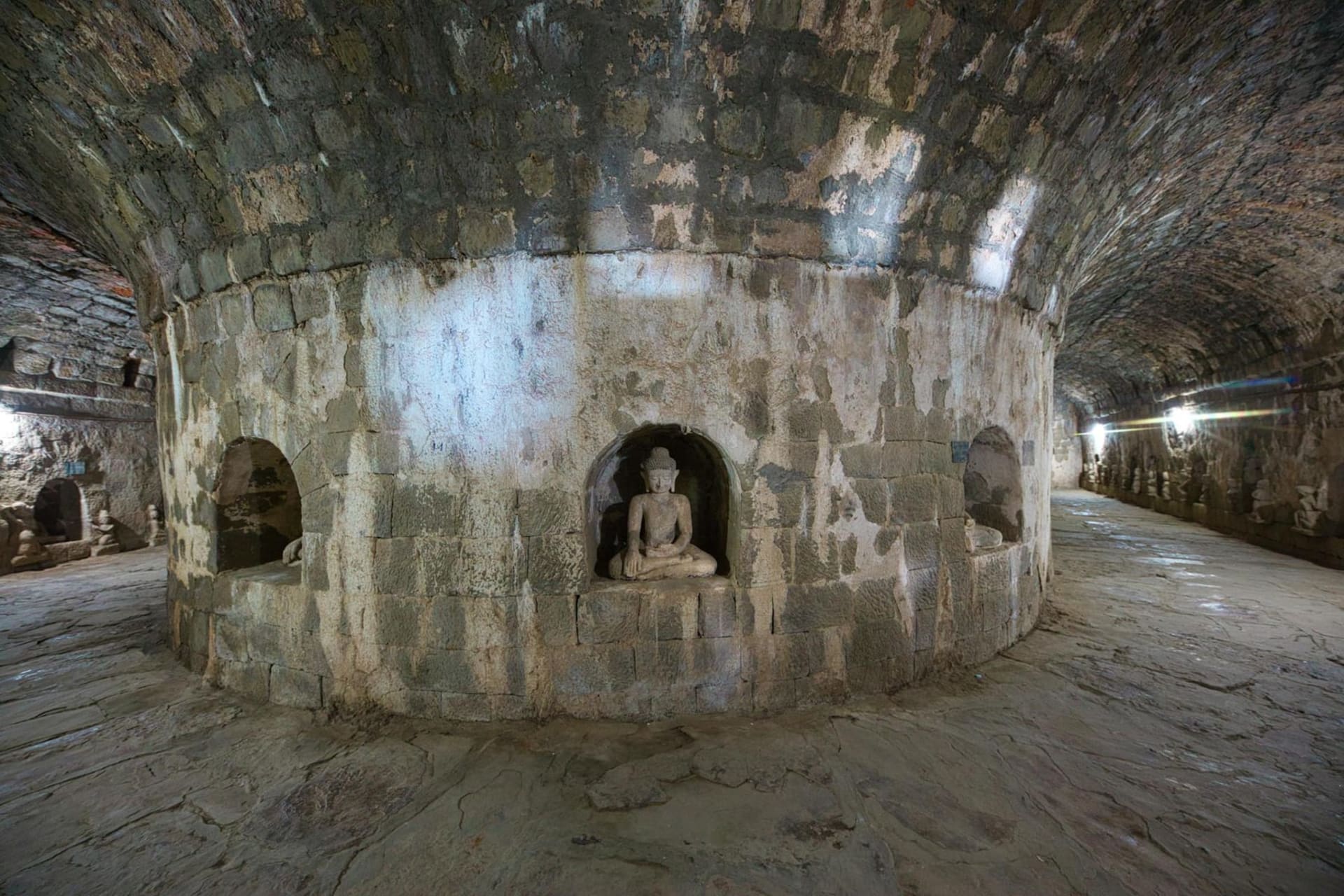
Mrauk U was the capital of a powerful Arakan kingdom from the 15th to 18th centuries, and at its peak it rivaled Pagan in ambition if not in scale. What remains are temples of a very different character from Bagan’s brick towers — lower, more massive, built with stone blocks so precisely fitted they feel geological rather than constructed. The interior corridors of Shitthaung Temple are lined with thousands of carved figures pressed into the sandstone: nats, mythological beasts, soldiers in procession. Walking through them with a small torch, the shadows playing across ten thousand years of iconography, I felt less like a tourist than a trespasser.
The unexpected discovery came at Ratanabon Temple, which I had nearly skipped. Through a low doorway in the outer wall, a monk no older than sixteen was practicing English vocabulary from a notebook, sitting cross-legged beside a Buddha image twice his height. He read me a sentence about cloud formations. I have no idea why that particular moment lodged itself so completely.
Light and Logistics
The best hours are the first and last of the day, when mist still clings to the lower ground and the stone turns amber. Rent a bicycle from one of the guesthouses along the market road — the temples are spread across several square kilometers and the paths between them pass through working rice paddies and small villages where life continues indifferently around the ruins.
When to go: The dry season between November and April offers the clearest skies and manageable heat; February and March bring the golden light that makes the sandstone photograph like something from a fever dream.