
Ibo Island
"The silversmith showed me a bracelet he'd made without electricity, working from an Arabic pattern eight hundred years old. I don't know what more to tell you."
A coral-rag island in the Quirimbas where three Portuguese forts crumble beside a village of silversmiths who learned their craft from Arab traders.

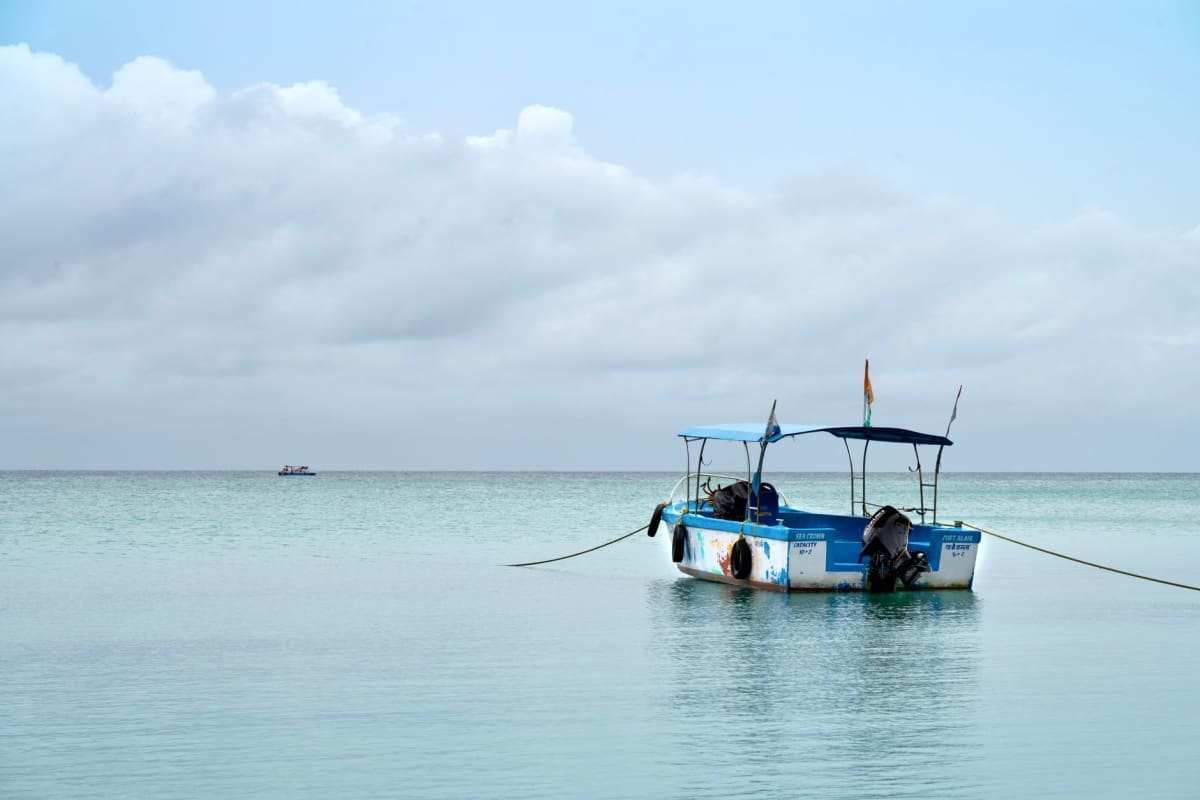
The dhow from Pemba to Ibo takes four hours in the dry season, the sail up for most of it, the boat angled across a light northeast wind, and for the last hour you can see the fort walls from the water — grey stone, unmistakable, rising above the mangroves with the specific authority of something built to last. We arrived at high tide, which matters here, and the dhow nosed into a channel between coral-rag walls and the skipper tied up to an iron ring that has been set in that same wall for longer than anyone can say with certainty. I climbed out onto a stone quay and stood very still for a moment, listening. The quiet on Ibo is of a specific kind — not empty, but settled, as though the island has been producing it deliberately for eight hundred years.
Fort São João is the largest of the three Portuguese fortifications, and the most intact, though intact is relative. The walls are thick and the ramparts walkable, and the interior holds the kind of ruin that has become its own ecology: bats roosting in vaulted ceilings, fig tree roots slowly disassembling the masonry, a courtyard where the grass grows in the cracks of the original paving. I climbed to the ramparts at sunset and watched the light change over the archipelago — the channels and the mangrove creeks going from green to gold to dark — and a colony of fruit bats lifted from the trees inside the fort walls and began to move south, hundreds of them, the sky briefly busy with their angular shapes.
The silversmiths are the thing I was not prepared for. The tradition came from Arab traders who passed through these islands for centuries, and it is still practiced in small workshops — open-sided rooms, really, with charcoal braziers and hand tools and the smell of hot metal — by men who learned from their fathers who learned from their fathers. The designs are geometric and intricate: bracelets and earrings that look like script, pendants with filigree work so fine it seems improbable that it was made by human hands without magnification. The silversmith I visited worked for most of an hour while I watched, and what he produced in that time was a cuff bracelet that I bought for a price that made me feel guilty and that I still wear on particular occasions. He was pleased, I think, that I watched the whole process, that I understood it had taken time.

The tides organize Ibo in ways that become obvious after a day. At low tide the coral pathways around the island emerge — hard ridges of raised reef that connect areas you’d need a boat for at high water — and the fishing community fans out across the exposed mud and rock to collect what the sea has left. Women with baskets work the shallow pools near the mangroves. Children follow routes they know as well as I know the streets of my neighborhood. At high tide everything contracts back to the island’s stone lanes and the shade of the mango trees, and the pace, already slow, slows further. I had not planned to stay two nights on Ibo. I stayed four.
When to go: May through October. Dry season means predictable dhow crossings from Pemba and clear weather for exploring the tidal pathways. Coming at low tide on at least one day is worth timing deliberately — the island’s full geography is only visible then. Avoid the northeast monsoon season (November through April) when seas make the crossing difficult.
Keep exploring
More from Mozambique
 mozambique
Ilha de Moçambique
A crumbling, dazzling stone island that gave the whole country its name, where Swahili, Portuguese, and Indian Ocean histories share the same narrow streets.
Explore mozambique
Inhambane
Mozambique's oldest colonial town sits in a bay of mango trees and mangroves, conducting history at its own unhurried pace.
Explore mozambique
Maputo
A capital of crumbling tile work and jacaranda avenues where the night doesn't end until you've had the prawns.
Explore mozambique
Niassa Reserve
Africa's largest unfenced reserve and one of its least-visited, where the wilderness is so vast and remote it feels like it's testing whether you're serious.
Explore mozambique
Pemba
A northern port city on one of Africa's finest natural bays, where Arab, Portuguese, and Makua cultures have been negotiating space for centuries.
Explore mozambique
Quirimbas Archipelago
Thirty coral islands off the northern coast where Swahili culture and untouched Indian Ocean reefs meet with almost nobody watching.
Explore