You come to Ouarzazate over the mountains. The Tizi n’Tichka pass lifts you out of Marrakech’s orbit, climbing through Berber hamlets and argan groves until the landscape tilts and everything changes. On the southern side, the green vanishes. The earth turns the color of cinnamon and rust, the sky deepens to a blue so saturated it looks artificial, and the air carries a dryness that you feel in your lips within minutes. This is the threshold of the Sahara, and Ouarzazate — pronounced roughly “war-za-zat” — is its gatekeeper, a garrison town turned film set turned travelers’ crossroads, sitting at the confluence of the Draa and Dades valleys like a period at the end of a sentence the mountains have been writing.
The town itself is functional rather than beautiful — a grid of wide streets, a handful of hotels, a modest souk. But Ouarzazate has never been about itself. It has always been about what surrounds it, and what surrounds it is extraordinary. The Atlas Studios, founded in 1983, sprawl across the outskirts like a fever dream: plaster Egyptian temples stand beside Tibetan monasteries, a full-scale Roman arena bakes in the sun, and the crumbling walls of a Jerusalem set provide shade for stray cats. Gladiator, Kingdom of Heaven, Game of Thrones, Lawrence of Arabia, The Mummy — the list of productions filmed here reads like a greatest-hits compilation of epic cinema. The light is the reason. Southern Morocco offers over three hundred days of sunshine a year, and the desert landscapes can double for half the ancient world with minimal set dressing.
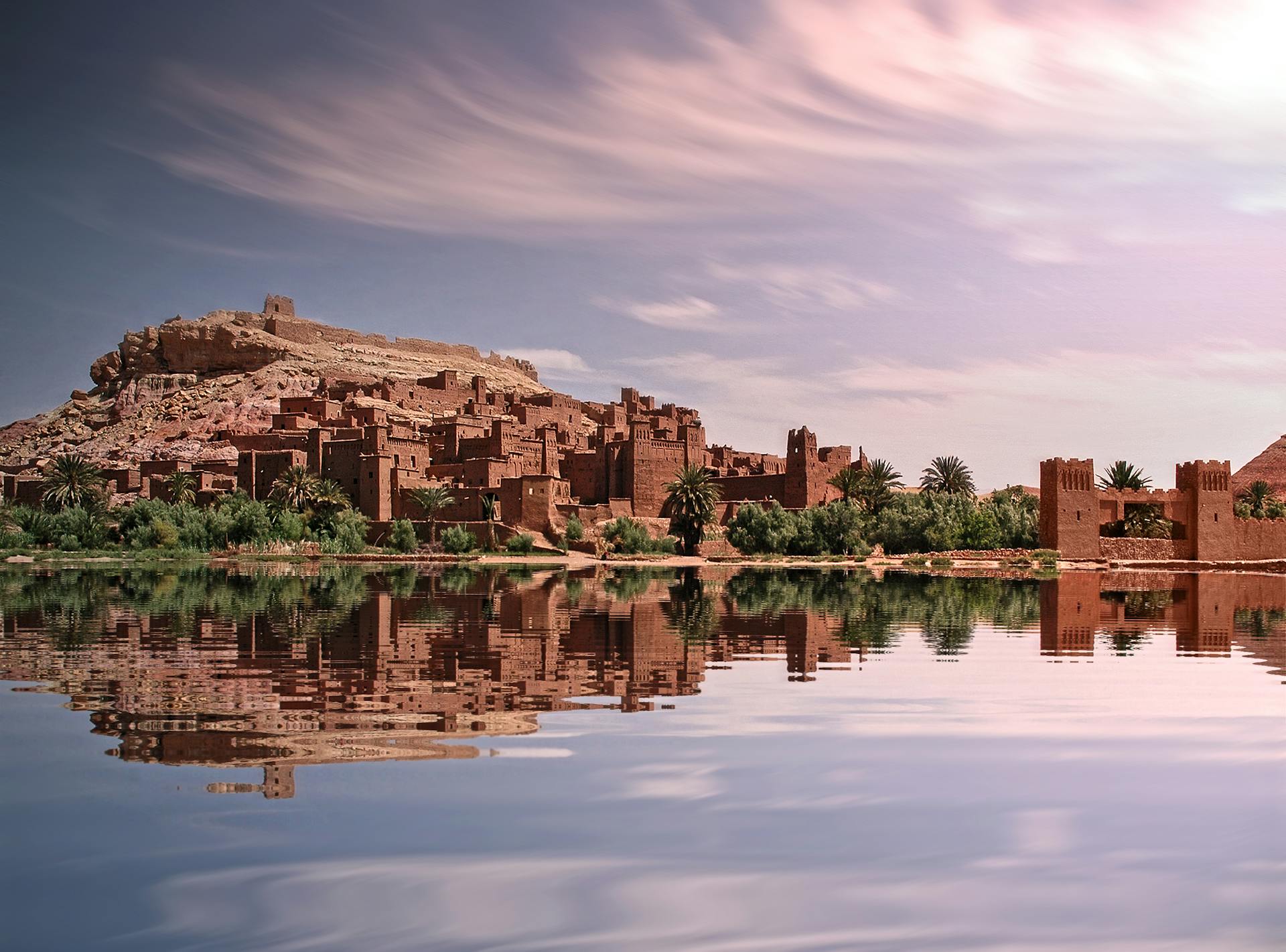
But the real star, the reason Ouarzazate deserves a place in any itinerary, stands six kilometers away along the banks of the Ounila River. Ait Benhaddou is a ksar — a fortified village — of earthen buildings stacked up a hillside in a composition so perfect it seems designed rather than grown. UNESCO listed it in 1987, and film directors discovered it long before that, but neither designation captures what it feels like to stand before it in the late afternoon when the mud walls catch the sinking sun and glow in shades of gold, amber, and deep rose. The village has been inhabited for centuries, though only a handful of families remain within the walls now. You cross the river on foot — stepping stones in dry season, a shallow wade in spring — and climb through narrow passages between granaries and homes, the packed earth cool beneath your hands where you steady yourself on the steeper sections, until you reach the summit and a view that unfolds across the valley in every direction.
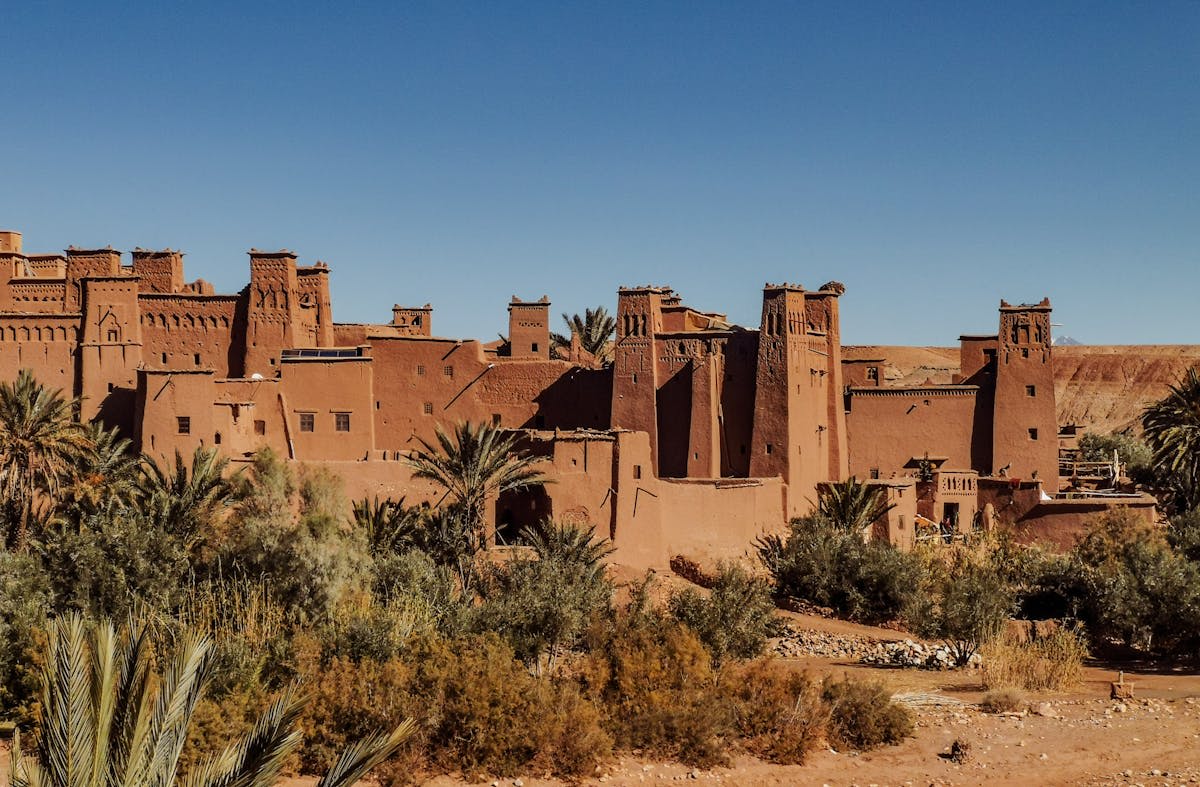
East of Ouarzazate, the Road of a Thousand Kasbahs unfolds along the Dades Valley, and the name barely exaggerates. Every few kilometers another fortified village appears — some restored and inhabited, others crumbling back into the earth from which they were built, their towers and crenellations dissolving in slow motion over decades. The Skoura Oasis is an unexpected paradise along this route: a vast palm grove hiding the elegant Kasbah Amridil, one of the best-preserved in southern Morocco, its four towers rising above date palms and almond trees. The oasis feels secret, enclosed, a green world that exists in defiance of the arid plains surrounding it.
Further east, the valleys narrow and the geology grows dramatic. The Dades Gorge carves through rock formations that twist into surreal shapes — one cluster, known locally as “monkey fingers,” rises in columns so strange they look sculpted by a playful giant. The road through the gorge climbs along a ledge with hairpin bends that test both nerve and steering. And then there is the Todra Gorge, where the canyon walls close to a gap barely twenty meters wide while rising three hundred meters overhead. At midday, the base of the gorge is cool and shadowed, the river running clear over smooth stones, and the sheer scale of the rock face — striated in orange, red, and gray — reduces you to a speck. Climbers come from across Europe to scale these walls, but even standing at the bottom, craning your neck, is enough to feel the vertigo of deep time.
This is a landscape built by patience — by rivers carving stone over millions of years, by wind polishing dunes grain by grain, by Berber hands shaping mud and straw into kasbahs that endure for centuries before returning to dust. Ouarzazate is the door to all of it, and the door, it turns out, opens onto one of the most visually astonishing corridors on earth.
When to go: March to May for comfortable temperatures, blooming almond trees, and rivers still running from snowmelt. October to November offers warm days and cool nights without the fierce summer heat. Avoid June through August unless you relish temperatures above 40 degrees Celsius in the desert valleys.