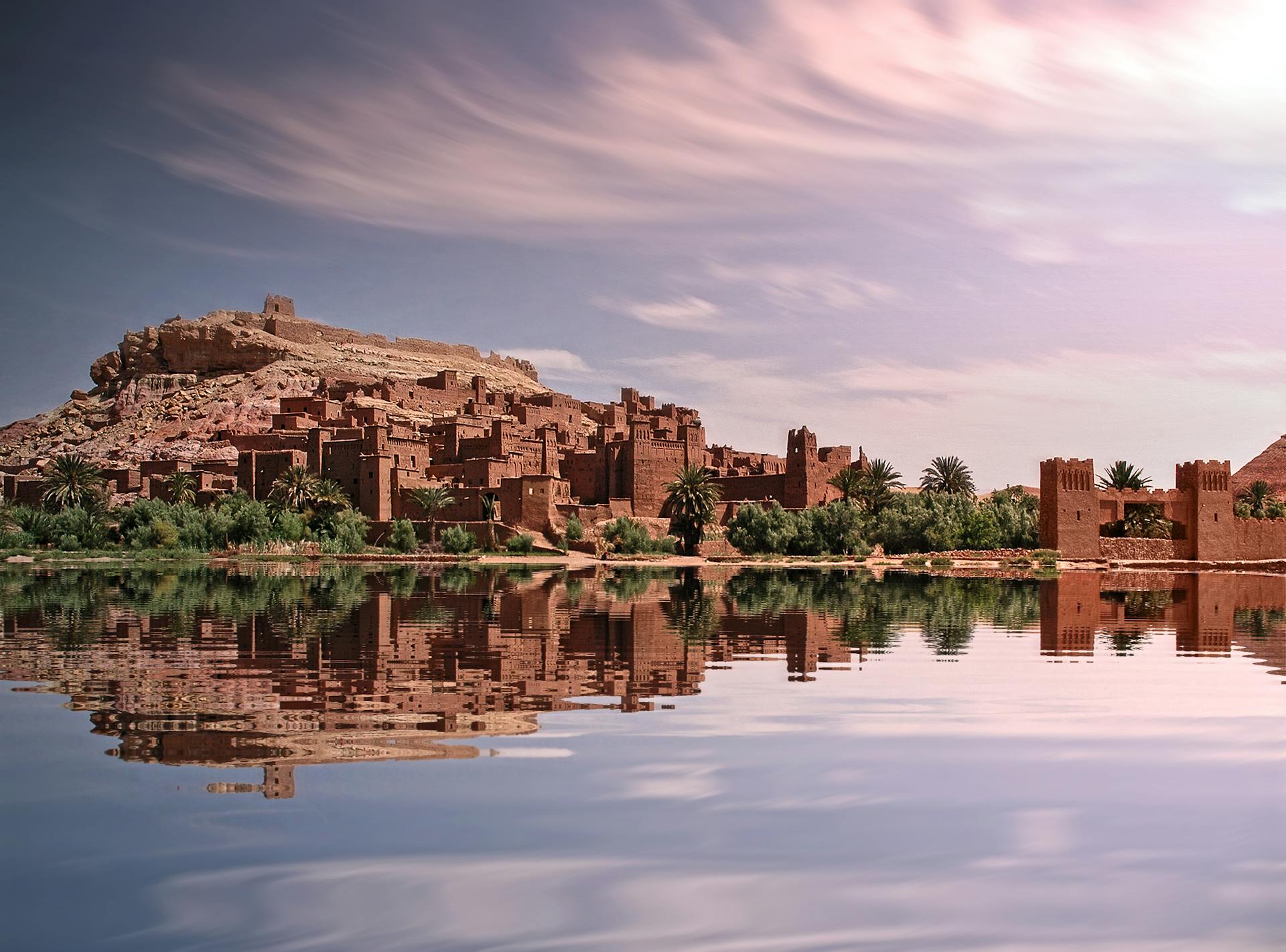
The High Atlas announces itself long before you reach it. Driving south from Marrakech, the plains give way to foothills the color of burnt umber, and then the mountains appear — a jagged rampart of rock and snow that cuts Morocco in two, separating the mild coast from the furnace of the Sahara. This is North Africa’s spine, a range that stretches nearly seven hundred kilometers and rises to altitudes that would look at home in the European Alps. Yet the Atlas feels nothing like the Alps. There are no gondolas, no manicured trails, no chalets selling fondue. Here the mountains belong to the Imazighen — the Berber people — who have farmed these slopes for millennia and whose villages seem to grow directly from the earth they sit upon.
The gateway for most travelers is Imlil, a small settlement at 1,740 meters that serves as the trailhead for Jebel Toubkal, the highest peak in the Arab world at 4,167 meters. The trek to the summit is not technical — no ropes, no crampons in summer — but it demands respect. The trail climbs through walnut groves and past stone refuges, the air thinning with each switchback until the final scree slope delivers you to a summit where the view stretches from the Sahara to the Atlantic on a clear day. Most climbers make it a two-day affair, sleeping at the Toubkal Refuge and rising before dawn for the push to the top. The descent, knees complaining, deposits you back in Imlil by late afternoon, where mint tea and tagine taste better than any meal you have ever eaten.
But Toubkal is only one story the Atlas tells. The villages scattered across these valleys are the quieter, deeper narrative. In settlements like Armed and Aremd, flat-roofed houses of packed earth and stone stack against the hillside in shades of terracotta and gray. Irrigation channels — ancient, ingenious — carry snowmelt through terraced gardens where barley, walnuts, potatoes, and cherry trees grow on plots no wider than a kitchen table. Women carry bundles of firewood along paths that donkeys share without complaint. Children appear at doorways, curious but unhurried. Time in these villages moves at the pace of seasons, not hours.
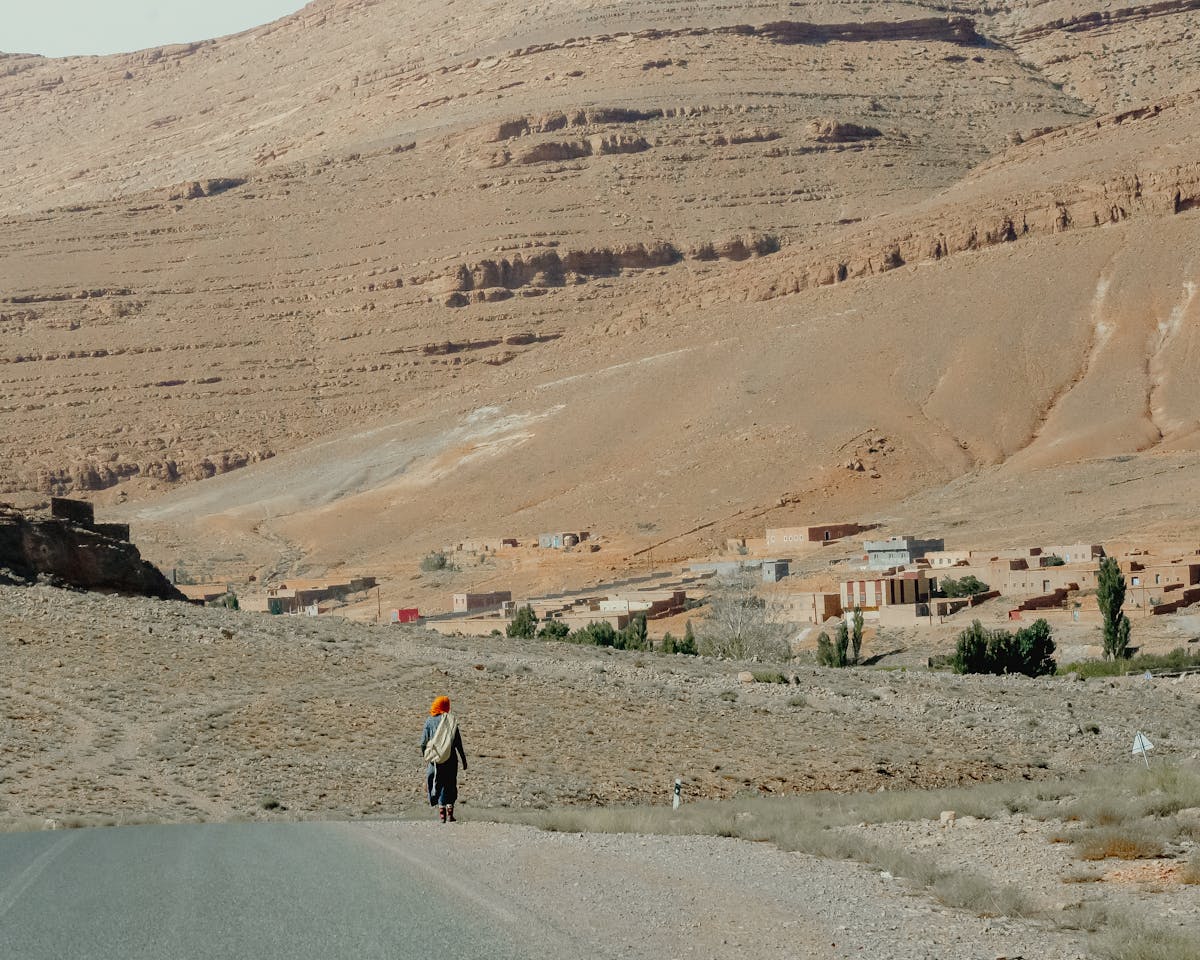
The Ourika Valley, barely an hour from Marrakech, offers a gentler introduction to Atlas life. The river tumbles over boulders between terraced farms, and a series of waterfalls at its head reward a short hike with cool spray and emerald pools. On Mondays, the weekly souk at Tnine Ourika draws villagers from surrounding hills to trade vegetables, spices, livestock, and gossip — a scene that has changed little in centuries. The valley is popular with Marrakchis escaping the summer heat, and the roadside is lined with restaurants perched over the river, their tables shaded by fig trees.
Further afield, the Ait Bougmez Valley — known as the Happy Valley — remains one of Morocco’s best-kept secrets. Reached by a winding mountain road that was unpaved until recently, this broad, fertile valley is a patchwork of wheat and alfalfa fields bounded by adobe villages and watched over by the dramatic peaks of the Mgoun massif. Trekking here is superb and solitary: you can walk for days, sleeping in village guesthouses, without encountering another foreign traveler. The hospitality is startling in its generosity — you will be invited to share meals by people who have very little, offered the best seat and the first glass of tea, and sent on your way with blessings you do not need to understand to feel.
The mountain roads are destinations in themselves. The Tizi n’Test pass, climbing to 2,100 meters, is a masterpiece of engineering and nerve, its hairpin bends revealing landscapes that shift from alpine meadow to arid gorge within a single turn. The Tizi n’Tichka, the main route to Ouarzazate, is gentler but no less dramatic, its summit offering a panorama of peaks that seem to go on forever. And in winter, improbably, the ski station at Oukaimeden — the highest in Africa at 2,600 meters — offers runs just two hours from the palm trees of Marrakech, a reminder that Morocco is a country that refuses to be reduced to a single story.
When to go: April to June for wildflowers carpeting the valleys and snowmelt filling the rivers. September to October for the clearest trekking conditions and golden light. Toubkal is best attempted from June to September when the summit is free of snow. Winter brings skiing to Oukaimeden and a stark, silent beauty to the high passes.