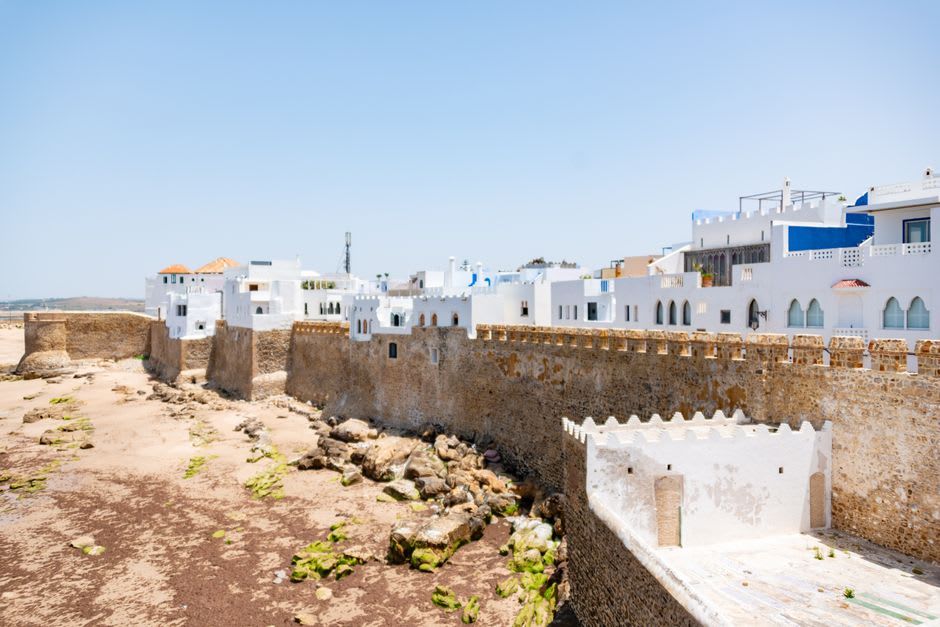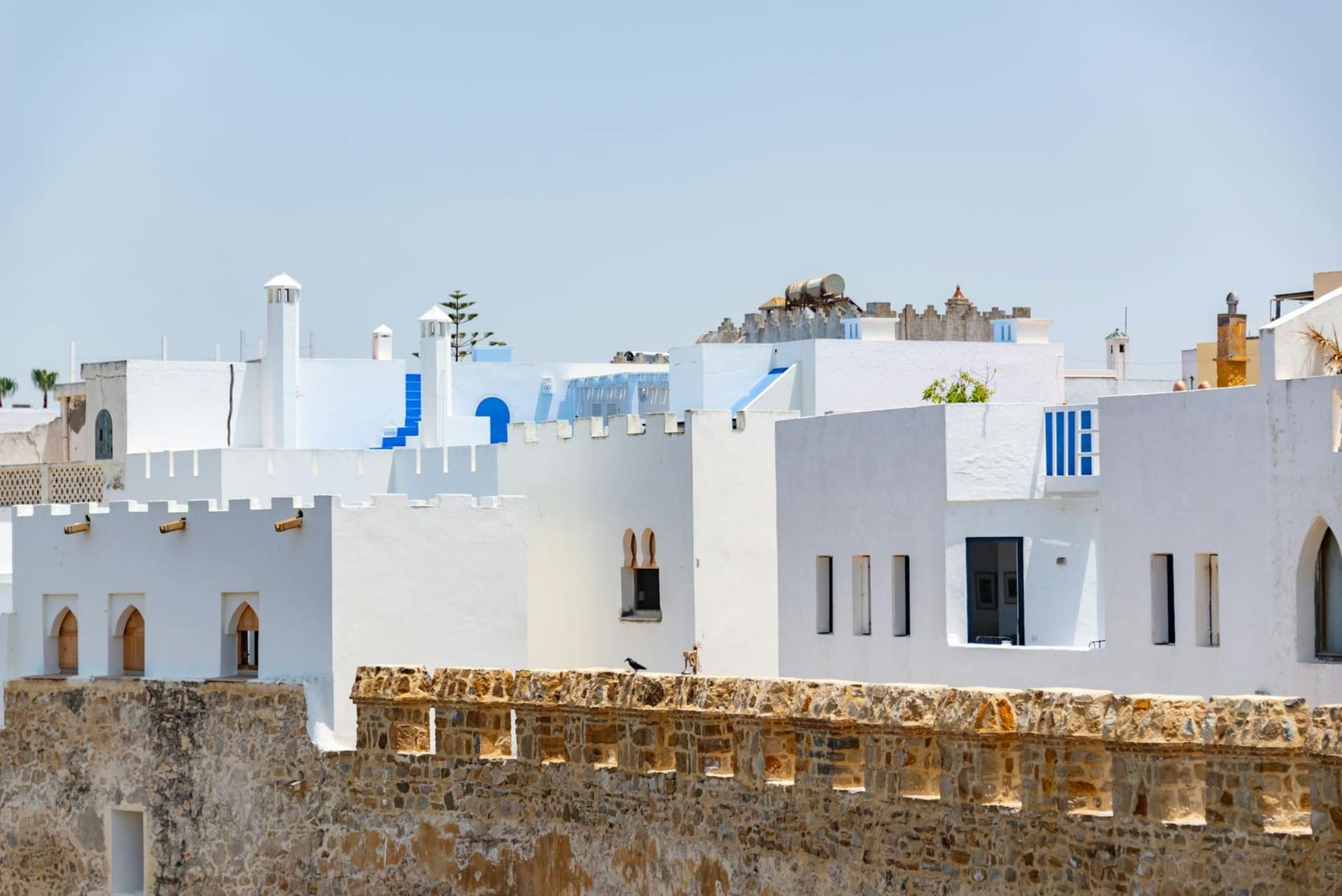
A whitewashed Atlantic port where murals bloom on ancient ramparts and fishermen mend nets at sunrise.
I arrived in Asilah on the overnight train from Casablanca, stepping onto the platform just as the sky over the Atlantic turned that particular shade of pewter that precedes Atlantic dawn. The town is small enough to walk end to end in twenty minutes, and I did exactly that before the first café had unlocked its shutters.
The Medina as Canvas
Asilah’s medina is a living gallery that nobody formally curated. Every August, the Moussem cultural festival invites artists from across the world to paint the walls of the old Portuguese ramparts, and the layers have been accumulating since 1978. What remains is a palimpsest of styles — geometric arabesques bleeding into figurative portraits, faded cobalt fish overlaid by a fresh crimson abstract, a giant eye watching from a corner off Rue Zallaka that I almost walked past before it stopped me cold.
The whitewash is relentless and necessary. Without it, the whole thing would calcify into a museum. Instead, each season erases and rewrites, and the town stays honest about what it is: a place where art is a habit, not a monument.
Sunrise on the Ramparts
Lia found the fishermen. I was half-asleep over mint tea at a plastic table near the sea gate when she came back to drag me to the harbour wall at the base of the Bab el Bahr. A dozen men had been there since before light, mending nets with the mechanical patience of people who do not need to think about what their hands are doing. The Atlantic was loud and grey-green, smelling of iodine and diesel. Nobody was performing for tourists. We sat on the stones and watched until the sun cleared the rooftops of the medina and the whitewash began to glow.
Breakfast that morning was msemen — the flaky, griddle-fried flatbread — with argan honey from a jar on the counter of a hole-in-the-wall café on Avenue Hassan II. It cost almost nothing and tasted of everything I had hoped Morocco would be before I had been to Morocco enough times to temper my expectations.
What Surprised Me
I had expected charm. What I had not expected was quiet. Asilah sits only forty kilometres south of Tangier, and I had braced for Tangier’s noise and hustle to have bled down the coast. Instead the medina, even in summer, moves at a pace that feels privately negotiated — unhurried without being sleepy. The surprise was discovering, on my second evening, that the ramparts at dusk are almost completely empty. Just the Atlantic battering the old stone, and the last light turning the mural walls gold.
When to go: Late spring (April–May) or early autumn (September–October) for mild Atlantic weather without peak-summer crowds. The Moussem festival in August brings fresh murals and live music but also fills the town completely — worth experiencing once, if you book accommodation early.