Jack Boy Hill
"Turquoise sea on one side. Grey apocalypse on the other. The ridge is the border between them."
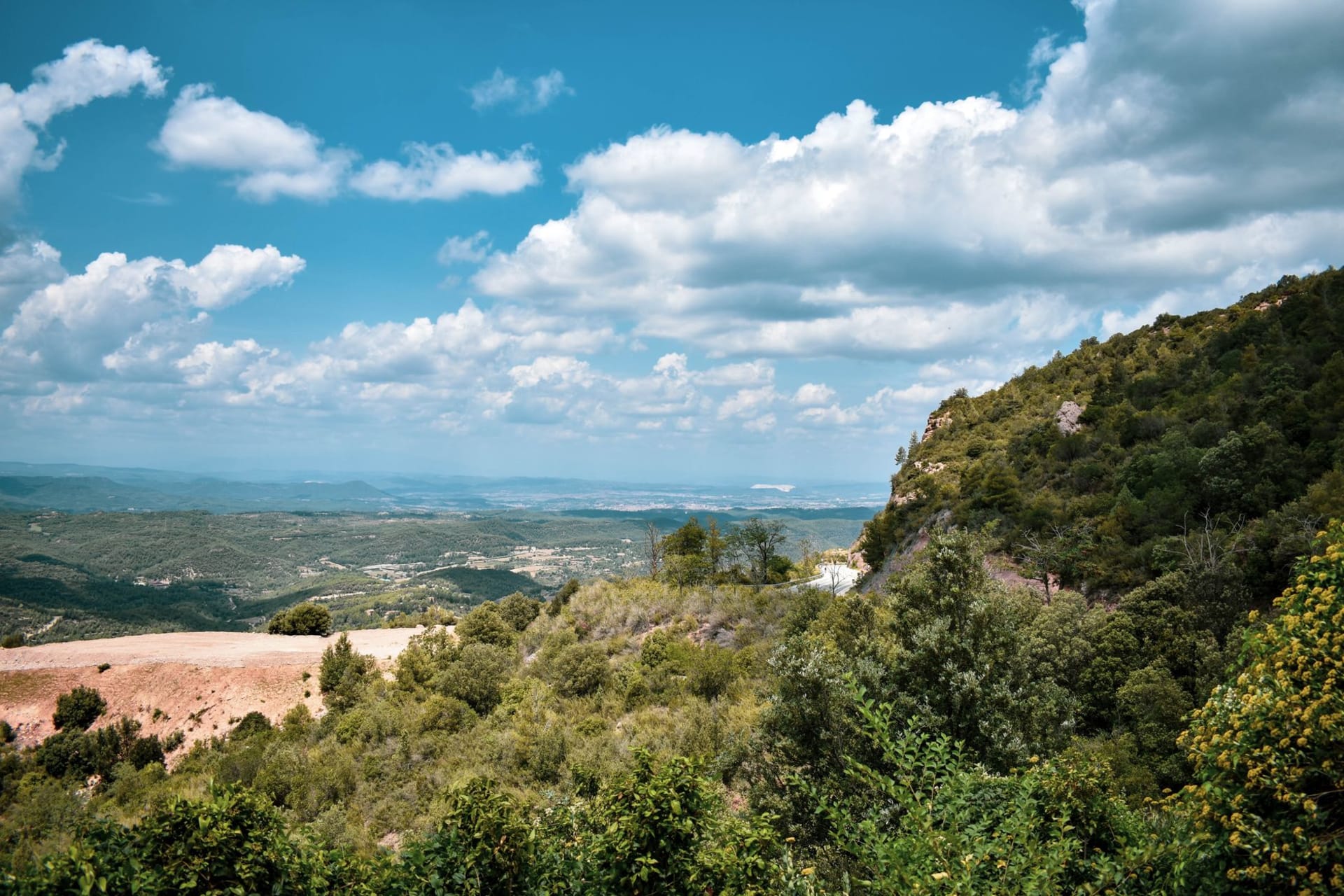
The road winds up through the green hillside of the north and then, without ceremony, arrives at a small parking area with a wooden viewpoint structure and the feeling of having reached a threshold. Jack Boy Hill is not a dramatic climb — it is a drive and a short walk — but the view it delivers is one of those arrangements of geography that earns its reputation entirely through the honesty of what it shows you. To the west and north, the Caribbean spreads out in flat blues and turquoises. To the south, the exclusion zone begins, and the landscape below becomes grey.
Standing at the viewpoint railing I could see Plymouth without difficulty — the cluster of rooftops and church towers embedded in the grey ash plain, the former waterfront, the outline of streets still visible under the material that buried them. On clear days you can see the Soufrière Hills dome itself, steam rising from the summit, the grey tongues of pyroclastic fans spreading from the flanks toward the coast. The scale of the transformation the volcano has imposed on the southern half of the island is easier to understand from here than from any map: the green runs right up to a line, then the grey begins, and the grey is deep and pervasive and does not look temporary.

But the view is not only south. Turn around — or simply shift your gaze — and the Caribbean is right there, luminous and enormous and indifferent to the drama on the other side of the ridge. The island’s northern coast stretches below, green and intact, with Rendezvous Bay visible as a white arc in the distance on clear days. The contrast is not metaphorical. It is literal and physical: standing on this ridge you are standing precisely at the point where the two versions of Montserrat meet. The volcano side and the surviving side. The buried and the living.
I came at late afternoon, when the light was low and golden and gave the ash plain below a false warmth — the grey surface catching the orange of the hour and looking, just briefly, like something other than what it was. Two other people were at the viewpoint: a local man with binoculars who did not explain what he was looking for, and a woman who had come from Germany specifically to photograph the exclusion zone from above. She had a professional camera and was working methodically, frame by frame. She did not speak while she worked, and neither did the man with the binoculars, and I did not speak either. Jack Boy Hill is the kind of place that does that — not from reverence exactly, more from a shared understanding that words would interrupt something.

The viewpoint is free to access and open year-round. It is one of the few places on the island where the full picture of what happened — and what is still happening — can be held in a single field of view. Plymouth below. The dome above. The sea beyond. That triptych is the summation of Montserrat: catastrophe, ongoing process, survival, all visible from one ridge at the same time.
When to go: Jack Boy Hill is most striking in dry season (December through April) when haze clears and the dome is visible against a clean sky. Late afternoon light turns the ash plain warm and the sea gold simultaneously — if you go at one time, go then. Mornings have cleaner light but no warmth to the colours.