Whitefish
"Whitefish has not yet decided what it wants to be, and that undecidedness is the most appealing thing about it."
I arrived in Whitefish on a Thursday evening in late January when the temperature had been sitting below minus fifteen for three days and the steam rising off the Whitefish River looked like the river itself was trying to escape. The main street was alive in the particular way of mountain towns in winter — not the performative bustle of Aspen or Vail but something quieter and more accidental, the result of people who genuinely needed food and warmth and happened to find themselves in the same block of storefronts.
The town is small enough that you can walk its core in ten minutes and large enough that you won’t exhaust it in a week. Central Avenue has a hardware store, a bar with a pressed tin ceiling and taxidermied elk on the wall, two coffee shops of strongly contrasting philosophies, a taco place operating out of a converted gas station, and a bookshop run by a woman who knows what you should read before she knows your name.

Whitefish Mountain Resort sits eleven kilometers north of town on a ridgeline that catches heavy Pacific moisture coming off the Cascades. In a good winter, the resort receives over seven hundred centimeters of snow, and it falls as the dry, cold, light variety that Montanans call “cold smoke.” The mountain is not vast — it is no rival to Utah or Colorado in vertical drop — but it is serious, with tree skiing that genuinely rewards experienced skiers and long groomed runs that are quiet by midweek. The gondola from the base village up to Big Mountain Summit delivers a view across the peaks of Glacier National Park that requires no commentary.
What I didn’t expect was how much I would like Whitefish in summer. The lake — Whitefish Lake, the town’s northwestern border — warms to swimmable temperatures by July and has a sandy public beach that draws locals the way the slopes draw them in January. The farmers market on Saturday mornings spills across the depot parking lot, and in summer the flathead cherries appear — a local variety grown along the lake with a sweetness and depth that feels slightly implausible for fruit this far north. I bought a kilogram and ate them over two days with no particular strategy.
The town has money coming in now, the kind that builds contemporary mountain houses above the treeline and pushes restaurant prices toward what you’d pay in Jackson Hole. But Whitefish has not yet lost itself the way some resort towns do. The hardware store is still the hardware store. The bar with the elk on the wall still closes when the last regular goes home.

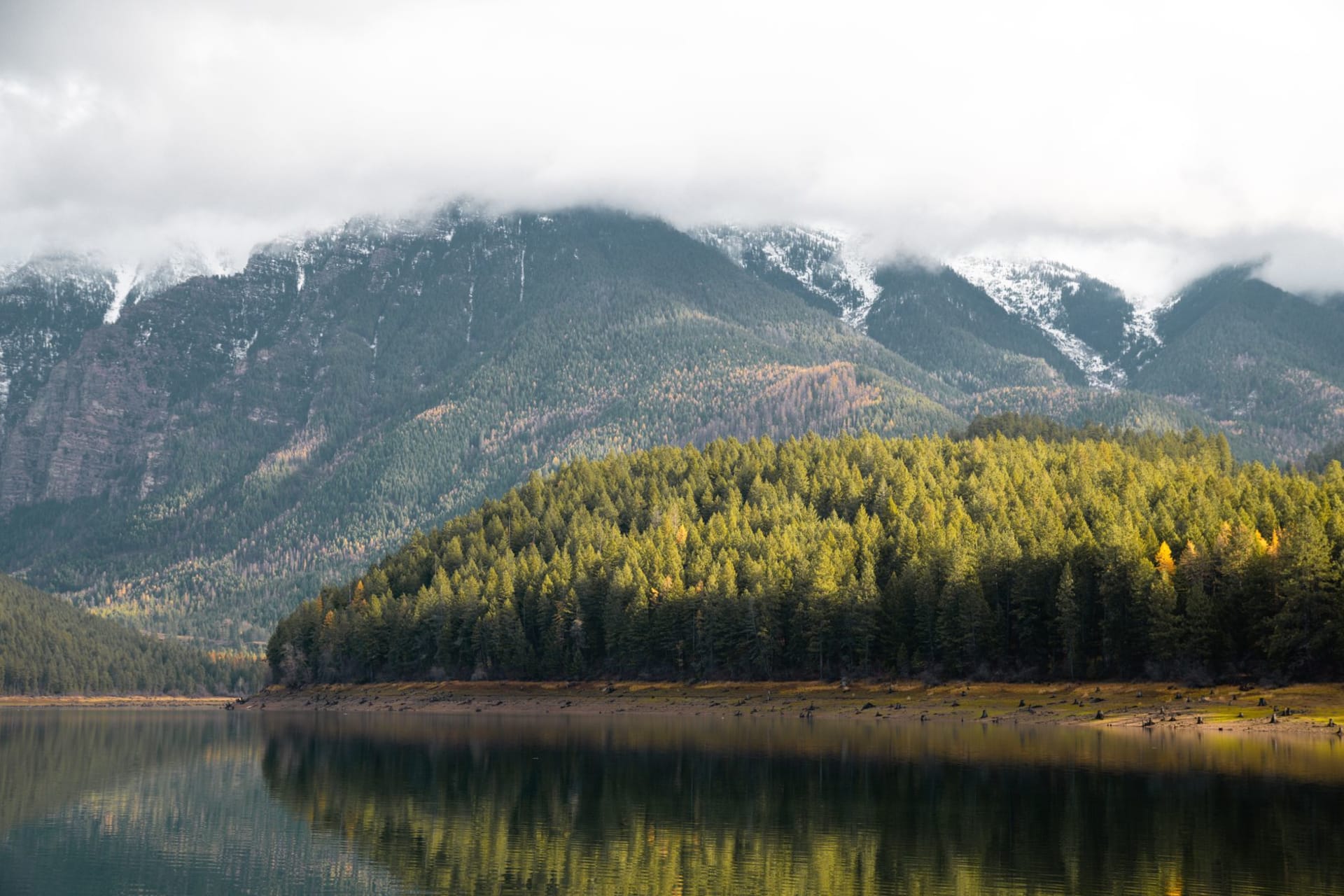
The best way I found to understand Whitefish’s particular character was to drive the ten minutes north to Tally Lake — the deepest lake in Montana, ringed by forest, with a campsite at the water’s edge where you can swim in the morning before anyone else is up. That combination — ski mountain twenty minutes from a cold, deep, silent lake surrounded by pines — is what people are actually paying for when they come here, whether they know it or not.
When to go: December through March for skiing, with January and February typically offering the best snow. Late June through August for the lake and the mountains without the ice. The shoulder seasons — May and November — are quiet to the point of ghostly, which has its own appeal if you like a town that’s resting.