Ongi Monastery
"A monk showed me a photograph of a thousand monks living where I was standing. Then he showed me his hands, which had helped rebuild one small temple from the rubble."
The ruins of one of Mongolia's largest monasteries, torn apart in the Stalinist purges of the 1930s and left standing, half-erased, on the banks of a Gobi river.
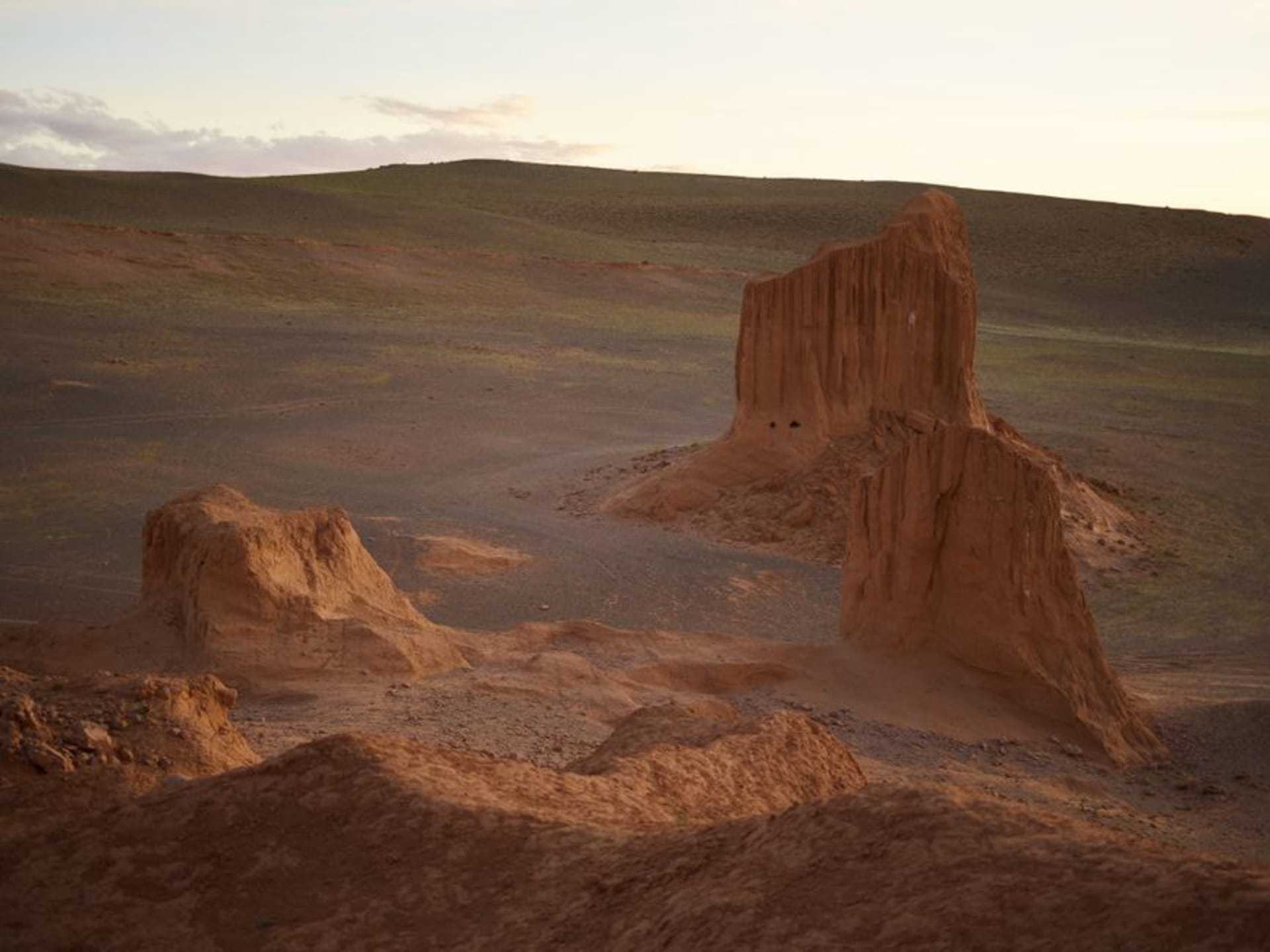
Ongi Monastery is a ruin in the truest sense — not a curated archaeological site with interpretive signage and a gift shop, but a scattered field of broken stone walls, collapsed foundations, and the occasional intact wall fragment stretching along both banks of the Ongi River where it cuts through the northern Gobi. Before 1939 this was one of the largest monastic complexes in the country, two separate monasteries facing each other across the river, home to as many as a thousand monks at its peak. Then the purges came, the buildings were dynamited or dismantled for building materials, the monks were killed, imprisoned, or forced into secular life, and for half a century the site sat as rubble, quietly disappearing into the desert.
What struck me walking through it wasn’t the scale of what remained — plenty of it is unremarkable stone debris that requires imagination to read as a temple wall — but the deliberate patchiness of the destruction, the way a single carved lintel or an intact archway survives beside total collapse, evidence of both the thoroughness of the demolition and its incompleteness. A small museum near the site entrance holds photographs from before the purge: rows of monks in ceremonial dress, temple roofs catching the sun, a functioning community of scholars and herders’ sons sent here for education and vocation. The contrast between those photographs and the ground you’re standing on does more work than any placard could.
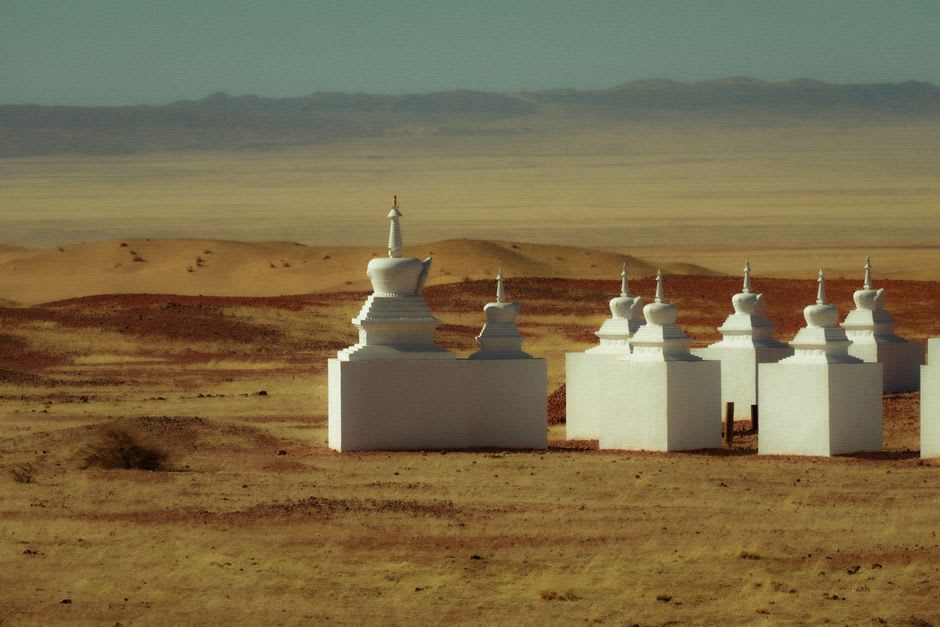
Since the 1990s a handful of monks have returned, and one small temple has been reconstructed from salvaged and new materials, functioning again as an active place of worship amid the ruins around it. I spoke with a young monk there, Tuvshin, who told me — matter-of-factly, without visible bitterness — that his own grandfather had been a monk here before the purge and had survived only by renouncing his vows and becoming a herder for the rest of his life, never speaking of the monastery again until he was very old. Tuvshin had come to Ongi specifically because of that family history, choosing to rebuild, in some small personal way, what had been taken from his grandfather generations earlier.
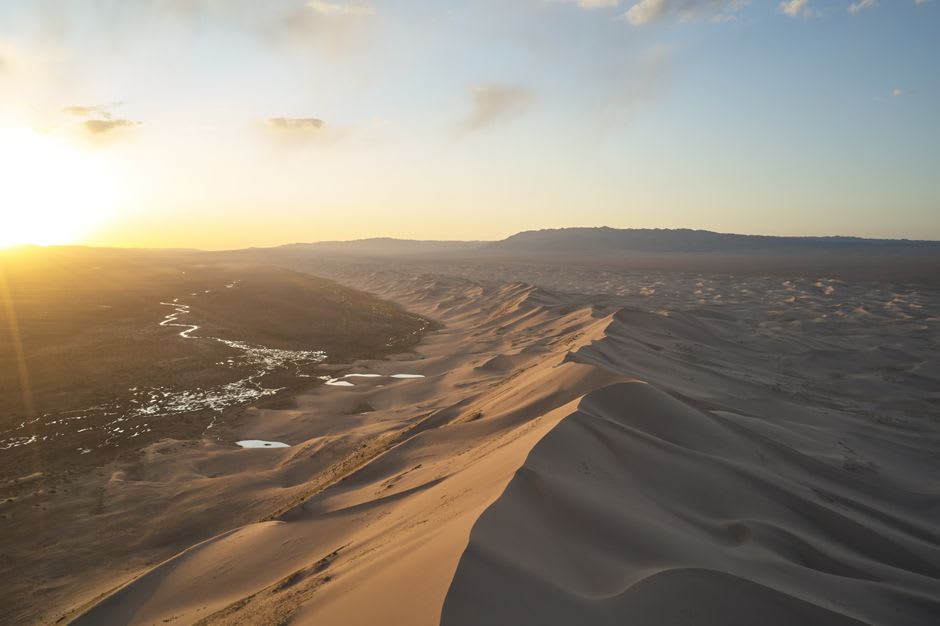
The river itself, once perennial and now reduced to a much diminished and sometimes seasonal flow due to upstream water use, still supports a narrow band of poplar trees and green growth that stands out sharply against the surrounding grey-brown desert, giving the whole ruined site an unexpected softness at its edges — the kind of oasis quality that presumably drew the original builders here in the first place, centuries before any of what followed.
I left Ongi without any tidy conclusion to draw, which felt appropriate. It’s not a place designed to resolve into a lesson. It’s a place that simply insists you look at what was destroyed, and at what, quietly and slowly, is being rebuilt anyway.
When to go: May through September for road access; the site is remote and unmarked enough that a local guide or driver familiar with the route is close to essential. Early morning or late afternoon light does the ruins the most justice photographically, but any time of day carries the weight of the place.