Darkhan
"I stopped in Darkhan for one night to break up a long drive. I ended up glad the drive needed breaking."
Mongolia's second city, a Soviet-planned industrial hub on the road north to Russia, more useful as a waypoint than a destination but honest about it in a way I respected.
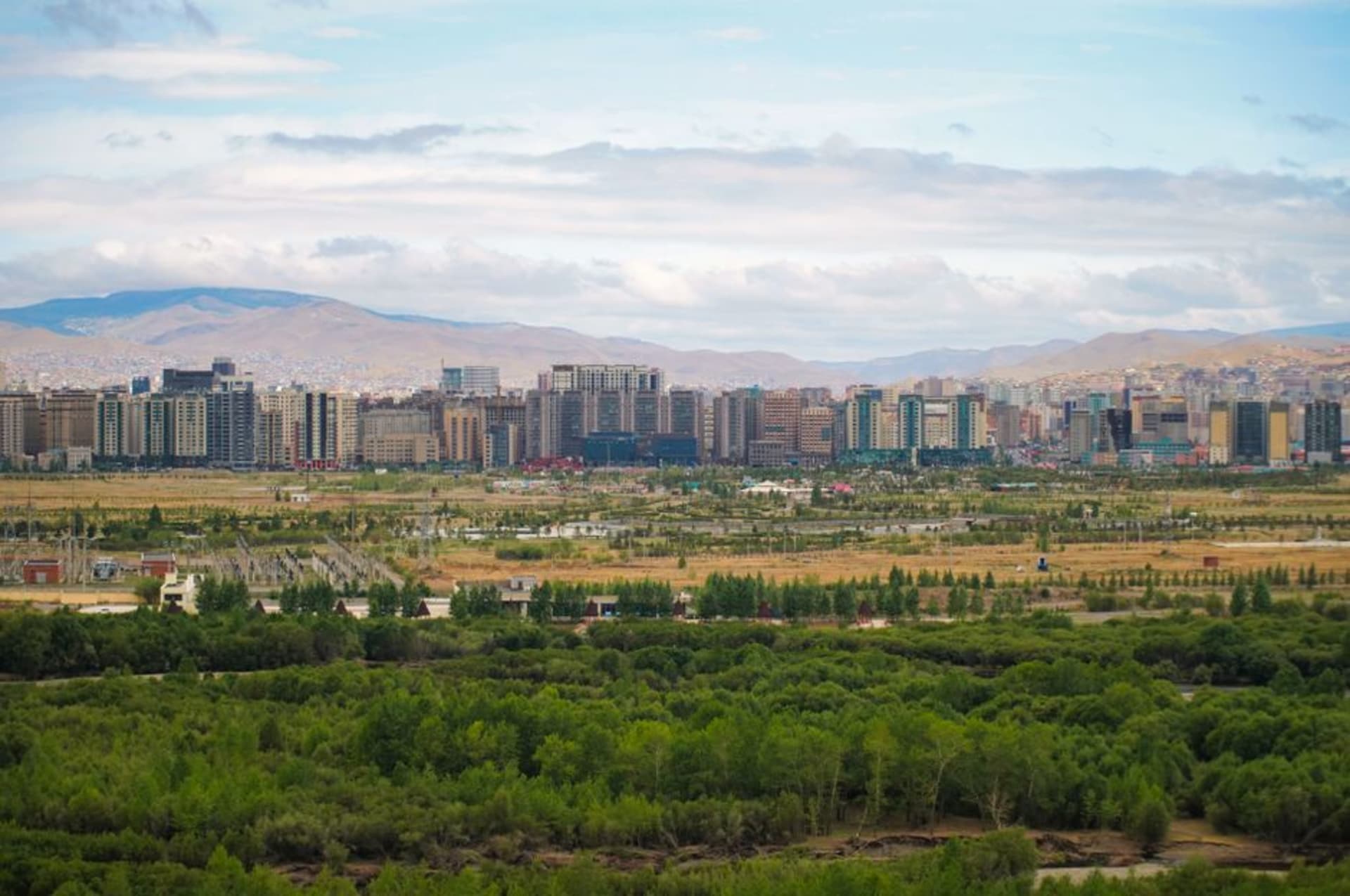
Darkhan exists primarily as a waypoint — the halfway point on the long drive between Ulaanbaatar and the Russian border, a rail junction, an industrial center built up rapidly in the 1960s as part of the same Soviet-era development push that later produced Erdenet. Most travelers pass through without stopping, or stop only long enough to change a tire or eat at one of the roadside guanz along the highway. I ended up staying a full night by choice, mostly because I’d been driving for ten straight hours and the idea of a real bed and a hot shower outcompeted any romantic notion of pushing on toward something more scenic.
The city itself splits into two distinct sections a few kilometers apart — an older, more industrial zone near the original factories and rail yards, and a newer, more residential district with the wide boulevards and apartment blocks typical of planned Soviet-era cities. Neither section is conventionally picturesque, but there’s a specific interest in seeing a Mongolian city that developed along an entirely different template than Ulaanbaatar’s more organic, congested sprawl — Darkhan’s streets are wide enough that traffic never really jams, its blocks are laid out with a geometric confidence that assumes central planning rather than accretion, and its central square still carries a hammer-and-sickle-adjacent monumentalism in its statuary that has mostly been softened or reinterpreted rather than removed outright.
I ate dinner at a guanz recommended by my guesthouse owner, a small family-run place serving khuushuur and a version of tsuivan with more vegetables than I’d been served anywhere further from a rail line, evidence of the city’s better supply connections. The owner, a woman probably in her sixties who’d run the place for over twenty years, told me — through her daughter’s translation — that Darkhan’s population had swelled and shrunk with the fortunes of its factories over the decades, and that she’d watched entire industries arrive, thrive for a decade, and then quietly wind down as the country’s economy shifted after 1990. She said this without much sentiment, the way someone describes weather patterns they’ve simply learned to plan around.
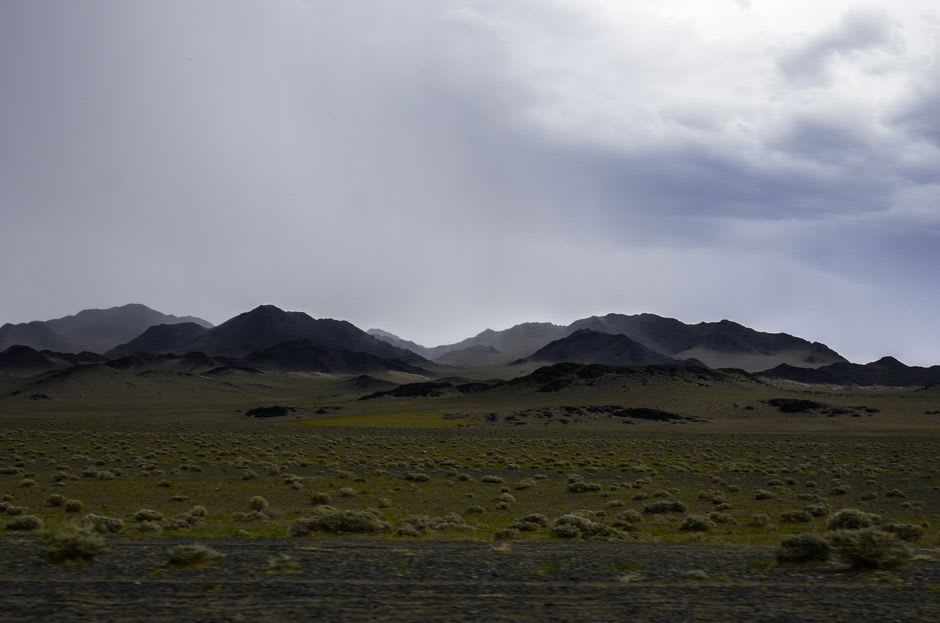
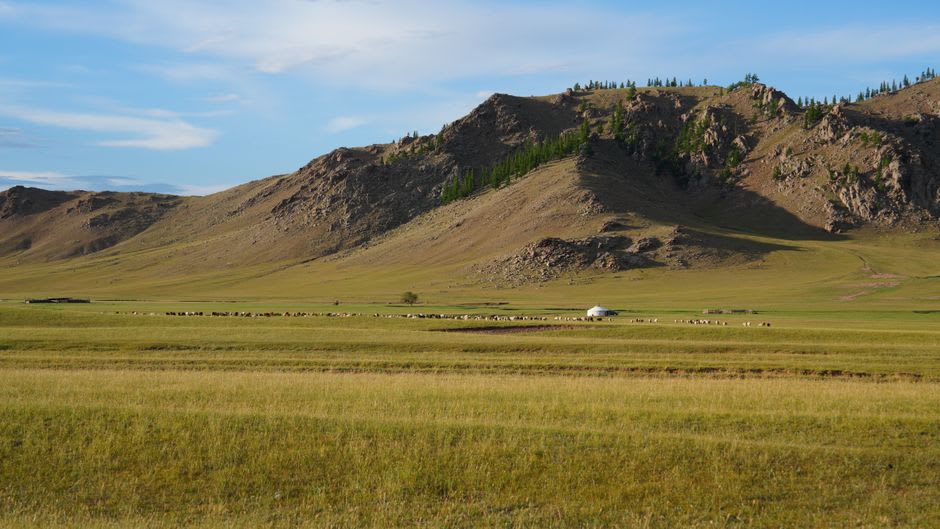
The surrounding countryside, once you’re a short drive outside the city limits, opens back into the steppe and low hills typical of central-northern Mongolia, and a nearby monastery — Dashchoilin, a modest working temple rebuilt after the purges — offers a quieter counterpoint to the industrial core if you have half a day to spare before continuing your drive.
I wouldn’t build a trip around Darkhan, and I don’t think Darkhan would expect me to. But it’s an honest, unpretentious stop on a long road, and there’s something to be said for a city that doesn’t try to sell you on being more than it is.
When to go: Any time you’re driving the Ulaanbaatar–Russia border route and need a comfortable overnight stop. Summer offers marginally better access to the countryside just outside town.