Dariganga
"Someone told me there were two hundred extinct volcanoes here. I stopped counting at twelve and just started walking."
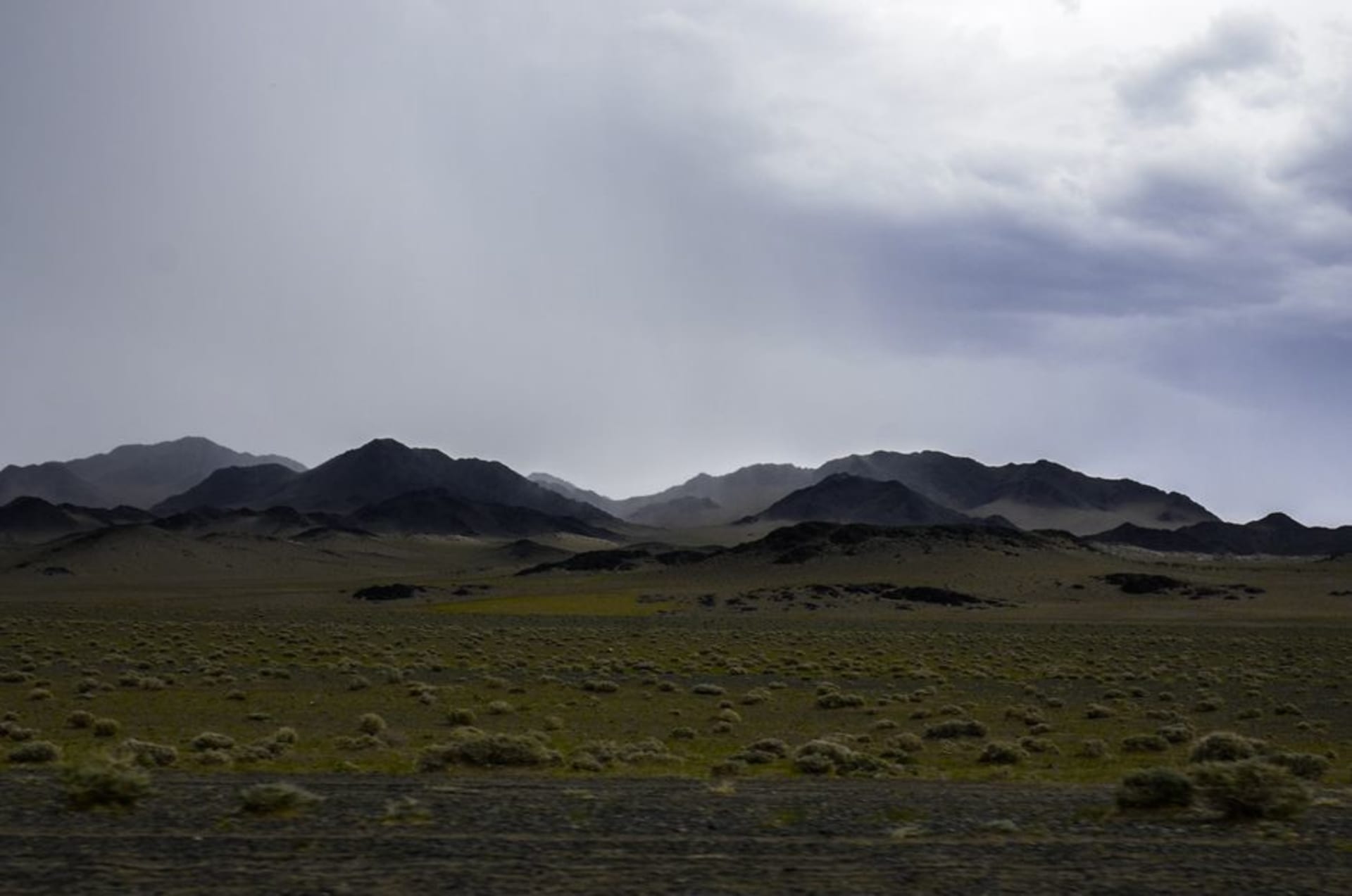
An extinct volcanic field in the far southeast where two hundred cinder cones rise out of the steppe and sand dunes creep up against grassland like they can't decide what desert means.
Dariganga sits in the far southeast of Mongolia, in Sükhbaatar province, close enough to the Chinese border that the region has a slightly different character than the central steppe — flatter in places, sandier in others, and studded with an extraordinary concentration of extinct volcanic cones, somewhere around two hundred by most counts, scattered across the grassland like something a giant abandoned mid-project. I’d seen photographs online that looked almost too regular to be real, symmetrical dark cones rising out of otherwise unbroken steppe, and went specifically to find out whether the landscape lived up to the strangeness of the premise.
It did, and in ways the photographs hadn’t quite prepared me for. The largest and most accessible cone, Altan Ovoo, is considered sacred and climbing to its summit is restricted or discouraged depending on who you ask locally — it functions as a site of ovoo worship, ribboned prayer cairns dotting its lower slopes, and I respected the boundary and observed rather than summited. But the surrounding volcanic field is walkable across dozens of smaller cones, most of them long dormant enough that grass has fully reclaimed their slopes, giving the region a landscape that reads, at a glance, like ordinary rolling steppe and then resolves, once you notice the pattern, into something startlingly geological.
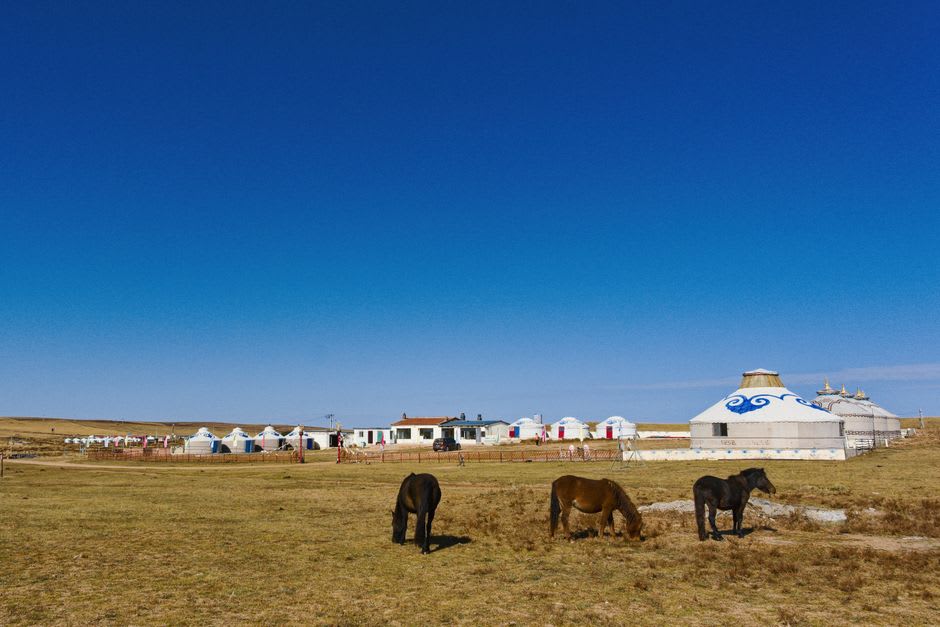
What surprised me even more than the volcanoes themselves was the sand — a substantial dune field sits within the same district, migrating slowly across the grassland in a way that looked, from a distance, almost like a slow-motion collision between two different kinds of Mongolia, desert nudging into pasture nudging into old lava fields. I walked a section of dune at sunset with a local herder named Tömör, who grazed his family’s sheep on the grass immediately adjacent to the sand and spoke about the dunes’ slow migration over his own lifetime with the specific, unbothered expertise of someone whose livelihood depends on tracking exactly where the sand will and won’t be encroaching in a given decade.
The region’s history adds another layer worth knowing — Dariganga was, for centuries, an imperial herding estate supplying livestock directly to the Qing court, and the area retains a reputation for particularly skilled silverwork and craftsmanship among older Mongolian families, a legacy of specialized artisans once supported by that same imperial patronage. A small local museum in the district center displays silver ornamental pieces — belt buckles, snuff bottles, harness fittings — whose intricacy felt entirely disproportionate to how remote and quiet the region otherwise is.
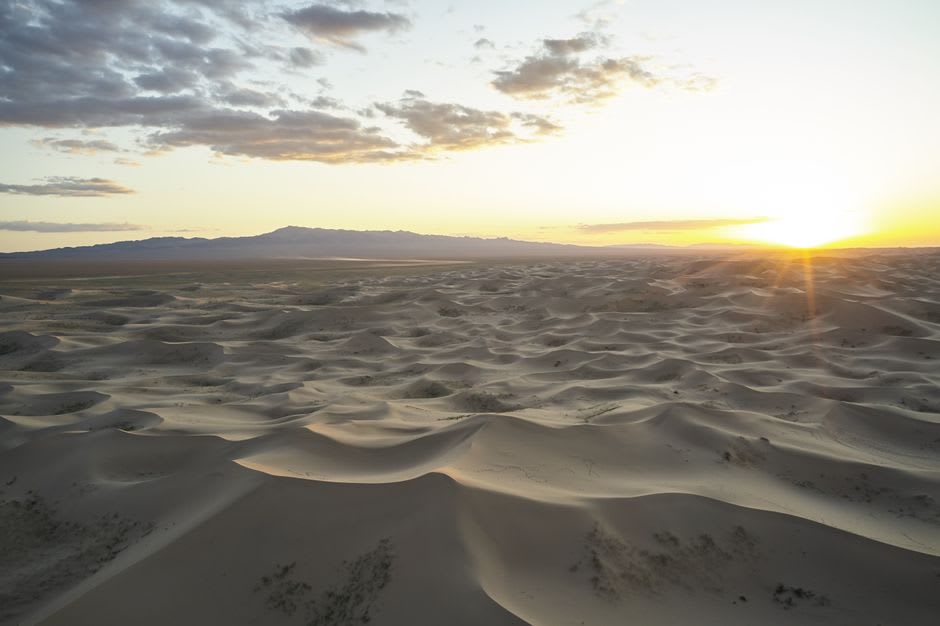
Dariganga is a genuinely long way from anywhere else on the standard Mongolia route, and I met not a single other foreign traveler during my time there. That isolation is exactly what let the volcanic field and the dunes feel so unclaimed, so entirely themselves.
When to go: June through September for road access and comfortable walking conditions across the volcanic field and dunes. This is a far southeastern detour best combined with extra time rather than a quick add-on.