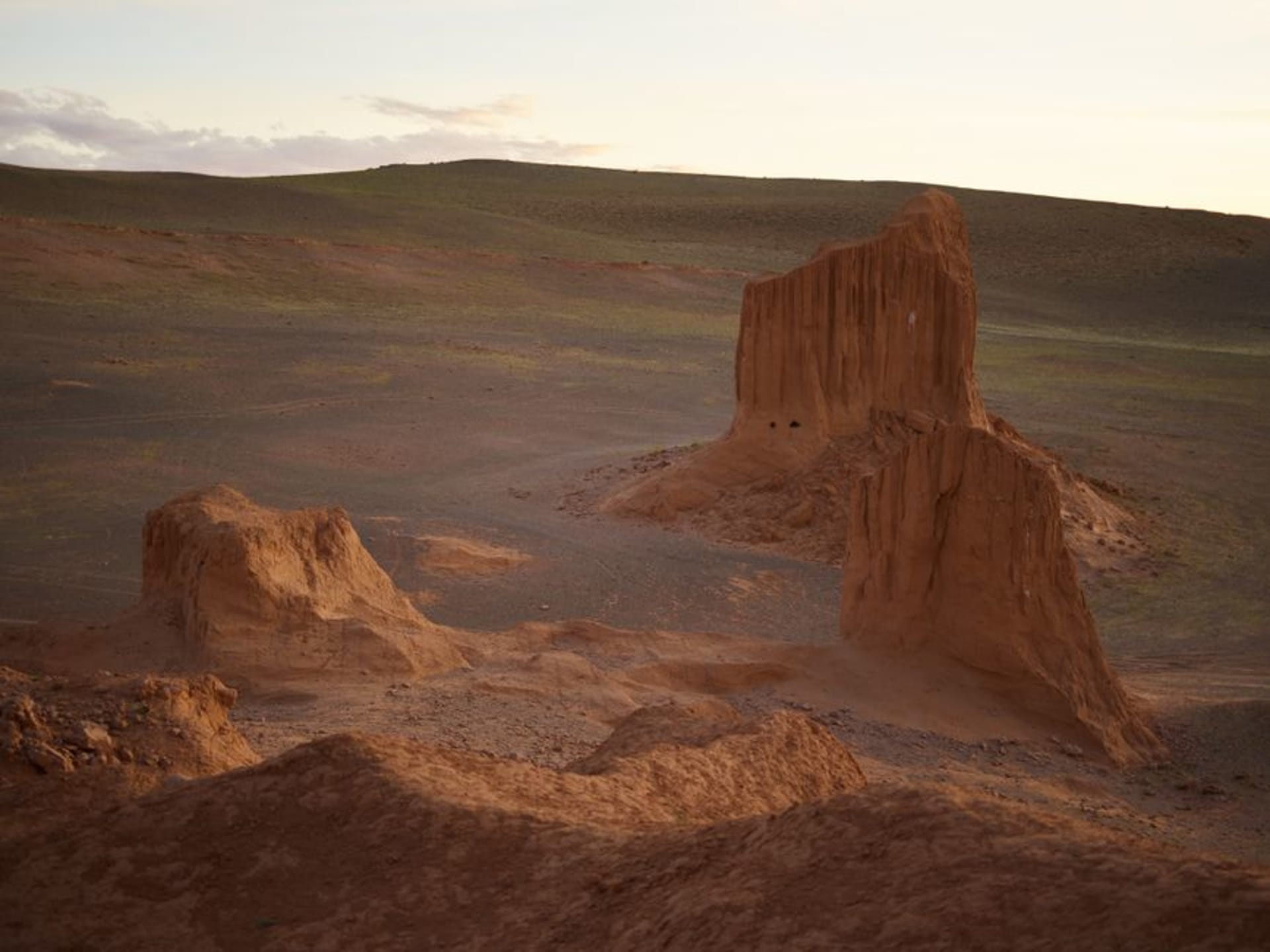
Dalanzadgad
"Everyone flies through Dalanzadgad on their way to somewhere more photogenic. I decided to actually look at the place doing the flying-through."
The gateway town to the South Gobi, unglamorous by design, where every traveler heading toward the dunes and canyons of Gurvansaikhan passes through and few actually stop to look.
Dalanzadgad is the capital of Ömnögovi province and functions, for the overwhelming majority of travelers who pass through it, purely as a logistics point — the airport that gets you into the South Gobi, the last real supply town before the dunes of Khongoryn Els and the canyons of Yolyn Am, a place to fuel a vehicle and buy bottled water before continuing on toward the sights that actually appear on the postcards. I’d flown through it myself on an earlier trip without spending more than the time it took to transfer into a waiting van. This time, delayed by a mechanical issue with that same van, I had an unplanned day and a half to actually look at the town doing all that quiet logistical labor.
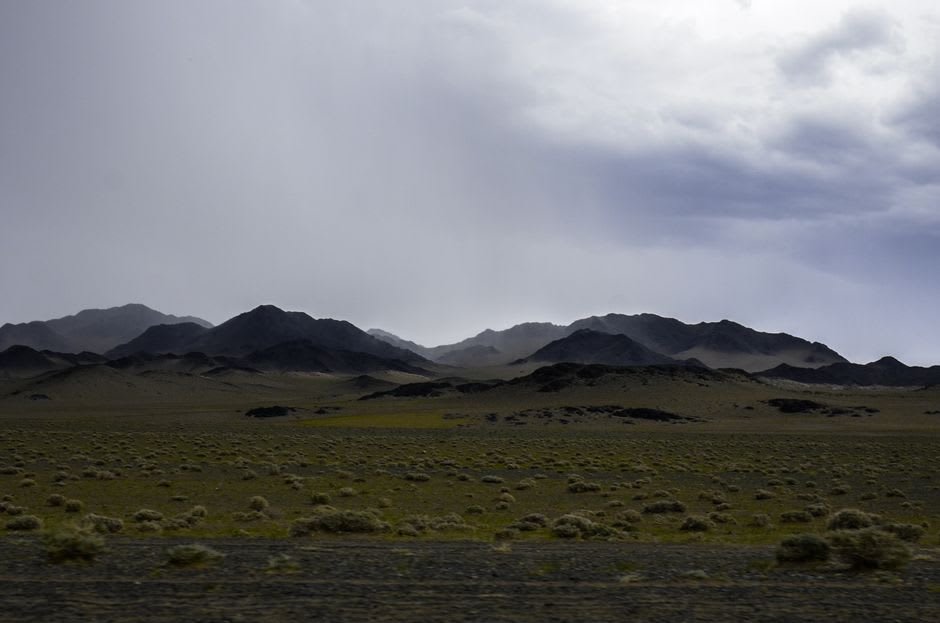
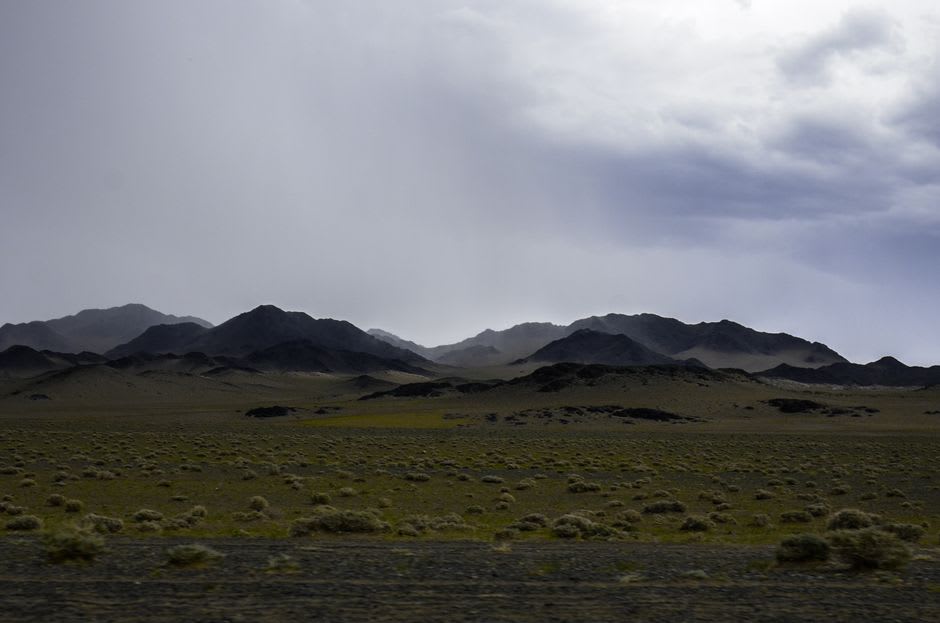
What I found was a functional, unpretentious desert settlement that wears its role honestly — wide dusty streets, a scattering of guanz and small hotels catering to the tour trade, a market supplying the herder families and mining workers who make up the bulk of the actual local population, and, ringing the edges of town, the low mountains of the Gurvansaikhan range that give the whole settlement a scenic backdrop it otherwise does very little to capitalize on. I walked the town’s central square in the late afternoon and found a small museum dedicated to the province’s paleontological and natural history, unassuming from outside but housing a genuinely impressive collection of dinosaur fossils recovered from the surrounding Gobi formations, a preview of sorts for anyone about to head toward Bayanzag or deeper into the desert.
I spent an evening at a small restaurant near the airport with a driver named Tömörbaatar who’d spent two decades ferrying tourists between Dalanzadgad and the surrounding Gobi sights, and he talked, with a mix of pride and mild exasperation, about the town’s strange existence as a place everyone needs and almost nobody actually sees. “They land, they get in my van, they leave,” he said. “Some of them, I don’t think they remember the name of the town at all.” He pointed out that the airport had expanded considerably over the past decade as Gobi tourism grew, bringing real economic benefit to the town even as its own identity remained almost entirely obscured by what lay beyond it.
The mountains just outside town offer a modest but genuine hiking opportunity that almost nobody takes advantage of given a spare afternoon, and I climbed a low ridge at sunset to look back over the town’s grid and, beyond it, the flat gravel plain stretching toward the more famous dunes and canyons that had drawn me to the region in the first place.
Dalanzadgad will never be anyone’s primary reason to visit the Gobi, and it doesn’t need to be. But an unplanned day here taught me something about how much of travel is actually logistics wearing the disguise of a place, and how that place, looked at directly, usually turns out to have its own modest story anyway.
When to go: Any time you’re flying into or driving through the South Gobi region; there’s little reason to add extra time here beyond a practical overnight stop, though the small natural history museum is worth an hour if you have it to spare.