Lelu Ruins
"A world heritage site where the only sound was rain dripping through the canopy onto stone."
I found the ruins by asking at the guesthouse, which involved a phone call, which involved my host waking up her cousin, which eventually produced a young man named Kileto who arrived on a motorbike and said he would show me. This is the general mechanism by which things happen in Kosrae. There is no sign on the main road pointing to the Lelu archaeological complex. There is no parking lot. There is a path through a residential area of Lelu town that leads to a low stone wall, and then through the wall into a space that takes a moment to resolve itself.

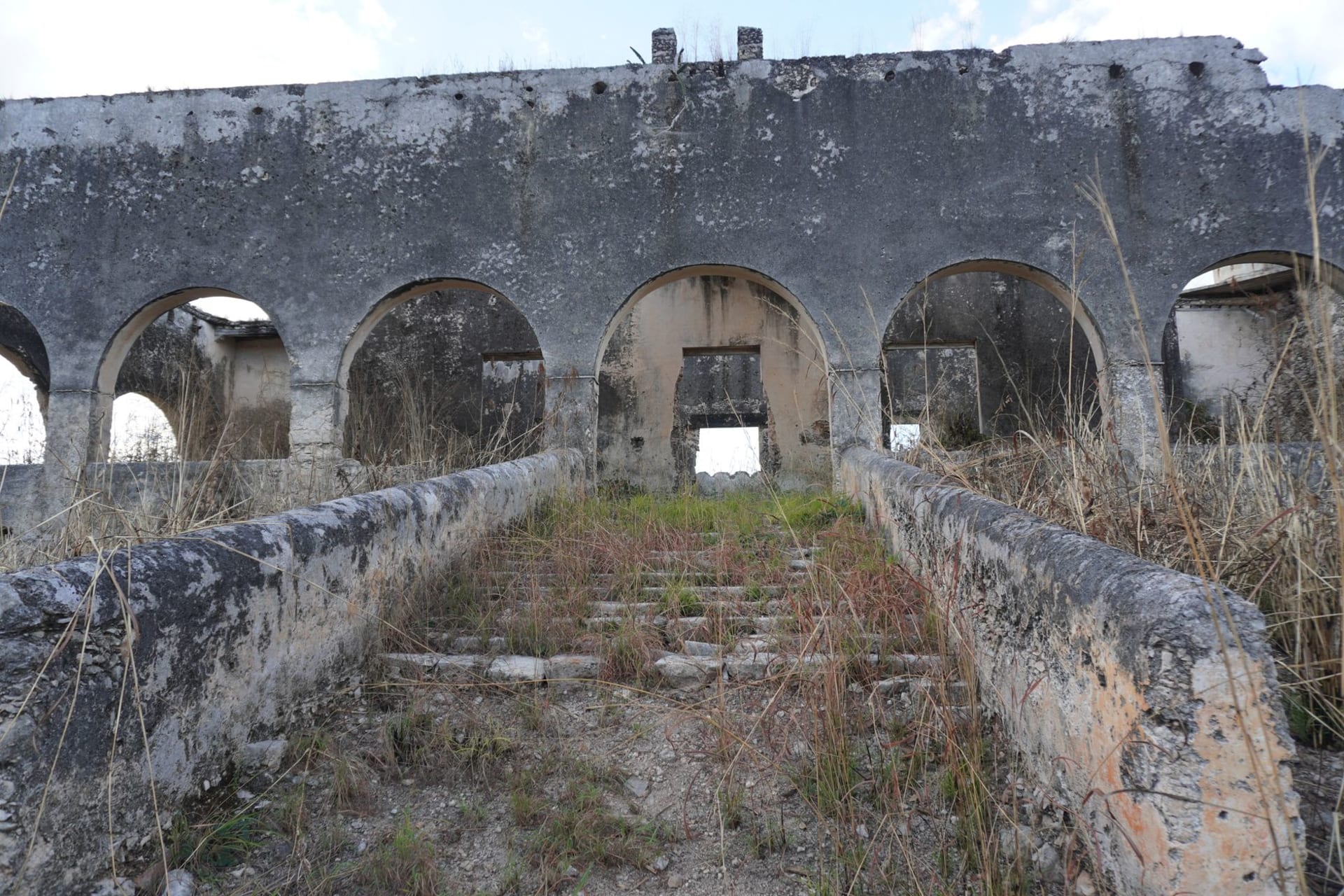
Lelu was the royal capital of the Kosraean chiefdom, constructed around the thirteenth and fourteenth centuries — a near-contemporary of Nan Madol across the FSM on Pohnpei, and built using the same fundamental material: prismatic basalt columns, stacked into walls that enclose compounds, pathways, burial crypts, and the residences of the island’s elite. The basalt here is a slightly different color than at Nan Madol — darker, almost charcoal in the rain — and the site sits on actual land rather than over a lagoon, so the jungle has had full access to it. Trees grow through the walls. Roots split the stonework from below. Vines drop from the tops of columns that are still, despite everything the jungle has done to them, four and five meters high. The encroachment gives the site a different quality from its Pohnpei counterpart — less alien, more melancholy, the stones wearing their abandonment more openly.
Kileto walked me through the main compounds, pointing out the function of different enclosures — the sleeping quarters of the high chiefs (feasting), the sacred areas where entry was restricted by rank, the burial platforms still visible as raised stone rectangles under a carpet of leaves. His knowledge was informal rather than scholarly: the kind of information that passes from grandparent to grandchild, with gaps and embellishments and occasional moments of genuine uncertainty where he simply said he didn’t know. This honesty was its own kind of information. The ruins are real and the knowledge of them is partial, and that combination feels more accurate to history than certainty would.

We spent two hours inside the complex and didn’t see another soul. On the way out, Kileto showed me a small section of canal — still partially intact, now shallow and green — that once connected the royal compound to the lagoon, allowing canoes access directly to the chiefs’ enclosures. He pointed at it with a casualness that suggested he’d never quite considered it remarkable. For me, the sight of that canal — twelve hundred years old, still holding water, with a fern growing from one of its stones — was the moment the visit became something I would carry for a long time.
When to go: Year-round, though the dry season (December to April) makes access easier and the walls more photogenic in clearer light. The ruins require a local guide or advance arrangement — contact Kosrae Nautilus Resort or any guesthouse in Tofol for connections.