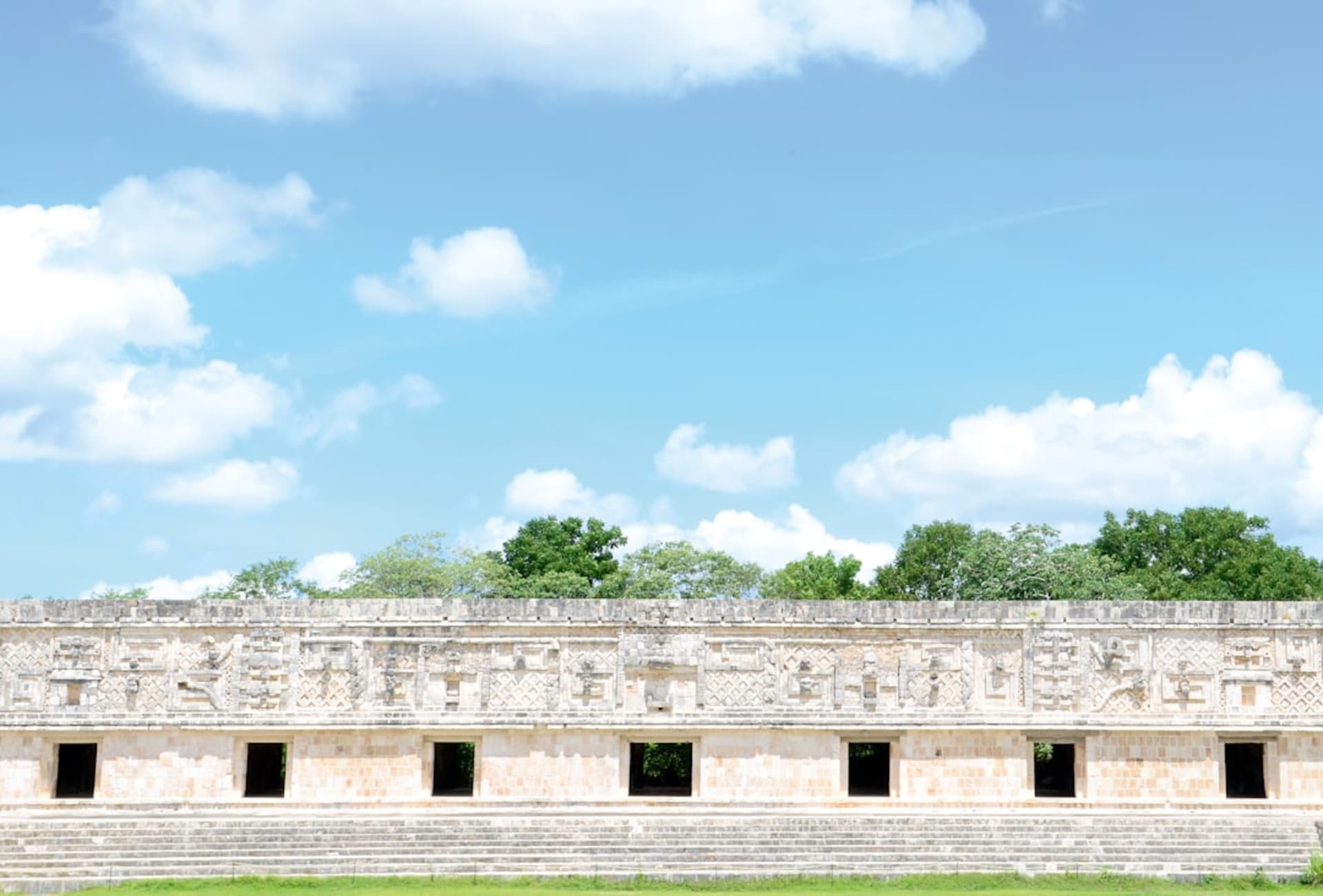
Dzibilchaltún
"Mexico keeps doing this to me: something extraordinary thirty minutes from everywhere, and the parking lot is half empty."
The drive from central Mérida takes fifteen minutes. Fifteen minutes. I kept checking the map because I was convinced I had gotten it wrong — that something with the weight of Dzibilchaltún’s history, something UNESCO-listed and continuously occupied for three thousand years, couldn’t possibly sit this close to a city of a million people. I arrived at six-thirty in the morning, well before the eight o’clock opening, and sat in the parking lot until a guard waved me through early. There were eleven other people on the site. I counted.
The Temple and What It Does at Dawn
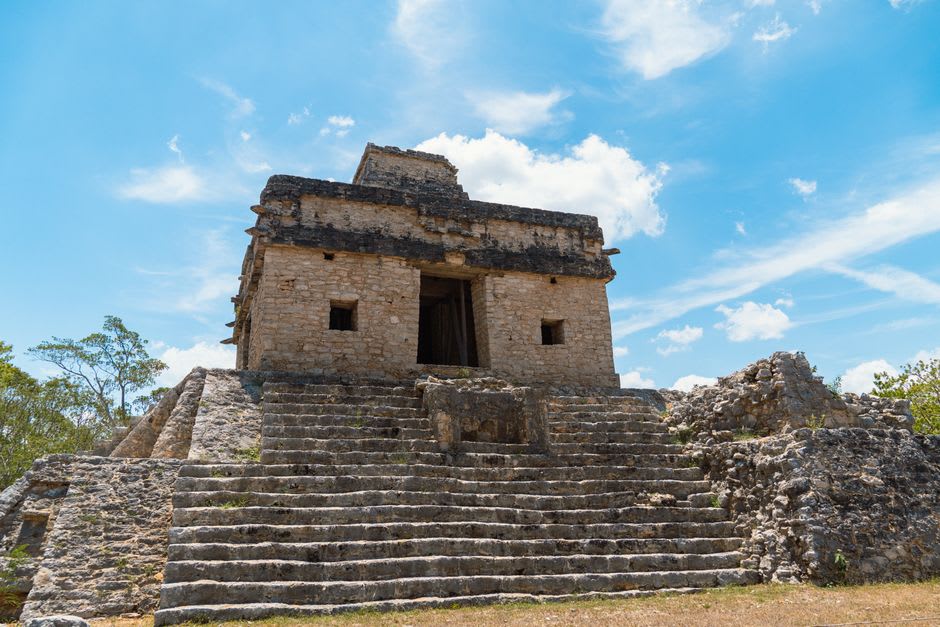
The Temple of the Seven Dolls earns its name from seven small clay figurines found inside during excavations in the 1950s — one of them apparently a hunchback, another possibly pregnant, all of them strange and slightly unsettling in the way that ancient ritual objects tend to be. But the building’s real distinction is what happens twice a year: on the spring and autumn equinoxes, the rising sun passes directly through the eastern doorway and the western doorway simultaneously, flooding the narrow interior with light from one side to the other. It’s one of those architectural achievements where you stand in front of it and run the math in your head and still can’t quite believe it was deliberate.
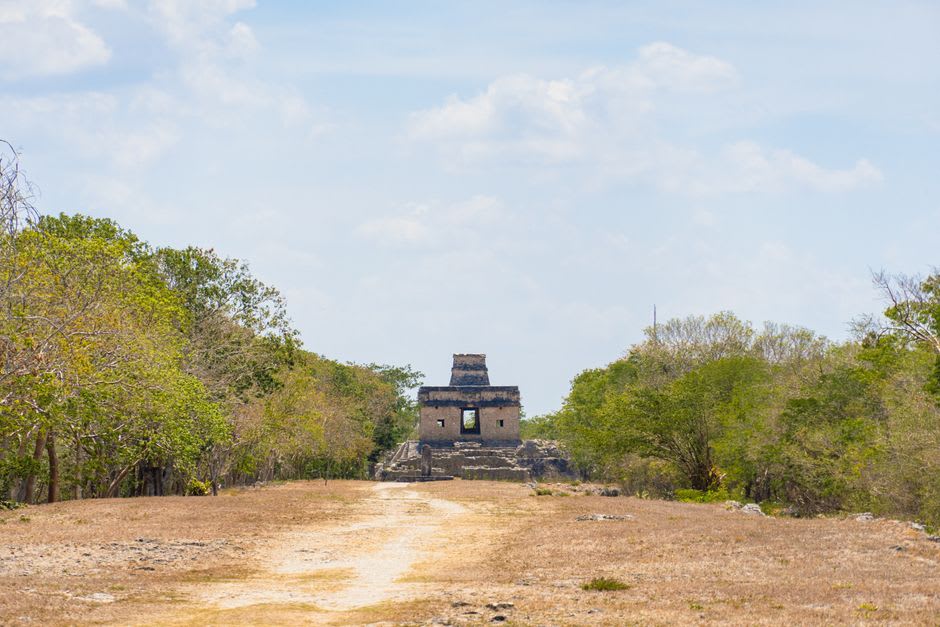
I was there in late March, a week after the equinox, so I missed the alignment by days. The morning light still caught the pale limestone at an angle that made the whole structure glow a warm amber against the deep blue of a Yucatán sky that hadn’t yet decided to be hot. There’s a long sacbé — a raised Maya causeway — leading toward the temple from the central plaza. Walking it at dawn, alone, with the grackles making noise in the scrub on either side, I felt the three thousand years.
Cenote Xlacah
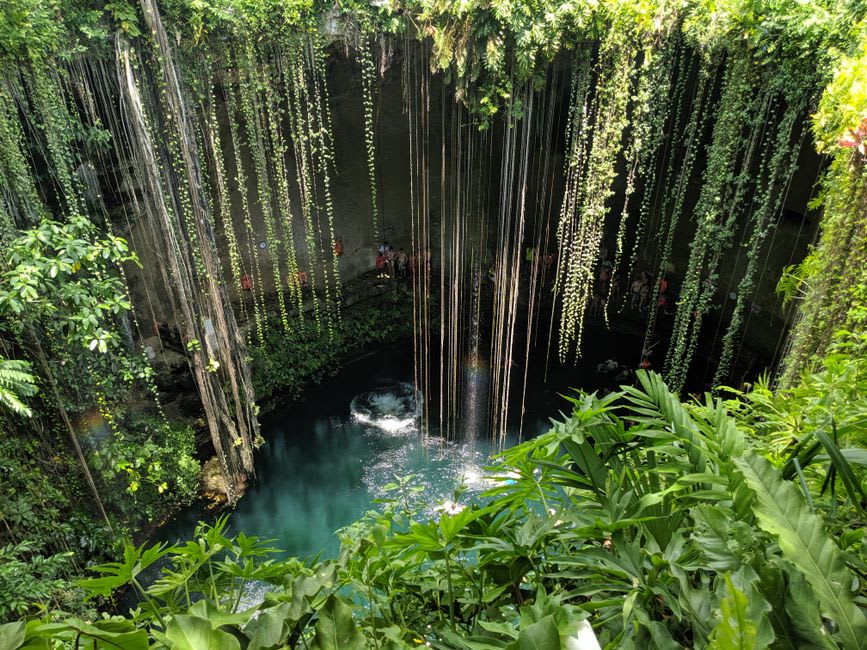
The cenote is not incidental. It sits at the heart of the site, which makes sense — the Maya built here precisely because the water was here. Cenote Xlacah is deep, some sources say over forty meters, and clear enough that you can watch fish drift through the blue-green dark below your feet. You can swim in it. This is rarer than it should be at active archaeological sites, and I appreciated it accordingly.
I had the cenote almost entirely to myself at seven in the morning, treading water above however many centuries of accumulated history, watching a great-tailed grackle pick something off a nearby stone with the practiced indifference of an animal that has never once considered tourism. The site provides changing rooms near the cenote and a small palapa with plastic chairs. It’s not luxurious. It doesn’t need to be. The thing nobody tells you is that swimming here after walking the ruins — sweaty, limestone dust on your sandals — is one of the more quietly satisfying experiences the Yucatán has to offer.
The Museum at the Entrance
There’s a small museum at the site entrance — the Museo del Pueblo Maya — that most visitors walk straight past on their way to the ruins. I nearly did. It contains the seven dolls themselves, displayed in a low case with the quiet confidence of objects that have outlasted everything. There are also stelae, ceramics, and a room devoted to the Spanish colonial presence on the site, including a roofless open chapel built directly over Maya structures. Whether that reads as erasure or accidental preservation probably depends on your mood.
The museum is included in the entrance fee and takes about thirty minutes if you read the placards. I’d do it on the way out, once the site has given you enough context to make the objects mean something.
Getting There
From central Mérida, take the Periférico north toward Progreso and follow the Dzibilchaltún signs — the turnoff is clearly marked. By car it’s fifteen to twenty minutes. Colectivos from Mérida’s terminal on Calle 62 run toward Progreso and pass near the entrance road; from the highway it’s roughly a kilometer on foot. The site opens at eight and closes at five. Budget three hours minimum if you plan to swim.