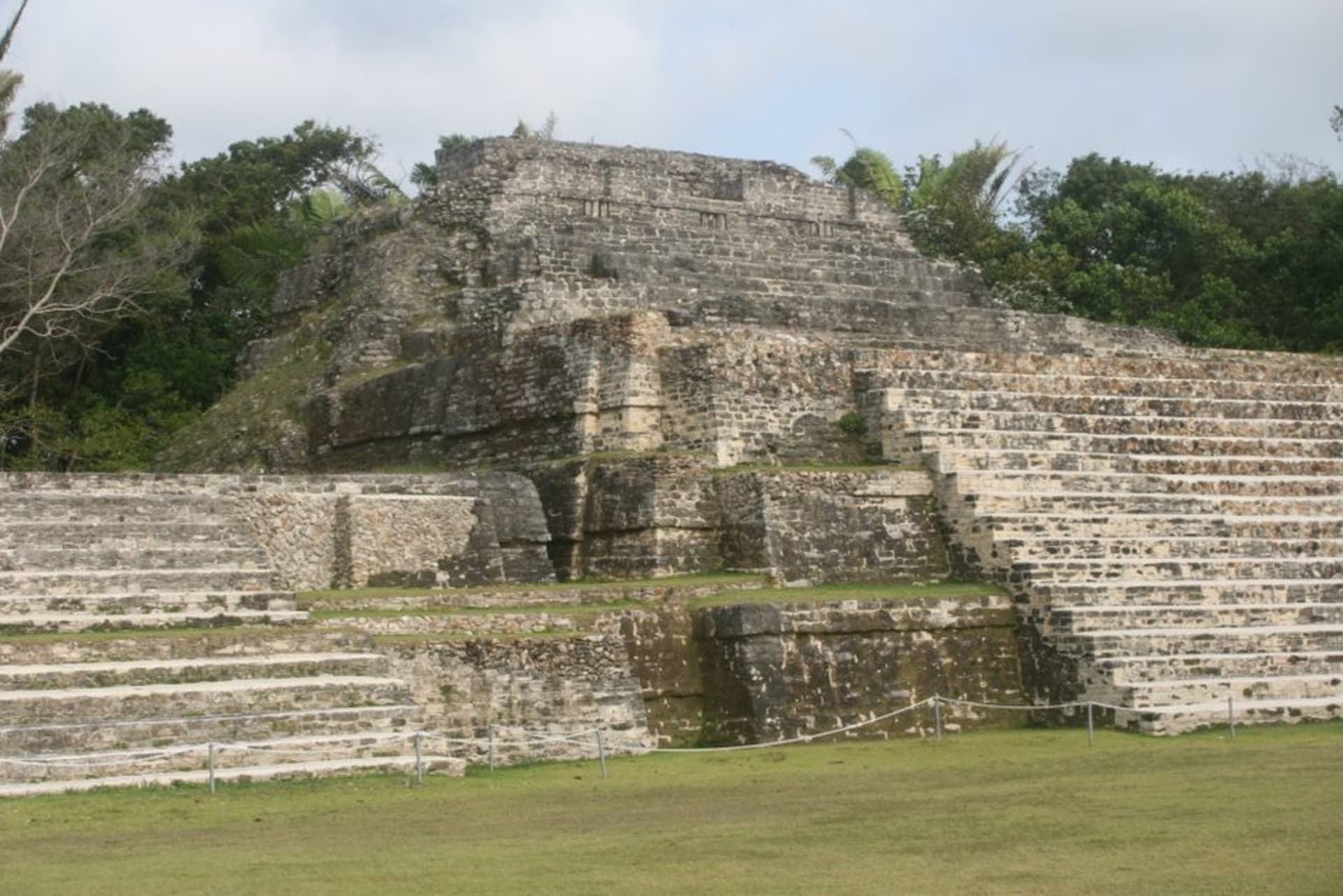
Acanceh
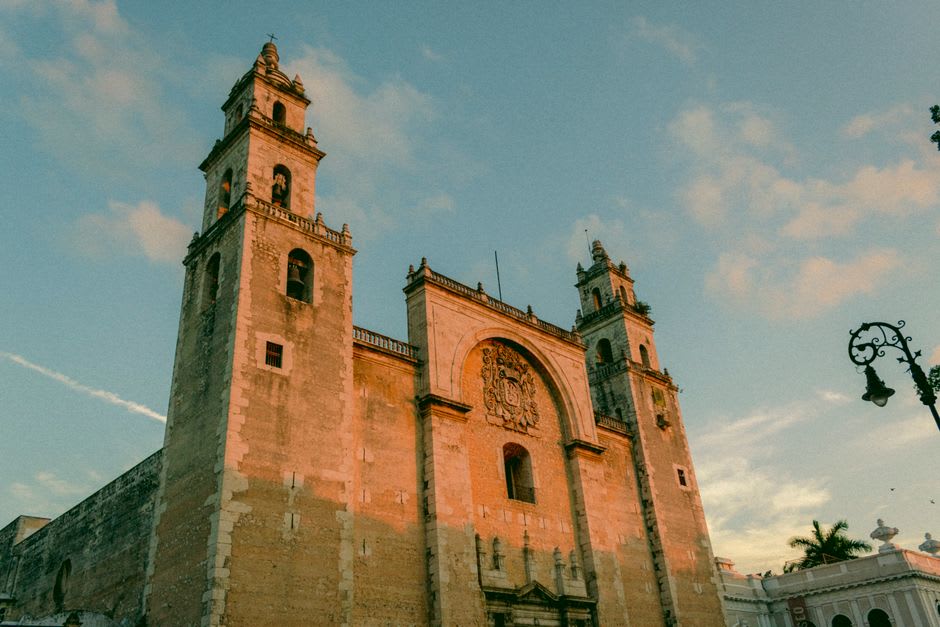
"The pyramid and the church are so close together that at certain angles they look like one building — an accidental monument to five centuries of uneasy coexistence that Yucatán keeps producing."
I pulled into Acanceh expecting a village with a pyramid somewhere on the edge of things, accessible by a dirt path, with a sign explaining it. What I found was a pyramid sitting directly on the plaza, twenty meters from the parish church, flanked by taco stands and a pharmacy. A man was selling paletas from a cart parked at the pyramid’s base. Two women were eating marquesitas on the church steps. Nobody was looking at the pyramid at all. I stood there for a moment recalibrating, which is a sensation Yucatán seems to specialize in producing.
The Pyramid of the Stuccoes
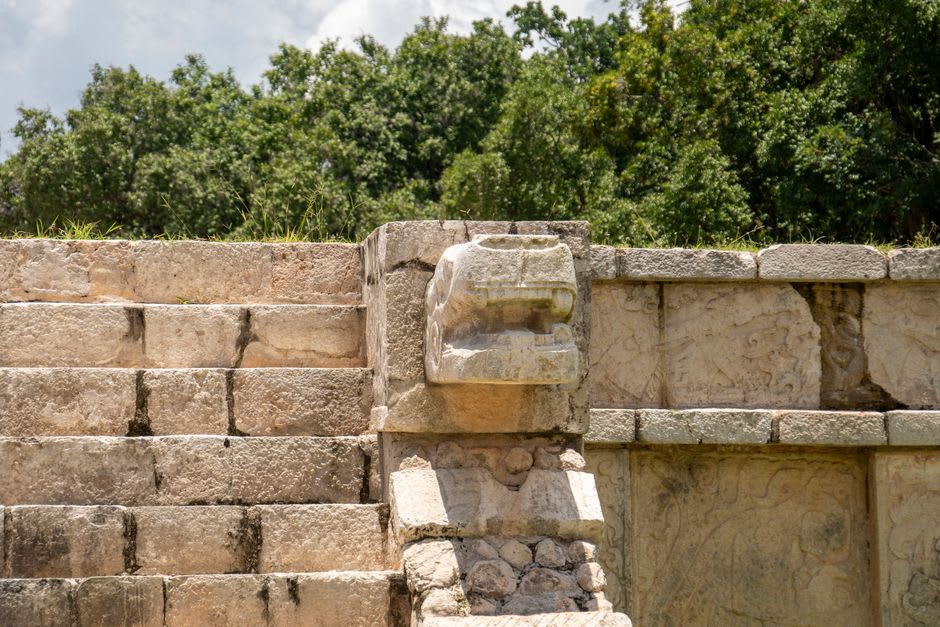
This is the thing to understand about Acanceh: the site is not roped off, not landscaped, not staged for photographs. You pay roughly thirty pesos at a small booth beside the steps — a price so improbable I checked it twice — and then you climb. The pyramid dates to roughly 300–600 CE, modest in scale by Chichén Itzá standards, but what it carries on its upper chamber is not modest at all. The Pyramid of the Stuccoes takes its name from the relief carvings sheltered beneath a protective roof on the upper level: zoomorphic deity masks, a jaguar face in high detail, bat-winged figures rendered in stucco so precise that early-twentieth-century archaeologists spent years debating their iconographic system. I am not an archaeologist. I just stood in the narrow shade of the protective roof reading the shapes, feeling the specific weight that comes from looking at something made fourteen hundred years ago and left here, in this town, on this plaza, more or less ever since.
The Market Behind the Church
The Mercado Municipal in Acanceh is tucked behind the church on Calle 20 and still functions as a market rather than a market experience. I arrived mid-morning on a weekday and ate sopa de lima at a metal table while a woman two seats over argued on the phone and a teenager swept the floor around my feet without interrupting either of them. The lime broth was sharp and clear, the shredded chicken piled without ceremony, the tortillas wrapped in cloth so they’d stay warm. I ate slowly because there was no reason to eat fast. Through the market’s open side wall, the pyramid was visible above the pharmacy awning across the street, its profile as unremarkable to everyone around me as a water tower would be. Acanceh residents have presumably filtered it out entirely. The filter required to do that — to make a pre-Columbian ceremonial structure into background — is, in its way, as interesting as the structure itself.
How to Use the Day
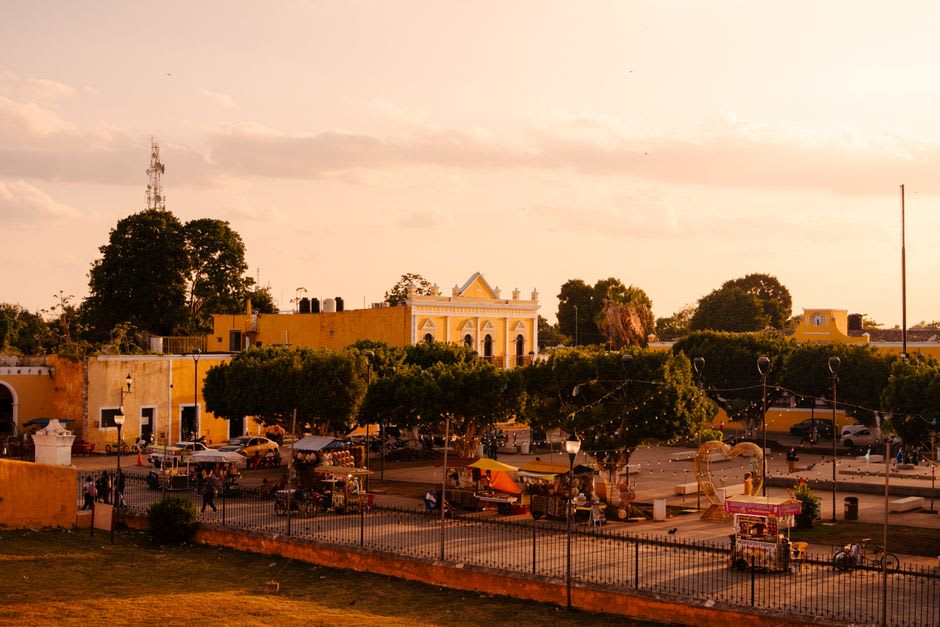
Acanceh is not arranged for overnight visitors and I didn’t go looking for a hotel. This is a day trip, and a well-proportioned one: arrive by nine while the light is still manageable and the market is moving at full pace, climb the pyramid before the midday heat settles onto the stones, eat at one of the comedor tables on Calle 22 before noon. By one o’clock you’ll have seen what there is to see. The town rewards a slow walk regardless — the painted facades along Calle 19, the kiosk in the plaza where men sit through the afternoon playing cards — before you decide whether to drive back to Mérida or continue south toward Mayapán to make a circuit of it.
Getting There
Acanceh is 28 kilometers southeast of Mérida along Highway 18. By car, the drive takes forty to fifty minutes. Colectivos depart throughout the morning from Parque de San Juan in Mérida for around twenty pesos; they drop you on the main road and the plaza is a five-minute walk from there. There is no marked bus station. The pyramid is visible from the road in — follow the church tower and you’ve arrived.