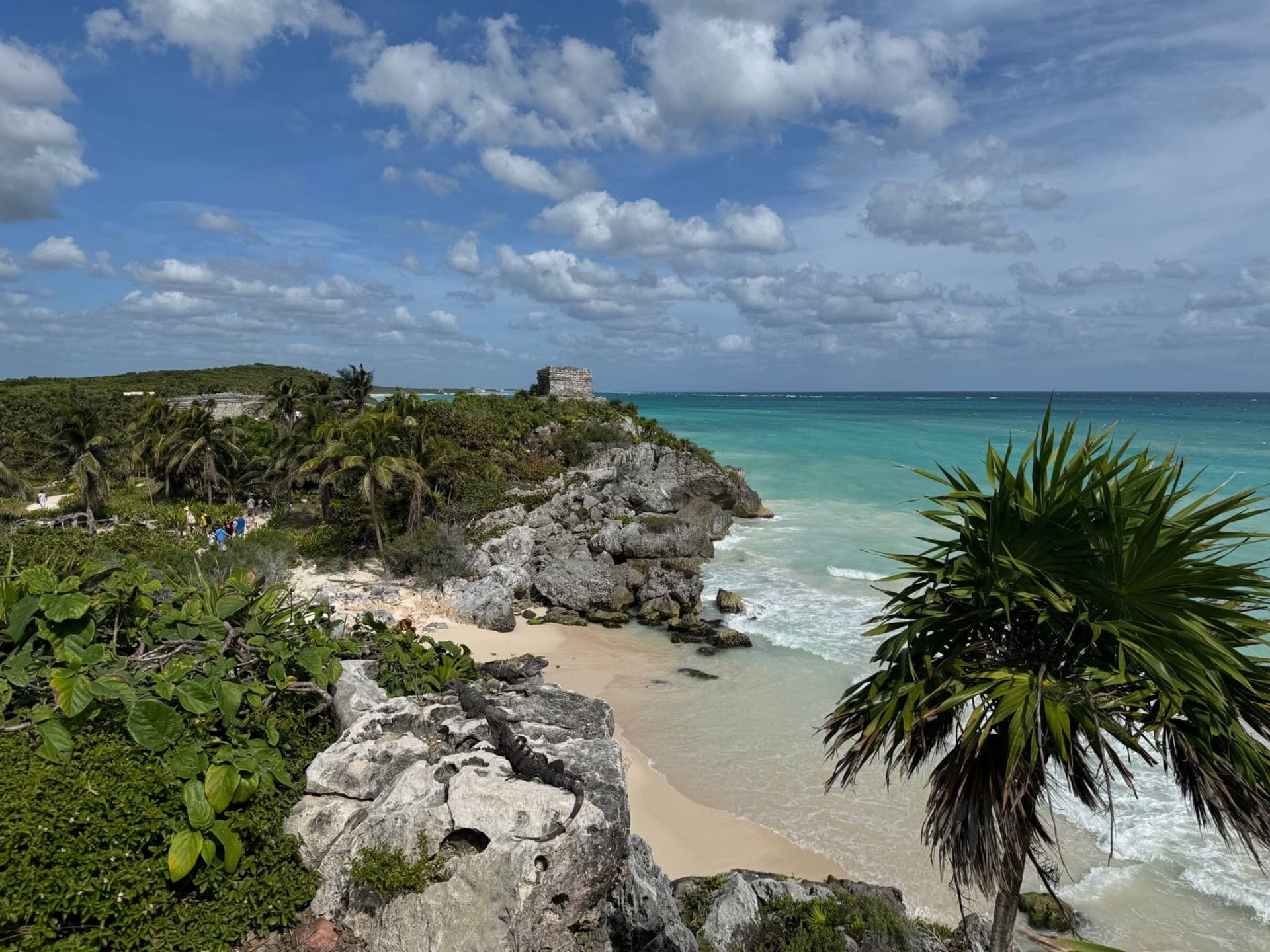
I arrived in Tulum from the south, on a colectivo that smelled of salt and sunscreen, watching the jungle thicken as the highway narrowed. Nothing prepares you for the first glimpse of the ruins — not photographs, not descriptions, not the half-dozen people on the van who had already been twice. You crest a slight rise on the Zona Arqueológica path and suddenly the Caribbean is just there, a color that should not exist in nature, pressed flat against the sky below towers of pale limestone.
The Ruins at the Edge
The Castillo — the main temple — sits at the highest point of the cliff, perhaps fifteen meters above the water. The Iguanas have claimed the stones completely; they drape themselves across carved lintels like they have tenure. I walked the perimeter of the site in the early morning, before the tour groups arrived from Playa del Carmen, when the only sounds were surf and wind moving through the dry coastal scrub. The temple of El Dios Descendente, the Descending God, faces west — a deliberate alignment, the guides will tell you, with the setting sun at certain times of year. Standing there, I believed it completely.
Underground Tulum
The cenotes are where Tulum’s second life begins. Lia and I rented bikes one afternoon and pedaled south along the dirt road that runs parallel to the beach, past the clutch of boutique hotels and their hand-lettered signs, to Gran Cenote. Entering a cenote for the first time is a specific, unrepeatable shock: the air drops five degrees, the limestone closes over your head, and suddenly you are floating in water so clear it appears backlit from below. Blind cave fish ghosted around my ankles. Stalactites hung within arm’s reach. It felt genuinely subterranean, genuinely ancient — not a managed attraction but a world that had simply been there, waiting, for longer than the ruins above.
Eating on Avenida Satelite
The real town — Tulum Pueblo, not the hotel zone — is a different place entirely, loud and practical and full of taqueria smoke. I ate al pastor twice daily from a stand on Avenida Satelite, the central artery where locals actually live. A jamaica agua fresca sweating in the midday heat, the char of the trompo, corn tortillas doubled up so they hold the weight — this was the meal I kept returning to. It cost forty pesos and tasted like everything the beach clubs charge four hundred for are quietly trying to replicate.
The unexpected thing: the sea turtles. In season, they haul themselves onto the beach at night, indifferent to the hotels built around them. I watched one for twenty minutes from a respectful distance, a creature from a world older than the ruins, older than anything I had come to see.
When to go: November through February offers dry weather, manageable crowds, and softer light — the shoulder between hurricane season and the spring-break surge. Sea turtle nesting runs June through November for those who want to time their visit accordingly.