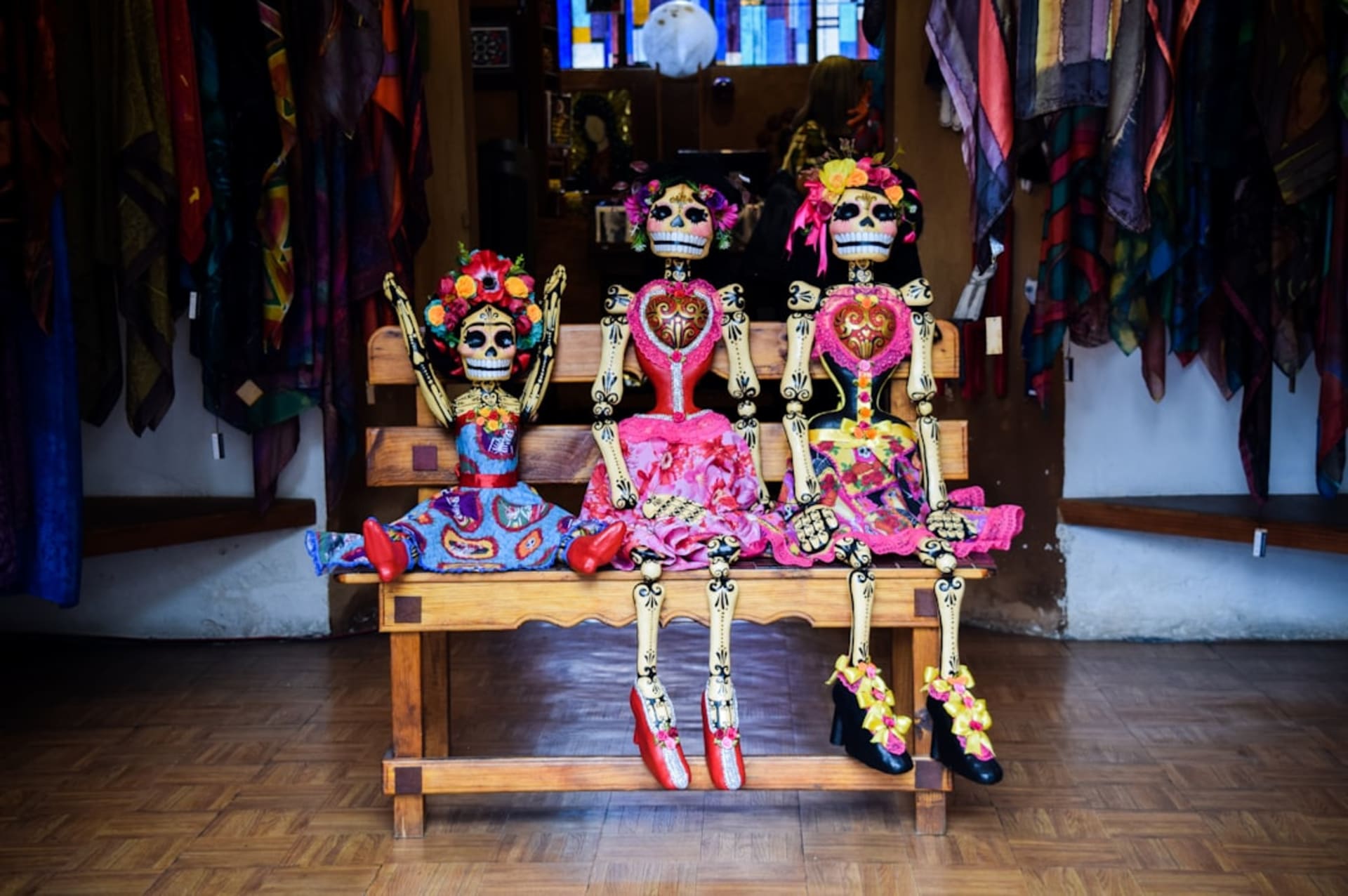
The first thing you notice is the cliffs. Not the town, not the market, not the pyramid — the cliffs. They ring Tepoztlán on three sides like the walls of a ruined amphitheater, basalt columns rising two hundred meters straight out of the valley floor, stained dark with moisture and covered in copal trees. The effect, arriving by bus from Mexico City on a Friday afternoon, is of driving into somewhere fundamentally enclosed — a place that has its own weather, its own gravity, its own set of rules.
I came on a recommendation from a woman who sold cheese at the Mercado de Medellín in Roma Norte. She told me it was two hours on the bus from TAPO and that I should go on a weekday if I didn’t want to share it with half of Condesa. I went on a Wednesday. She was right on both counts.
The Pyramid
The Tepozteco pyramid sits at the top of a steep forested ridge above the town, accessible via a path that climbs roughly 400 meters in under two kilometers. The park entrance is at the end of Avenida del Tepozteco, past the last taco stall, up a stone staircase that transitions quickly into packed earth and loose rock. The entire climb takes between 45 minutes and two hours depending on your fitness and honesty with yourself.
I did it the first time in the heat of a November afternoon, which I do not recommend. By the time the path flattened onto the ridge and the pyramid appeared — smaller than expected but dramatically placed, cantilevered over the valley with nothing behind it but sky — my shirt was translucent and I had consumed both of the water bottles I had brought. A man selling tamarind candies and drinks appeared from nowhere, which I interpreted as either entrepreneurialism or divine intervention.
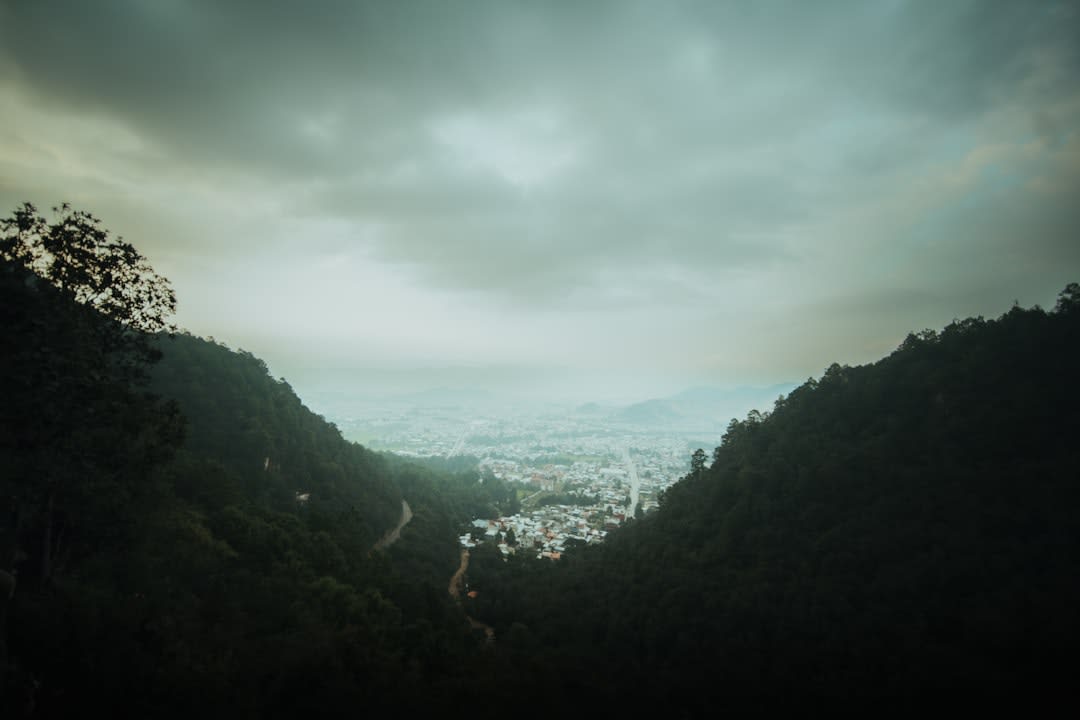
The pyramid is dedicated to Tepoztecatl, the Nahua deity of pulque and the night wind — one of the four hundred gods of drunkenness in the pre-Hispanic pantheon, which I find a satisfying concept. The structure dates to around the 12th century and was in active use for religious ceremonies when the Spanish arrived. From the top platform, the village below looks small and the valley looks enormous. In the right light — early morning, when the cliffs catch the first sun and the rest of the canyon is still in shadow — it is one of the more extraordinary viewpoints I have found in Mexico.
Go early. Before 9am on weekdays, you may have the path mostly to yourself. On weekend afternoons in high season, it becomes a line of day-trippers moving at the pace of the slowest member of each group. Bring more water than you think you need. The tuck shop at the top sells at a serious premium.
The Market and What to Eat
The Sunday market on Avenida Revolución de 1910 is the social and commercial center of Tepoztlán. It spills out from the market building across the surrounding streets and draws vendors from across the region selling crafts, textiles, crystals (Tepoztlán has a strong spiritual community and a commensurate crystal economy), dried herbs, artisan food, and the usual tourist-oriented goods.
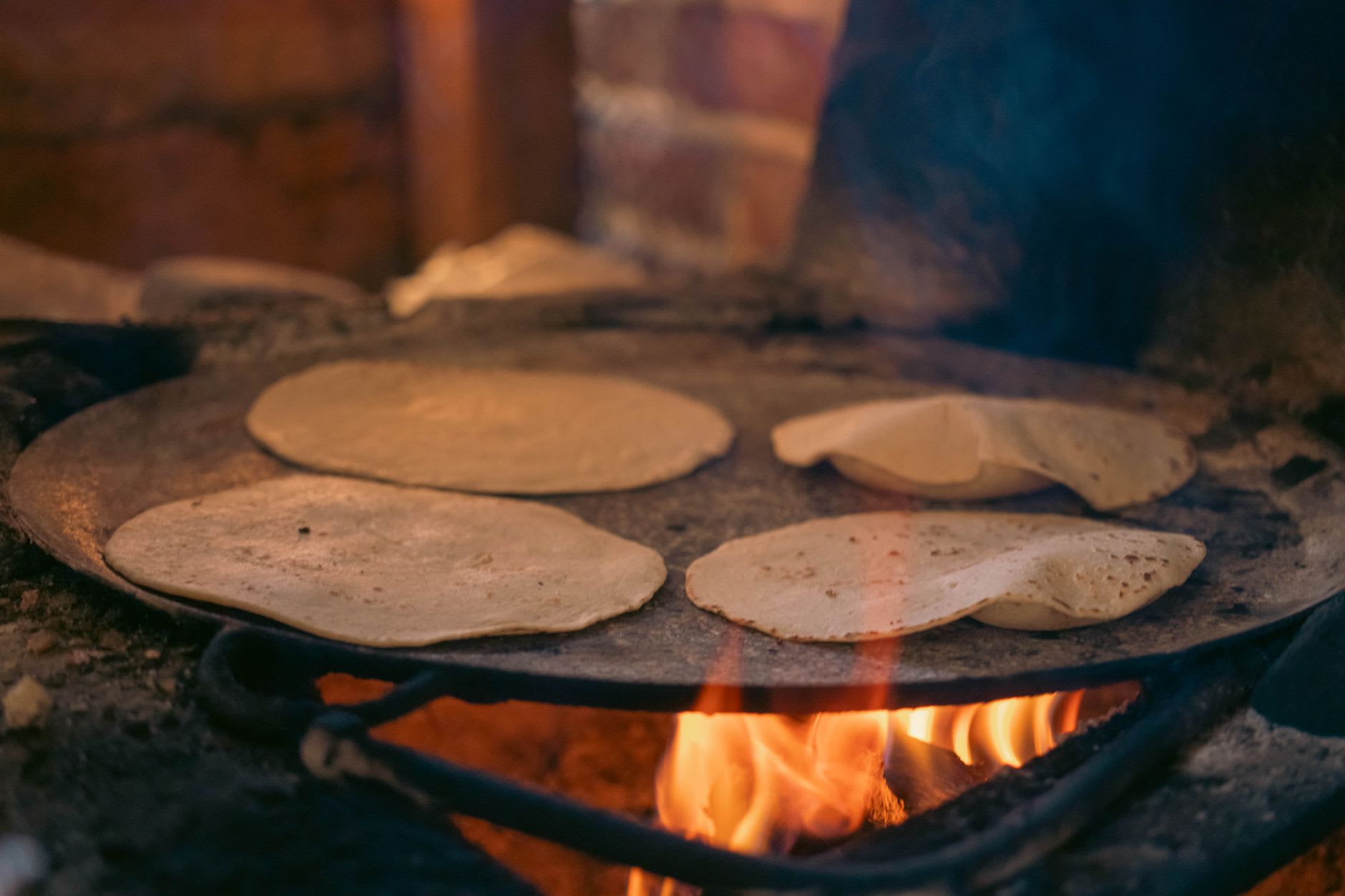
The eating, however, is exceptional. Look for the women cooking at comals under the permanent stalls inside the covered market:
Tlayudas — the Oaxacan flatbread makes it up here in a solid form. The version I ate at a stall near the market entrance used locally sourced black beans and quesillo from a producer down the road. It was very good.
Cecina — thin-cured beef, dried in the sun, sold by weight and grilled over charcoal at the market. The Morelos version uses chile ancho in the curing process and is slightly different from the Oaxacan style.
Atole and champurrado — served from large clay pots in the morning, made by two women who have clearly been doing this for a long time. Cold mornings, hot champurrado, a tlayuda to the side: this is breakfast.
Tepache and pulque — Tepoztlán is pulque country. The agave plantations on the slopes above town produce the sap that becomes pulque, the fermented drink that predates mezcal and was the ritual beverage of Tepoztecatl himself. The local pulquería on Calle del Tepozteco serves it natural or curado (blended with fresh fruit) in clay cups. It has a faint fermented-mushroom taste that takes some adjustment and then becomes compulsive.
For sit-down meals, the restaurants on and around the main plaza tend toward the expensive and tourist-oriented, with notable exceptions. El Ciruelo, in a garden setting on Zaragoza, has been recommended to me twice by people I trust who live in Morelos, though I have eaten there only once. The mole verde was correct. La Sombra del Tepozteco, closer to the market, is reliable for straightforward Mexican food at local prices.
The Convento de la Natividad
Before the pyramid pulls you uphill, spend an hour at the Dominican monastery at the center of town. The Convento de la Natividad was built in 1559 on the foundations of a Nahua ceremonial complex — the Spanish habit of constructing churches directly over indigenous sacred sites was here carried out with particular thoroughness. What remains is one of the oldest and best-preserved colonial monasteries in Morelos: an atrium wide enough to have served as an open-air church for thousands of converts, a fortified stone façade that looks more like a battlement than a place of worship, and interior frescoes that have survived five centuries with varying degrees of grace.
The murals in the cloister are the reason to linger. Painted in black and white in the Tequitqui style — a hybrid of European technique and indigenous iconography that emerged in the decades after the conquest — they depict scenes from the life of Santo Domingo alongside motifs that a Nahua painter has quietly inflected with pre-Hispanic symbols. You can spend twenty minutes in there finding the places where the two traditions bleed into each other.
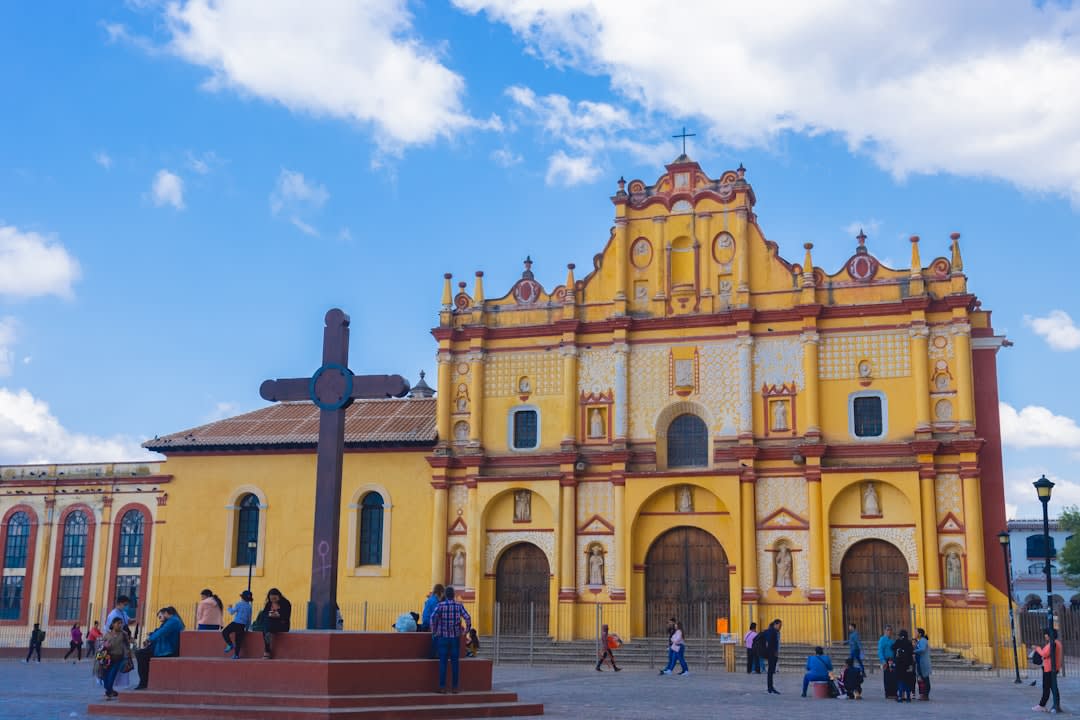
Entry is free. The monastery is attached to the Parroquia de la Natividad on the main plaza. Go in the morning before the tour groups arrive from Cuernavaca.
Walking the Streets
Tepoztlán’s street grid is straightforward and small enough that you will cover it entirely by accident over two days. The main commercial axis runs along Avenida Revolución de 1910 toward the market. The residential streets to the east and north — Calle del Olvido, Calle Netzahualcóyotl, the unnamed lanes that climb toward the base of the cliffs — are where the town’s actual texture lives.
The houses here are built in a vernacular style that is partly colonial, partly pre-Hispanic in its massing: low walls of stone or adobe, deep portales, interior courtyards hidden behind heavy wooden doors. Many are painted in the saturated colors — cobalt, ochre, terracotta, deep green — that characterize the Pueblo Mágico designations, but in Tepoztlán’s case the palette feels earned by the landscape rather than imposed by a tourism board.
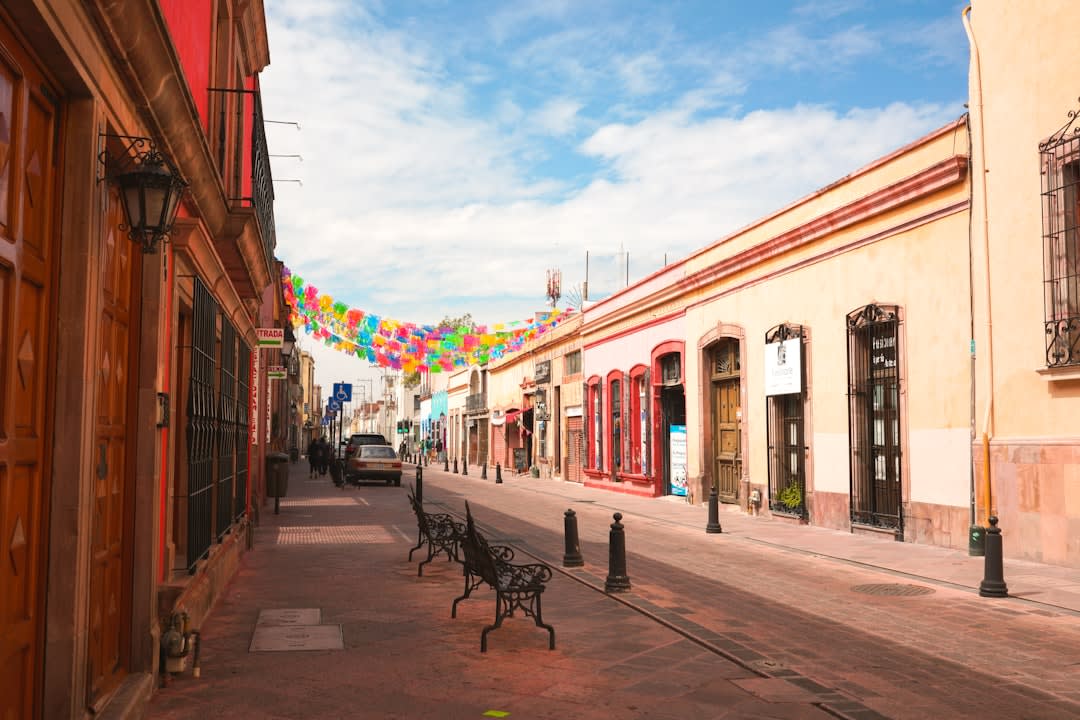
Walk toward the cliffs in the late afternoon. The path that continues past the Tepozteco trailhead entrance — not up the mountain, but along the base of the escarpment — passes through secondary forest and brings you to a series of seasonal waterfalls that run properly only in the rainy season but leave impressive wet-rock marks the rest of the year. In July and August, when the whole valley turns improbably green and afternoon thunderstorms roll in from the south, those waterfalls come down in white columns and the cliffs drip for hours after.
The Maguey Landscape
The slopes above town are covered in maguey — the genus of agave that produces pulque, the pale fermented drink that has been made in this valley for at least a thousand years. The plants grow slowly, taking between eight and fifteen years to reach maturity, at which point the central stalk is cut and the cavity fills with aguamiel, the sweet sap that ferments naturally into pulque within hours of harvest. A mature maguey produces enough aguamiel for one tlachiquero — the specialist who harvests it using a long gourd called an acocote — to collect twice daily for several months before the plant dies.
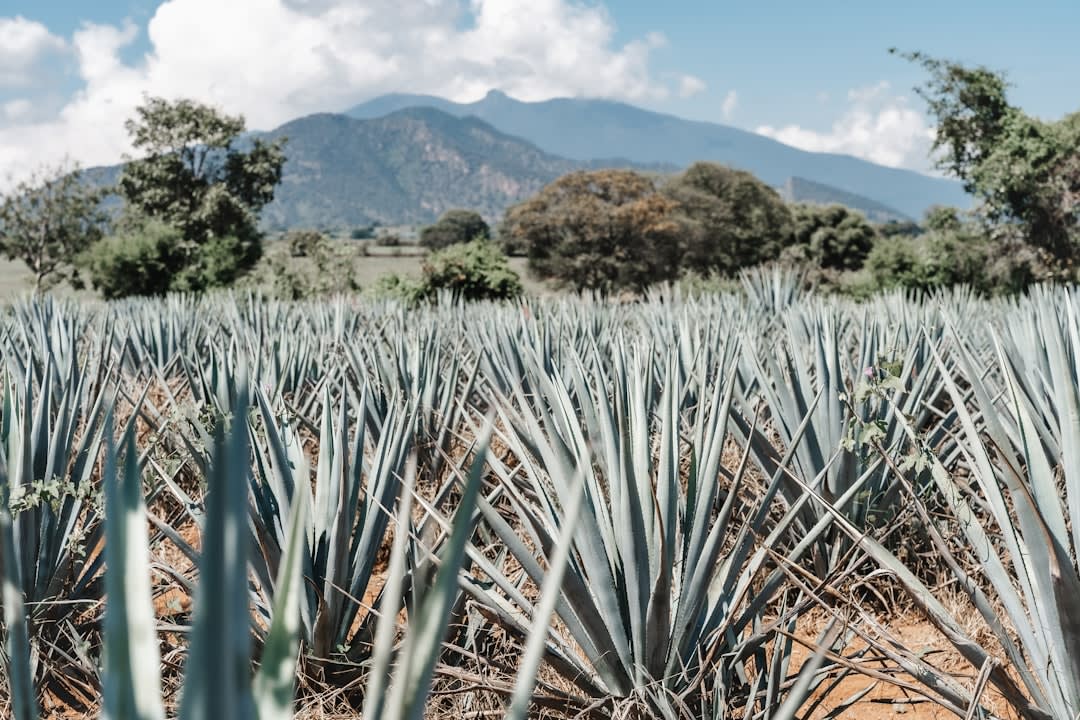
The pulquería on Calle del Tepozteco is the right place to taste this in context: a dim room with plastic tables, the pulque arriving in a clay cup still faintly warm from the vessel, curado versions blended with guayaba or tuna fruit to offset the sourness. Pulque does not travel — it begins to over-ferment within a day or two of leaving the tlachique — which means the version you drink here, an hour from the source, is categorically different from anything labeled pulque in Mexico City. The difference is substantial.
The Valley at Night
Something happens to Tepoztlán after dark on weekdays that doesn’t happen on weekends: it becomes quiet. The day-trippers have gone, the market stalls have packed up, and the cliffs — which catch the last light around 6pm in winter — begin to disappear into darkness. The town has a specific nighttime silence that feels earned by its geography. Enclosed on three sides, it doesn’t get the wind that sweeps through the open valleys nearby.
I stayed at a small posada on a side street for two nights on my second visit. On both evenings I sat on the rooftop terrace after dinner and watched the lights of Mexico City glow against the sky to the north — a faint orange haze above the mountains, evidence of fourteen million people going about their evening business two highway hours away. The juxtaposition is disorienting. Tepoztlán feels genuinely remote even though it isn’t.
The Spiritual Economy
Tepoztlán has a substantial population of what you might call seekers — people who came for a retreat, extended, and never left. This manifests as a proliferation of temazcal ceremonies, cacao circles, Ayurvedic practitioners, and signs advertising plant medicine in various forms. The town accommodates this alongside its indigenous Nahua culture and its weekend tourism economy with a pragmatism that is very Mexican. Nobody seems particularly troubled by the contradiction.
If temazcal is something you want to try, Tepoztlán is a reasonable place to do it. The pre-Hispanic sweat lodge ceremony, conducted in a small clay or stone structure heated by volcanic rocks, is offered at several places in town. The experience ranges from the genuine and rigorous (a traditional ceremonialist, three hours, no phones) to the tourist-facing and abbreviated. Ask around rather than booking online.
Where to Stay
Tepoztlán rewards staying overnight. The day-trip version — bus in, hike up, bus back — misses the thing that makes it worth knowing about. The town’s character emerges in the late afternoon and doesn’t fully arrive until after dark.
The accommodation range runs from basic posadas at 500–800 pesos a night to boutique hotels with pools and jungle garden rooms that charge Mexico City prices. The middle range is the right choice: posadas around 1,000–1,500 pesos with clean rooms, a rooftop or patio, and an owner who knows the town. Several are concentrated on the streets north of the market. Book ahead for weekends; weekday availability is rarely a problem even without a reservation.
Posada del Tepozteco has the most dramatic position in town — rooms built into the hillside with views directly up to the pyramid. Expensive by local standards but the terrace in the evening is extraordinary. Casa Bugambilia, smaller and quieter, on a side street two blocks from the market, is the kind of place where the owner leaves coffee in a thermos outside your door at seven in the morning. I have stayed in both. The second one felt more like sleeping in Tepoztlán, the first more like sleeping above it.
Day Trips from Tepoztlán
Cuernavaca — thirty minutes by car or colectivo — is worth a half-day. The Palacio de Cortés, built in 1526 by Hernán Cortés himself on the ruins of a Tlahuica palace, contains Diego Rivera murals commissioned in 1929 that are among the most politically unambiguous paintings of the twentieth century. Rivera used them to narrate the conquest from the indigenous perspective, which he painted directly onto the walls of Cortés’s house with a specificity that still lands hard. The Jardín Borda, an 18th-century garden estate built for a silver-mining family, is another hour well spent.
Xochicalco — roughly an hour southwest — is one of the most undervisited major archaeological sites in Mexico. The hilltop city flourished between 650 and 900 CE, after Teotihuacán’s collapse and before the Aztec expansion, and served as a kind of inter-cultural summit ground where traders and astronomers from Oaxaca, the Gulf coast, and the Maya regions converged. The Temple of the Feathered Serpent has some of the finest stone carving in Mesoamerica. The observatory — a subterranean chamber with a vertical shaft cut through the ceiling — was designed so that twice a year, on specific dates, sunlight falls directly on the chamber floor. Standing in it feels like being inside a clock built by people who took time more seriously than we do.
Las Estacas — an hour east — is a natural river park where a clear, cold spring feeds a long channel of water running through tropical forest. Mexicans have been swimming here since at least the 1950s. Bring a mask — the visibility is five meters in places and the channel is full of fish. It is one of the most pleasant places to spend a hot afternoon within two hours of Mexico City, and almost no foreign tourists have discovered it.
Getting There
The easiest route from Mexico City is via the ADO or OCC buses from TAPO (Terminal de Autobuses del Oriente) or the Línea terminal in Taxqueña. The journey takes between 1h30 and 2 hours depending on traffic, which means budget 2h30 on a Friday afternoon. The bus deposits you at the edge of the market area. No car required.
Driving is possible but the road from Cuernavaca involves a descent I found memorable in the wet season. The parking situation in town on weekends is the kind that makes you immediately grateful you took the bus.
When to go: Tuesday through Thursday avoids the weekend crowds entirely and the town reverts to something close to its actual self. The best months are October through January — dry, clear, the cliffs lit gold in the afternoons. July through September is the rainy season — the valley turns vivid green, the waterfalls run, and afternoon storms roll in daily. Worth experiencing at least once. Avoid Semana Santa and the Carnaval weekend in February, when the town fills to capacity and the hike becomes a queue.
Worth knowing: The town sits at around 1,700 meters elevation. Nights are cold in winter — bring a layer you did not expect to need. The pyramid path is free on most days but there’s an occasional entrance fee charged by the municipal government; bring a small amount of cash regardless. Colectivos to Cuernavaca depart from the market area and cost a fraction of the taxi price — ask at the market for the current stop location, which shifts periodically.