Teotihuacán
"The city was abandoned around 550 CE. We still don't know who built it or what they called themselves."
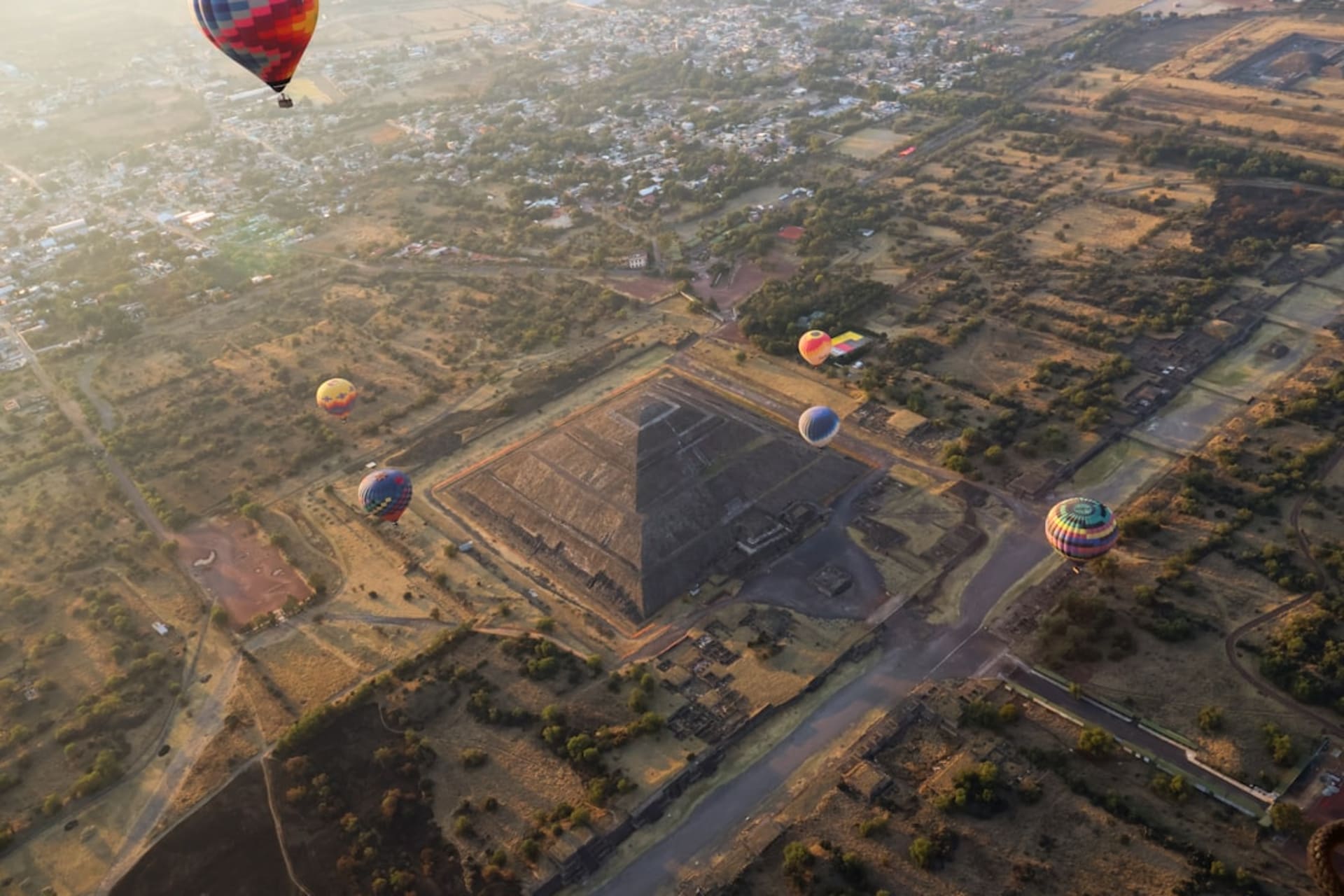
The most striking fact about Teotihuacán is not its scale, though the scale is extraordinary. It is not the precision of the alignment — the Pyramid of the Sun sits within a degree of true west, the Pyramid of the Moon faces true north, the entire city grid is rotated 15.5 degrees east of north to align with the setting of the Pleiades on a specific date. The most striking fact is that we don’t know who did any of this.
The city flourished between 100 BCE and 550 CE. At its peak it housed between 125,000 and 200,000 people, making it one of the largest cities on earth in the early first millennium — larger than Rome at several points in that period. It controlled trade routes across Mesoamerica, exerted cultural influence from the Gulf coast to Guatemala, and left traces of its artistic style in archaeological sites throughout the continent. Then, around 550 CE, it was deliberately destroyed — the ritual and administrative buildings along the Avenue of the Dead burned in a systematic way that suggests an internal uprising rather than a foreign invasion. The population dispersed. The city was never rebuilt.
The Aztecs, who arrived in the region a thousand years later, called it Teotihuacán — “the place where the gods were created” — because they found it abandoned, assumed it must have been built by gods, and incorporated it into their own cosmology. They were not the builders. Nobody knows who was.
Getting There at the Right Time
The single most important thing about visiting Teotihuacán is timing. The site opens at 8am. The tour buses from Mexico City and Cancún resort packages arrive between 10 and 11am. The window between eight and ten — particularly on weekdays — offers the ruins in a light and silence that the afternoon does not.
Take the first bus from Mexico City’s Terminal Norte (Autobuses México-Teotihuacán, departures every fifteen minutes from 5am). Arrive at gate 1 (closest to the Pyramid of the Moon) or gate 3 (entrance to the Avenue of the Dead near the Ciudadela). Walk directly to whichever pyramid you want to climb — the Moon is usually less crowded — and be at the summit for the first proper light.
The Pyramids
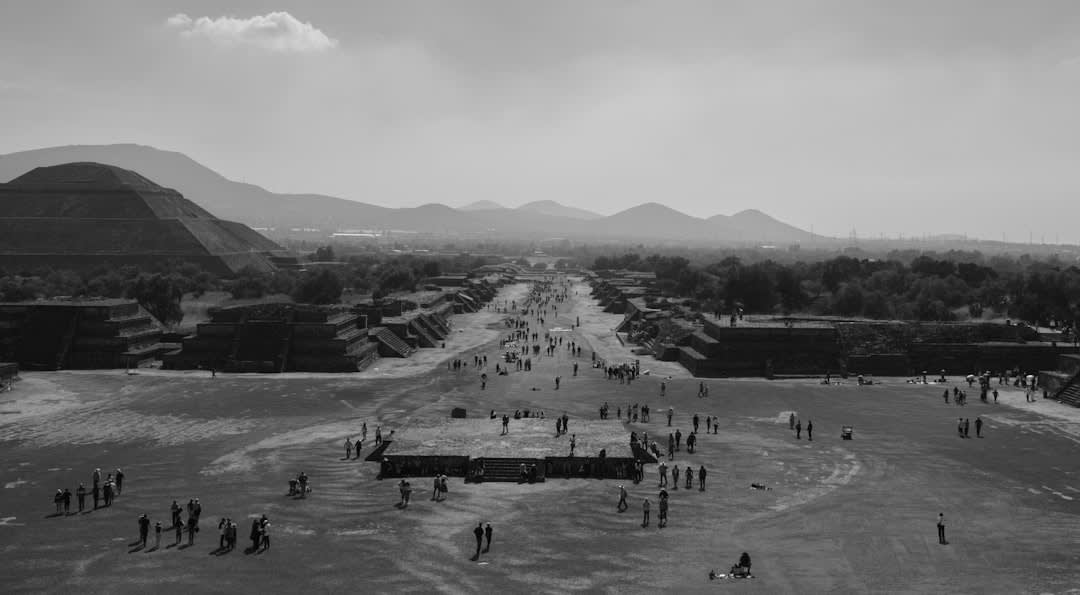
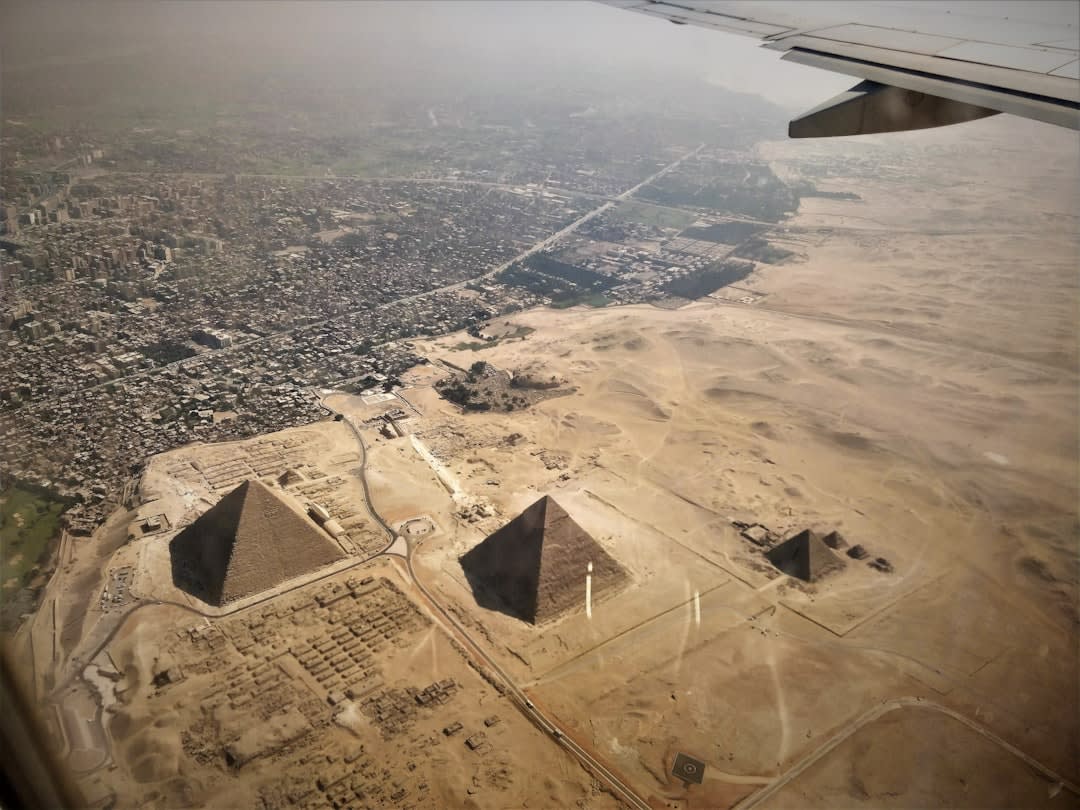
The Pyramid of the Sun is the larger of the two: 63 meters high, 215 meters on a side at the base, roughly the same base dimensions as the Great Pyramid of Giza but half its height. The four stairways — one on each side — are steep enough that many visitors descend sideways, gripping the chain railing. The summit platform gives a full view of the site layout: the Avenue of the Dead stretching two kilometers to the south, the Pyramid of the Moon at the north end of the avenue, the Ciudadela compound to the south, and the residential district grid spreading in all directions beyond the ceremonial core.
The Pyramid of the Moon, at the north end of the Avenue of the Dead, is slightly smaller but in some ways more dramatically placed — its back faces the hill of Cerro Gordo, which the pyramid appears to mimic in profile, a deliberate design choice that connects the built form to the natural landscape. Climbing to the upper level (not the summit, which is restricted) gives the best view back down the Avenue of the Dead with the Pyramid of the Sun to the east.
The Avenue of the Dead
The Calzada de los Muertos — named by the Aztecs, who interpreted the low platforms lining it as tombs — runs 2.4 kilometers from the Ciudadela in the south to the Plaza of the Moon in the north. The platforms are actually the plinths of temples and administrative buildings, their interiors excavated to reveal the construction phases beneath. The scale of the avenue — wide enough for a modern four-lane road — makes clear that Teotihuacán was designed for processions and mass movement in a way that is still difficult to fully comprehend.
The Ciudadela — the square compound at the south end of the avenue — contains the Temple of the Feathered Serpent (Quetzalcóatl), the most ornate structure at Teotihuacán, its façade covered in carved serpent heads alternating with the goggle-eyed rain deity. Human sacrifices were found here in archaeological excavations — 200 individuals buried in the foundations, possibly sacrificed at the pyramid’s dedication. The carvings are still sharp after 1,500 years.
The Museums
Museo de Sitio at gate 5 is worth an hour before or after walking the site. The collection includes burial offerings, obsidian blades, pottery, and the remarkable mica disk found in one of the pyramid chambers — a material imported from Brazil suggesting trade networks that extended the length of the continent.
The murals in the Palace of Quetzalpapalotl (adjacent to the Plaza of the Moon) are among the finest preserved at the site: geometric patterns and the butterfly-bird hybrid creature that gives the palace its name, in red, green, and yellow on white plaster.
Practical Notes
Water: Bring more than you think. The high-altitude sun at 2,300 meters is deceptive in dry season — you dehydrate faster than you notice.
Crowds: The site receives four million visitors annually. Weekday mornings in January-February are the quietest. Spring break (March-April) and Mexican school vacations (July-August) are the busiest. Equinoxes (March 21, September 21) draw massive crowds for the shadow effects on the pyramids.
From Mexico City: Terminal Norte (Metro Autobuses del Norte), direct buses every fifteen minutes, journey forty-five minutes to one hour. Buses return from the site entrance until 6pm. Uber from Roma Norte takes an hour in traffic and costs significantly more.