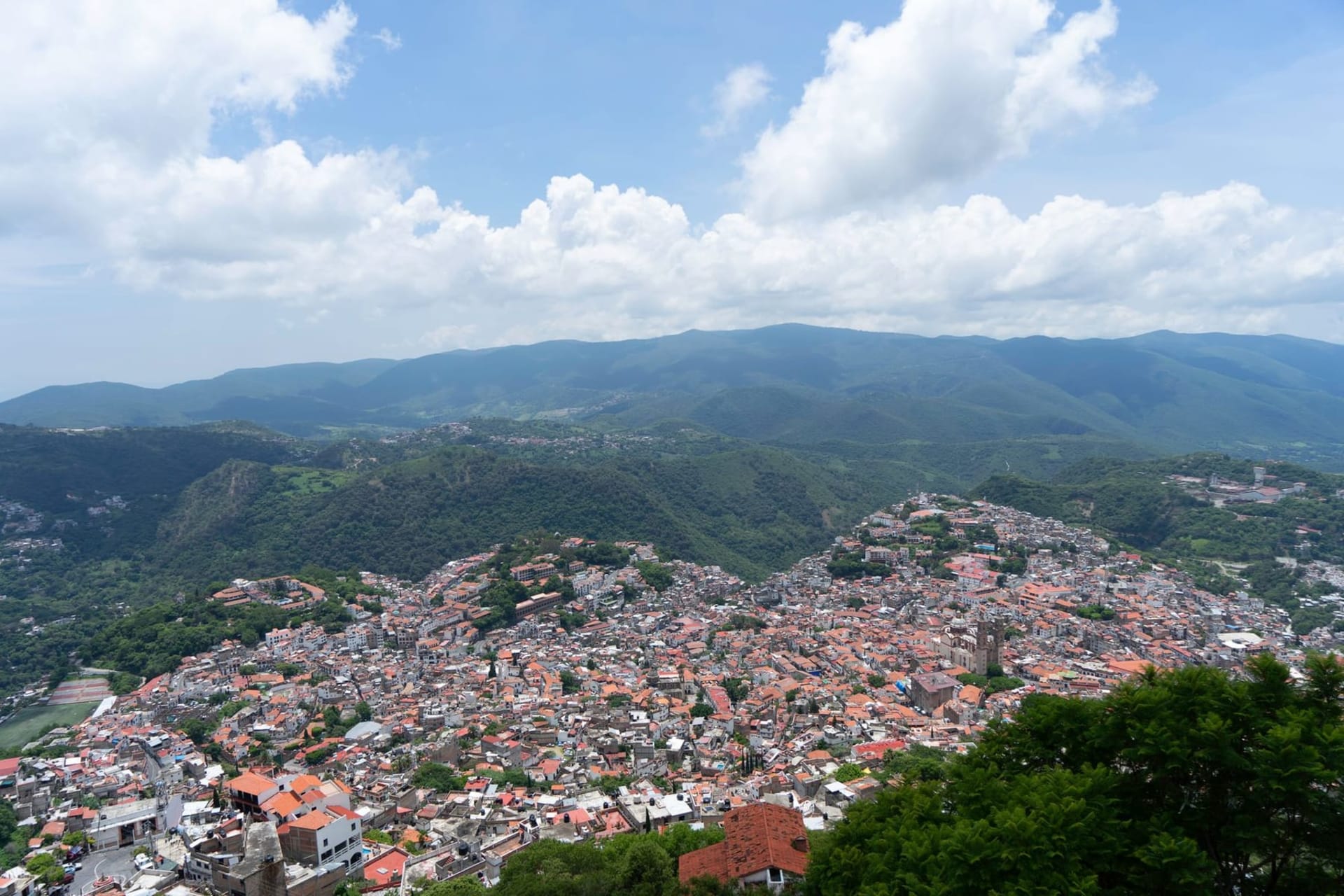
There are cities that reward patience, and Taxco is one of them. It doesn’t reveal itself quickly. The first hour I spent there, I was too preoccupied with the gradient — the callejones climb at angles that make your calves burn and your lungs apologize — to notice much else. Then I stopped on a small landing off Calle de las Delicias, caught my breath, and looked up. The twin baroque towers of Santa Prisca were catching the late afternoon light in a way that made the pink quarry stone look briefly, impossibly, like rose gold.
Silver and Stone
Taxco built its reputation on silver, and the metal is still everywhere — in shop windows lining the Plaza Borda, in the hands of artisans hunched over workbenches visible through half-open doors, in the earrings worn by women walking to the market before dawn. The silversmiths here descend from a tradition that William Spratling more or less invented in the 1930s, when he moved from New Orleans and convinced local craftsmen to revive pre-Hispanic designs. What he started never really stopped. I spent a slow afternoon in the workshops off Calle Cuauhtémoc watching a man solder a cuff bracelet with the focus of someone defusing something. He didn’t look up once.
The Unexpected Interior
Lia found the thing that surprised me most. She ducked into what looked like a hardware stall near the mercado and called me over. Behind a rack of plumbing fittings was a courtyard I would never have found alone — a crumbling colonial patio with a bougainvillea so large it had colonized the second-floor railing, and a woman selling tlayudas from a clay comal balanced on three bricks. We ate standing up, the tortillas thick and charred at the edges, spread with asiento and layered with chapulines. I had not expected to eat grasshoppers in a plumber’s courtyard, but Taxco runs on small revelations like that.
Light and Altitude
The light changes fast at this elevation. By four in the afternoon the shadows in the callejones are already deep and cold, while the rooftops above them are still burning. That hour-long window is when the city looks most like itself — when the white facades turn amber and the steep streets empty out enough that you can hear the bells of Santa Prisca rolling down the hill without anything to interrupt them. I walked back to the hotel on Plazuela de San Juan slowly, deliberately, the way you walk when you know you’re somewhere that won’t come back.
When to go: November through February brings dry, mild weather and clear skies ideal for walking the hillside streets. Semana Santa draws extraordinary processions but also significant crowds — worth it if you plan ahead.