The jeep driver told us to honk before entering. One short blast, wait three seconds, then go. That is how traffic is regulated inside the Ogarrio tunnel — a single lane bored through the mountain in 1901 to bring silver out and everything else in. We honked. Nobody answered. We drove into the dark.
The Tunnel and What Follows
It takes about four minutes to cross the Ogarrio at walking speed, which is the only speed available. The walls press close enough that I could have touched both sides with outstretched arms. Water seeps through cracks in the volcanic rock and drips onto the hood. Headlights dissolve into blackness twenty meters ahead. Lia had her hand on my knee the entire time, which she would later describe as purely practical.
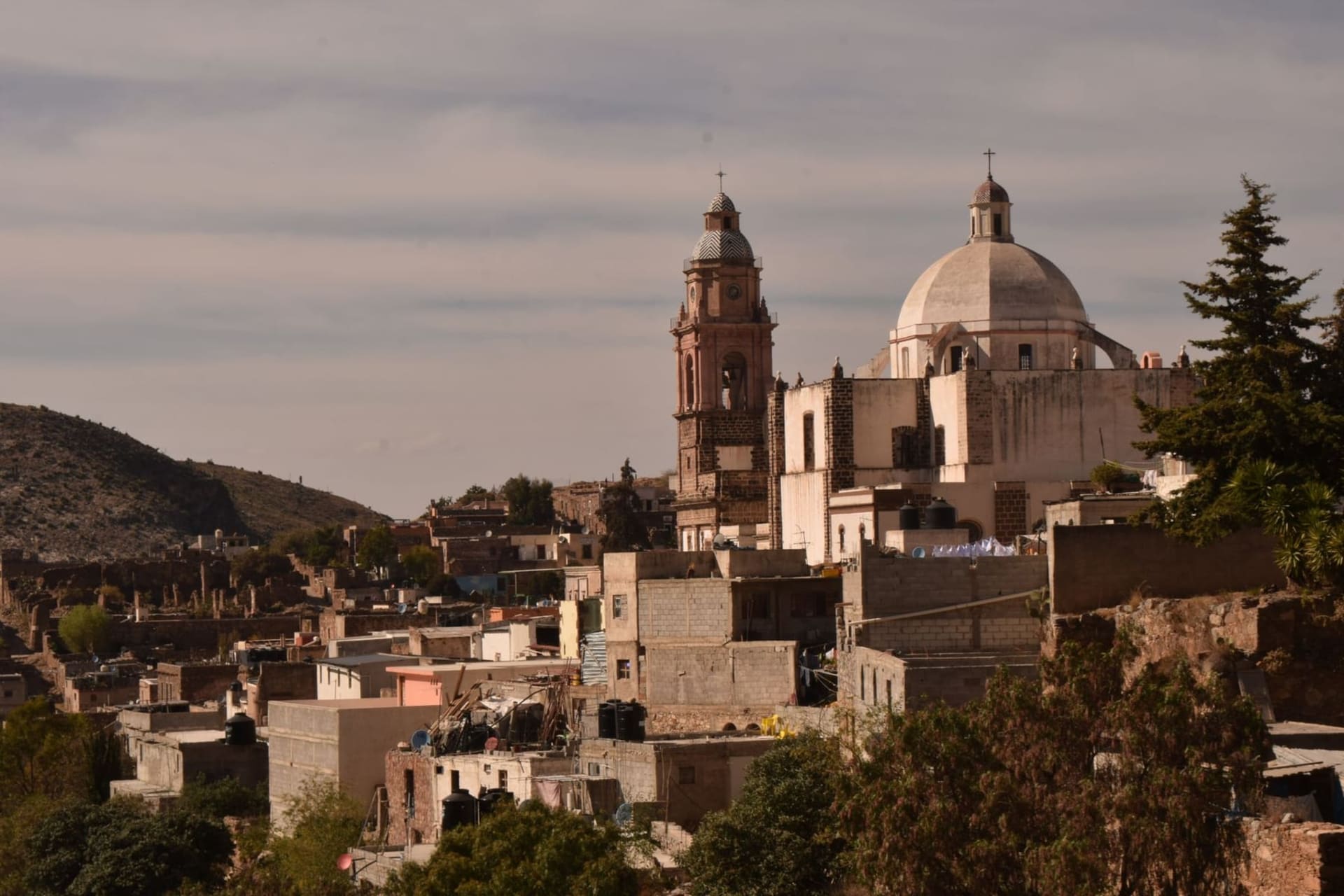
When the tunnel releases you, the town appears without warning — cobblestones, cantera stone walls the color of dried clay, a church façade so ornate it looks borrowed from a different century. The altitude here is 2,750 meters. The air is thin and cold even in late October, laced with copal smoke drifting from the Templo de la Purísima Concepción at the top of Calle Lanzagorta.
Silver Bones and Empty Rooms
Real de Catorce peaked around 1900 with a population of fourteen thousand miners and their families. Today somewhere between eight hundred and a thousand people remain, depending on the season and whether the pilgrims have arrived. The abandoned structures are not ruins in the tourist-brochure sense — they are simply buildings whose owners left and never came back. Roofless houses with intact doorframes. A bullring on the edge of town, its adobe walls slowly returning to the hillside, where you can walk the full circumference of the arena on a Sunday morning and see nobody.
The unexpected discovery came at a tienda on Calle Zaragoza, where the woman behind the counter was selling gorditas stuffed with nopales and requesón, cooked on a comal propped over a gas burner. We ate them standing at the door. The requesón was sharper than anything I had tasted in the cities below — something about the altitude, she said, or maybe the goats.
Wixáritari Country
The Wirrikuta desert plateau surrounding Real de Catorce is sacred to the Wixáritari people, who have made an annual pilgrimage here for centuries to harvest peyote. Arriving before the full pilgrimage season, we crossed the altiplano at dusk in flat golden light, the desert floor covered in candelilla shrubs and clumps of peyote cactus no larger than a coin. It is one of the quietest places I have been on this continent.
When to go: October through early December offers mild days, cold nights, and relatively few visitors. Avoid the week around October 4th — the feast of San Francisco de Asís draws tens of thousands of pilgrims and every room fills weeks in advance.