
Puerto Morelos
"Twenty-five kilometers from Cancún, and somehow nothing is happening here. The pelican on the lighthouse doesn't seem to mind."
Puerto Morelos shouldn’t still exist in the form that it does. It sits 25 kilometers south of Cancún’s hotel zone and 35 kilometers north of Playa del Carmen, in a corridor of coast that has been industrialized for tourism at a pace and scale that makes most of the Caribbean coast of Quintana Roo unrecognizable from what it was thirty years ago. And yet Puerto Morelos has a central plaza where the main activity on a Wednesday afternoon is a pelican sitting on the fence of the broken lighthouse. I sat on a bench across from it for twenty minutes, watching, and the pelican sat on the fence, also watching, and between us nothing happened that required documentation.
I find this more remarkable than any amount of natural beauty, which Puerto Morelos also has. The capacity of a town to remain itself while adjacent to forces of transformation that have consumed everything around it is not guaranteed. Puerto Morelos has it, for now.
The Leaning Lighthouse
Hurricane Beulah came through in 1967 and knocked the lighthouse at the edge of the town significantly off vertical. The structure didn’t fall and wasn’t demolished, and at some point the decision — conscious or simply logistical — was made to leave it as it is. The lighthouse now stands at a lean that is visually arresting: not quite the lean of Pisa, less theatrical, but definite enough that you look twice. It still functions as a navigational aid. It is also apparently one of the preferred perches for the brown pelicans that work the reef zone offshore.
The pelican I watched was large, with the specific expression of patient boredom that pelicans have mastered. It shifted its weight once in twenty minutes, resettled its feathers, and returned to looking at the plaza with an expression of resigned endurance that felt appropriate to a Wednesday.
The lighthouse sits at the end of the main street, where the town meets the beach. Behind it is the Caribbean, and beyond that — close enough to be visible as a line of slight discoloration in the water — is the reef.
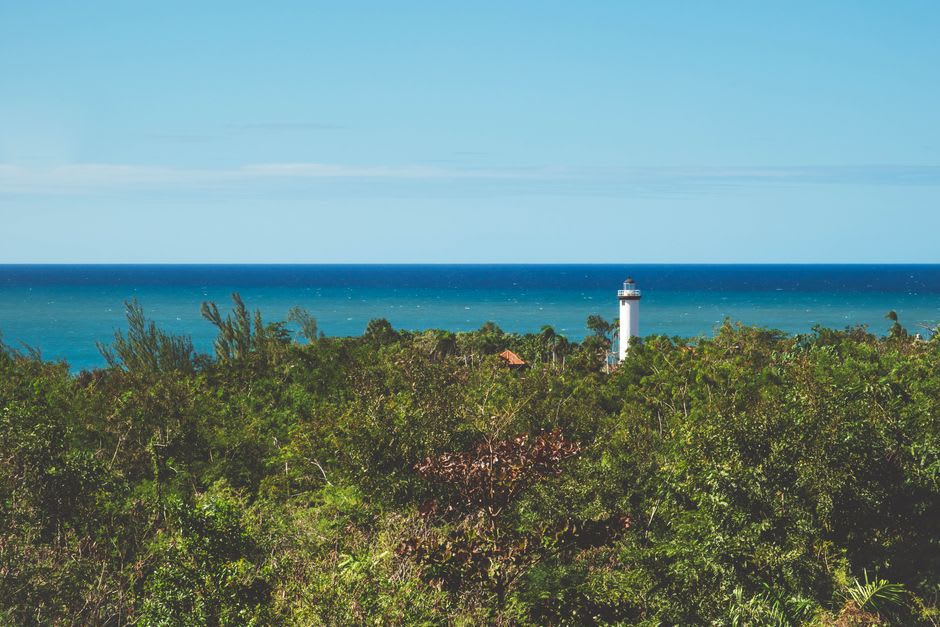
The Reef
The Mesoamerican Barrier Reef is the second-largest coral reef system in the world. In most places along the Quintana Roo coast, accessing it requires a boat and a guide. In Puerto Morelos, it is 600 meters from the beach — a leisurely fifteen-minute swim, or five minutes with a current — and the snorkeling is genuinely good, with the caveat that “genuinely good” is relative to a reef that has suffered the same bleaching and crown-of-thorns pressures as coral reefs globally.
What Puerto Morelos has that larger dive towns don’t is low boat traffic directly over the reef, which is protected as a national marine park. The visibility is good. The fish density is good. I rented gear from a shack near the beach and swam out on a morning when the water was flat enough to see my hands below me. The coral heads at the outer edge of the park are intact in the way that makes you understand why people care enough to protect them.
For diving, there are a small number of dive shops in town that are not overwhelming in the way that the Playa del Carmen operations can feel. You can book a boat, go out to the reef, and return without the industrial-tourism processing that larger operations involve.
The Market and the Town
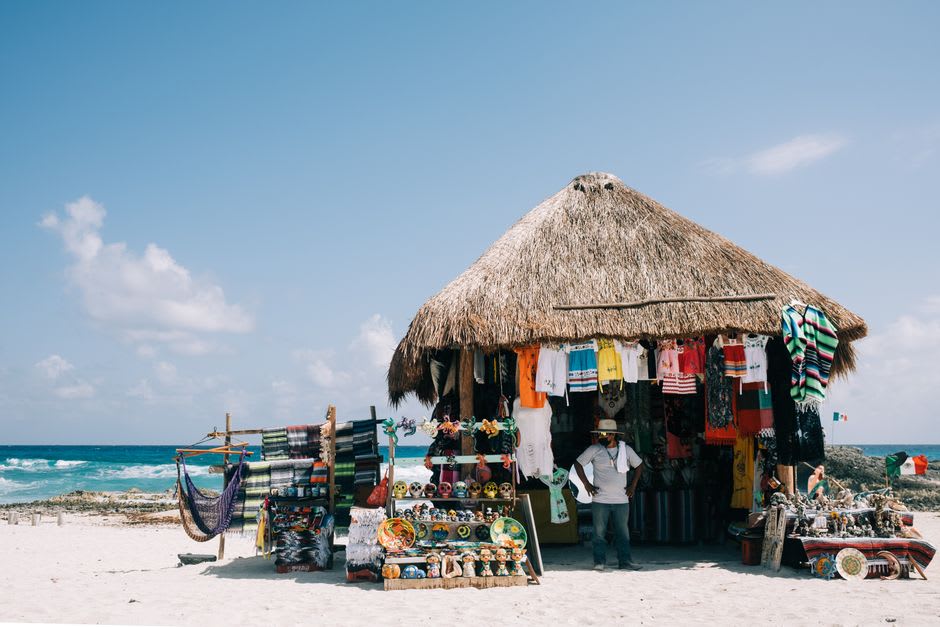
The artisan market on the main street is the other thing that separates Puerto Morelos from the resort coast. It is not a large market. But it has actual craft people selling actual made things: hammered jewelry, small textile pieces, carved wood. Not the same knockoff goods you find at every highway souvenir stop. I bought a hammered copper bracelet from a woman who made them herself and showed me the tools she used, which were partly improvised from hardware store materials. The bracelet is excellent.
The Playa Morelos port, just north of the town center, is where the car ferries to Cozumel depart — a crossing of about 45 minutes if you want to get a vehicle to the island. This gives Puerto Morelos a slightly more functional, less purely touristic quality: it has a working port, which means it has working-port infrastructure. There are mechanics, hardware stores, a large fish market where the local fishing fleet brings its catch in the early mornings.
Getting There
The highway pulloff is signed from the Cancún-Playa del Carmen federal highway — look for the Puerto Morelos exit and then follow the road three kilometers east to the coast. Buses from both Cancún and Playa del Carmen stop at the highway junction, from where a taxi or colectivo takes you to the town. There are several small hotels in the village, all quiet, all non-resort in the sense that matters.