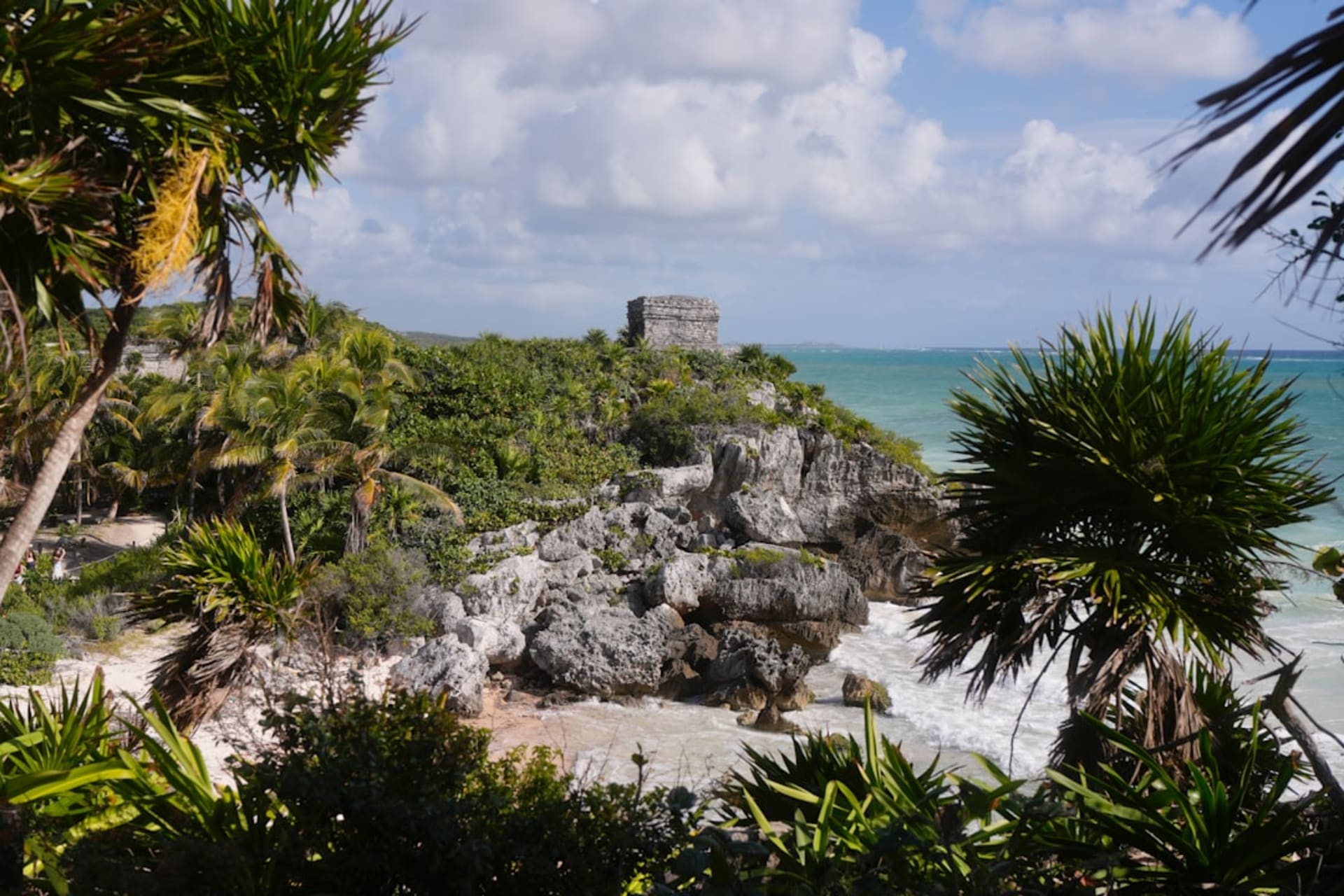
Cobá
"Cobá's pyramid is still climbable. Chichén Itzá closed the climb in 2006. Tulum was never climbable. Cobá is the last major Maya pyramid in the Yucatán where you can reach the top."
Cobá is the Maya city the Yucatán’s tourist infrastructure hasn’t fully absorbed — not because it isn’t significant (the city was occupied continuously from 100 BCE to 1500 CE, controlled a network of 50 raised roads, and at its peak housed 50,000 people in the jungle between the Caribbean coast and the central Yucatán plain) but because it requires more distance from the Tulum-Playa del Carmen axis and because the jungle setting, while atmospheric, doesn’t photograph as dramatically as Chichén Itzá’s cleared plazas.
What Cobá has that no other major Maya site in the Yucatán currently offers: you can still climb the main pyramid.
The Nohoch Mul Pyramid
Nohoch Mul (Yucatec Maya for “large mound”) is at 42 meters the tallest pyramid in the northern Yucatán — taller than El Castillo at Chichén Itzá (30 meters), taller than the Pyramid of the Magician at Uxmal (38 meters). The climb is steep — the steps are ancient, narrow, and worn — and a rope down the center of the staircase assists the descent. The summit: a small temple with a descending god image in stucco, and a view of the forest canopy extending flat to every horizon, broken only by the turquoise flash of the Lago de Cobá and Lago Macanxoc through the trees below.
The climb takes 15 minutes up and 20 minutes down (slower coming down the steep worn steps). The view from the top is the Yucatán without human infrastructure in every direction — the forest, the lakes, the flat limestone plateau extending to the Caribbean coast 50 kilometers east.
The Mexican government periodically discusses closing the climb as it has closed El Castillo at Chichén Itzá. As of now it remains open. This situation may change.
The Sacbé Roads
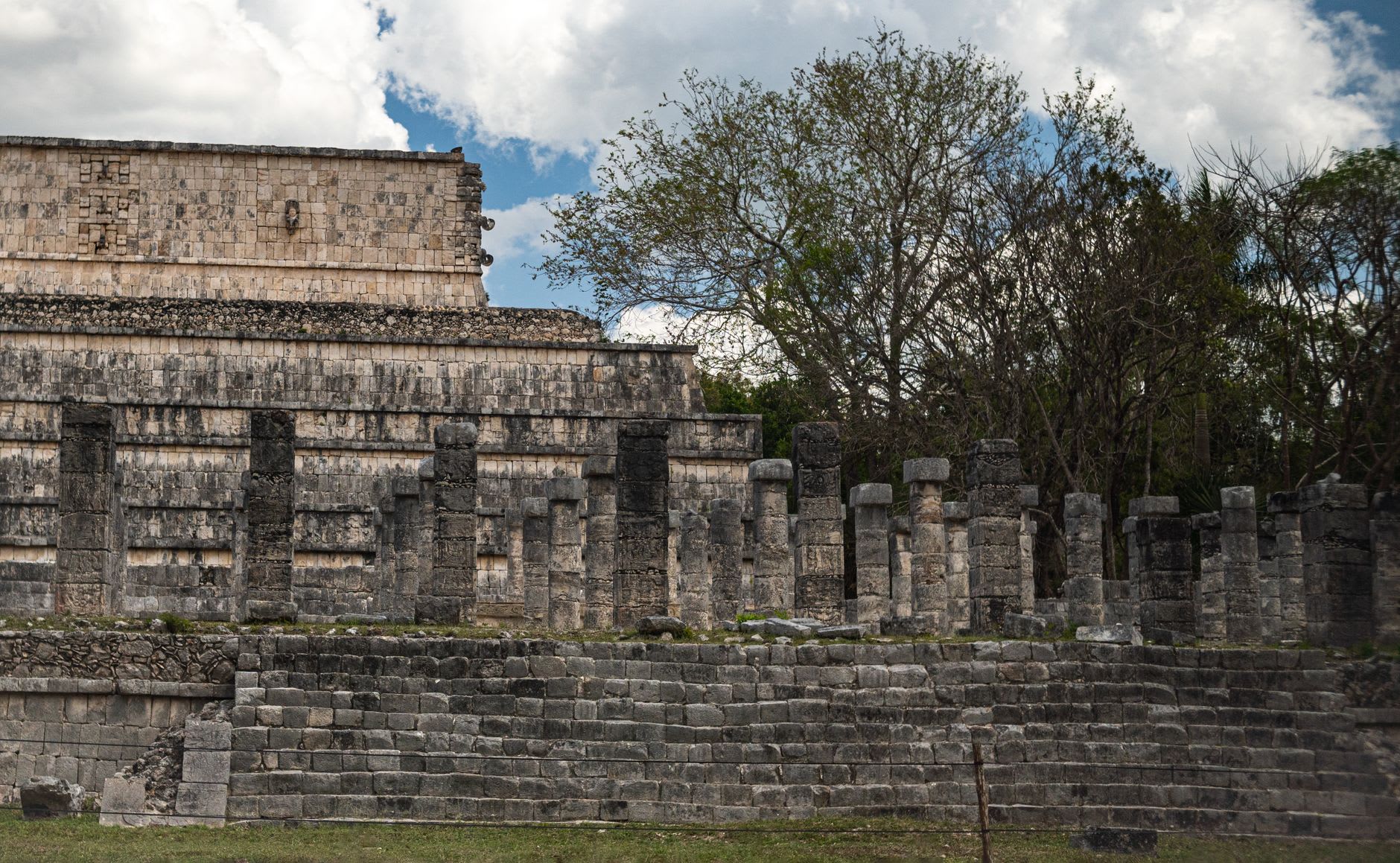
The most historically significant feature at Cobá that receives the least attention: the sacbé (white road) network. The ancient Maya built raised causeways of limestone connecting cities, ceremonial centers, and agricultural communities across the Yucatán lowlands. Cobá was the hub of the largest sacbé network in the Maya world — 50 roads radiating from the city center, the longest running 100 kilometers to the city of Yaxuná (near Chichén Itzá), an engineering project comparable to the Roman road system in ambition.
The sacbé roads are visible in the Cobá forest: sections of elevated white limestone path running between the archaeological groups, through jungle that has grown back around but not yet reclaimed the original causeway. Walking the sacbé between the Cobá Group (where Nohoch Mul stands) and the Macanxoc Group (2 kilometers through jungle, where the stelae with the oldest Long Count calendar date in the Yucatán are located) follows the same surface Maya commoners walked 1,000 years ago.
The Jungle and the Lakes
The site is set around two natural lakes — Cobá and Macanxoc — that provided the water source for the ancient city and now provide a landscape that is visually very different from the open, cleared-field settings of Chichén Itzá and Uxmal. The pyramids emerge from living jungle rather than manicured lawns. Spider monkeys are often visible in the canopy. The specific bird community of the Yucatán jungle — the ocellated turkey, the keel-billed toucan, the Yucatán woodpecker — is active in the forest around the structures.
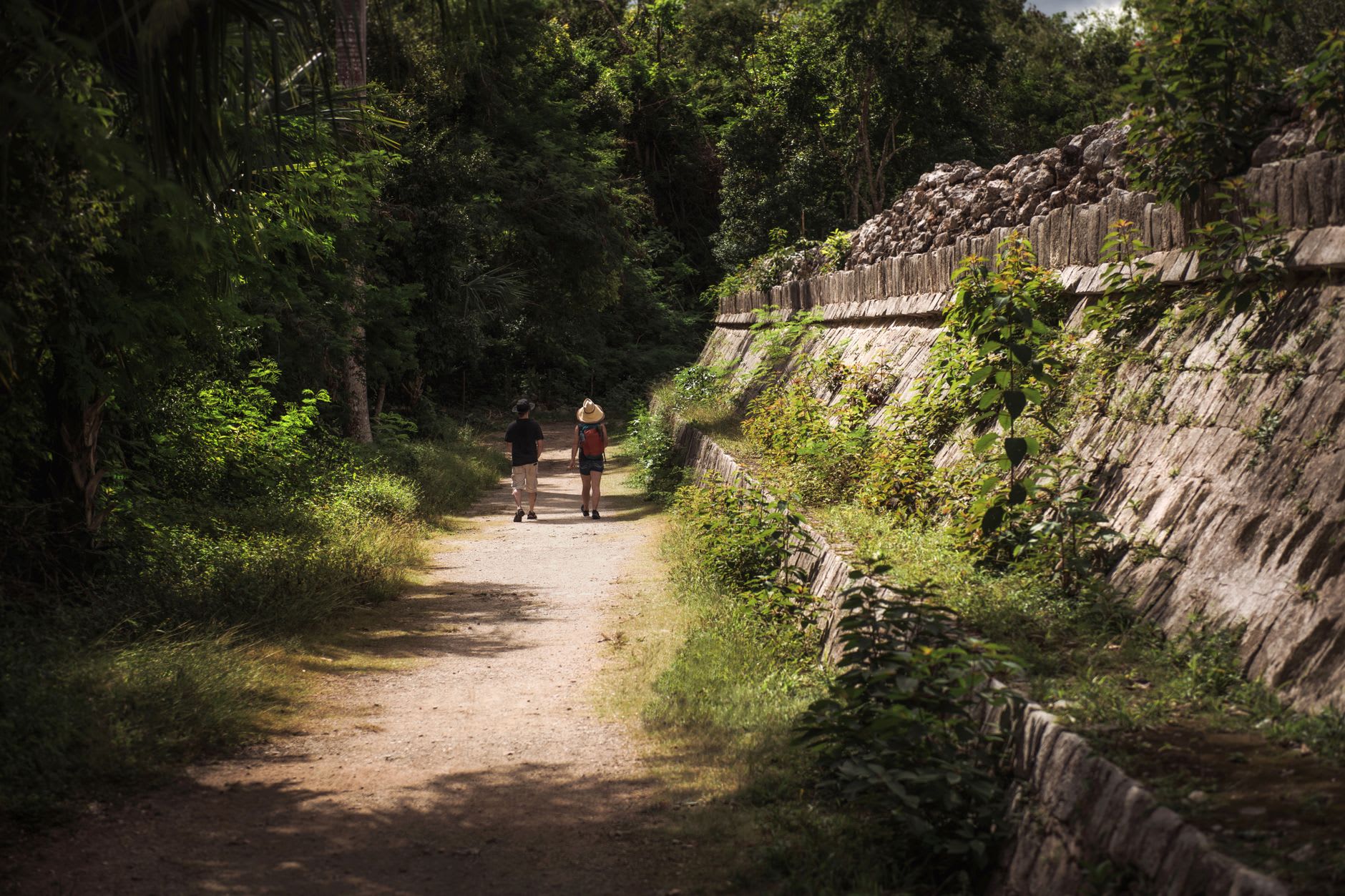
Bicycle rentals at the site entrance are the practical way to cover the 2-kilometer distance between the site entrance and Nohoch Mul (or a pedal-cart with a local driver). The jungle walk is possible; the midday Yucatán heat makes the bike the better option.
Getting there: From Tulum (45min by car or colectivo to Cobá town). From Playa del Carmen (2h). ADO buses from Cancún and Playa del Carmen to Cobá town, which is 500 meters from the site entrance. Day trip from Tulum is standard; arriving at opening (8am) avoids both the heat and the tour groups.
When to go: Year-round. November through April for the driest months. Arrive at 8am when the site opens; by 11am the tour buses from Cancún arrive and the pyramid staircase has a queue. The midday heat (35-40°C in summer) makes early arrival not optional, it’s practical.