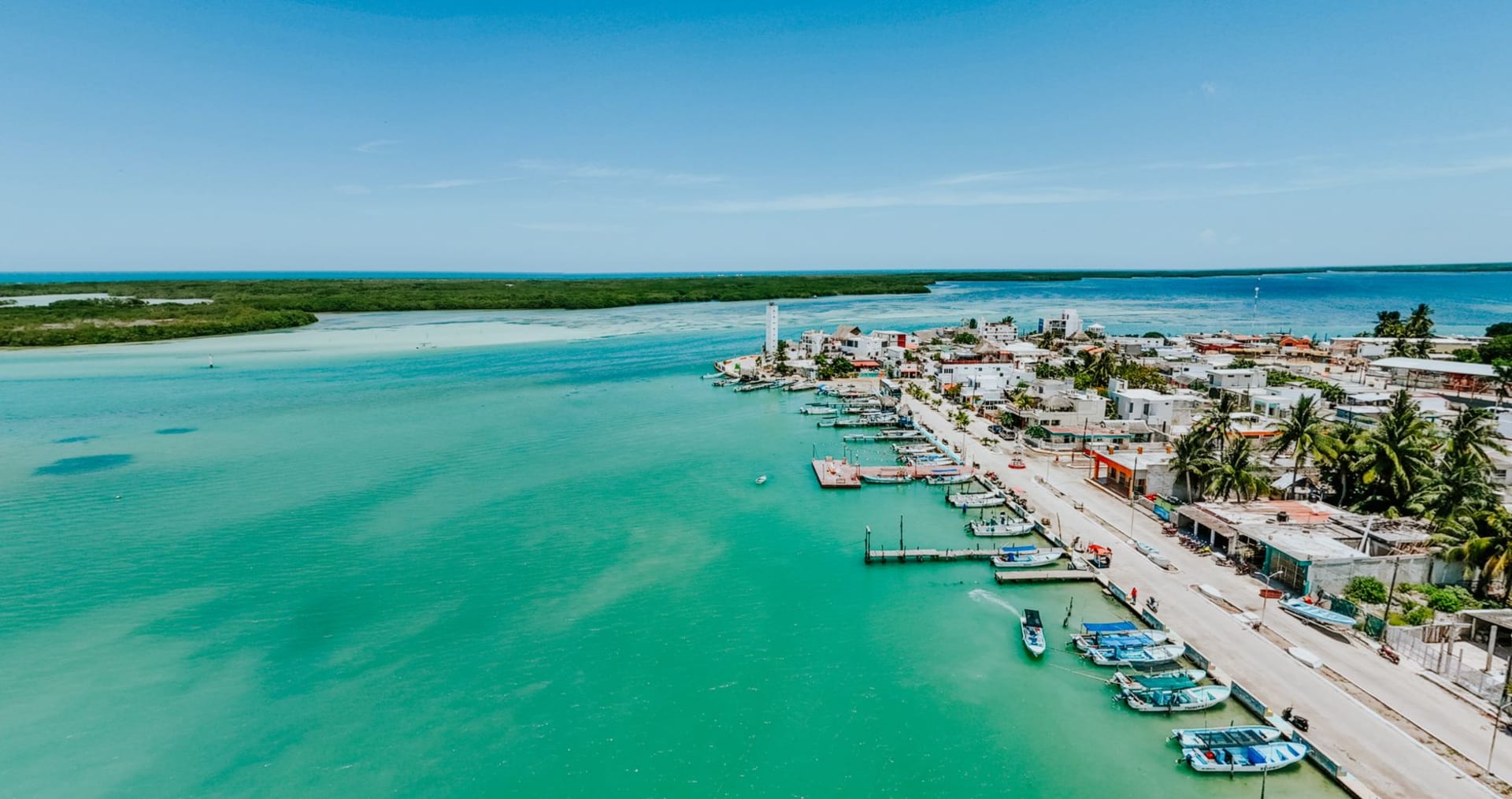
Chetumal
"I had driven past Tulum and Playa del Carmen and the entire organized spectacle of the Riviera Maya to get here, and I kept thinking: why doesn't anyone talk about Chetumal?"
Chetumal is the end of the road going south along the Caribbean coast of Mexico, and it has the quality that end-of-road cities tend to have: a slightly distracted relationship with tourism, the sense that the city has arranged itself around needs other than yours. The bus from Tulum takes about five hours. The bus to Belize City leaves from a block and a half away. Chetumal occupies the space between those two facts, and in that space it is one of the more interesting cities in Quintana Roo — which is a low bar to clear, but Chetumal clears it by a significant margin.
I came specifically for the Maya museum and stayed for three days, which surprised me. I hadn’t planned on three days.
The Museum of Maya Culture
The Museo de la Cultura Maya is in a modern building on the Avenida de los Héroes, and the building itself is striking — a series of levels meant to represent the three tiers of Maya cosmology: the underworld (Xibalba), the earth, and the thirteen heavens — but the exterior doesn’t prepare you for the interior, which is one of the best museum experiences I’ve had in Mexico.
The collection is organized thematically rather than chronologically, which is the right call for Maya culture: instead of moving through periods, you move through ideas. Agriculture, astronomy, trade, the calendar system, the ballgame, death and afterlife, the relationship between the human and divine. Each section uses original artifacts — stelae, jade ornaments, ceramic vessels, architectural fragments — combined with reproductions of murals and codices and explanatory panels that are genuinely informative without being condescending.
The reproduction of the murals from Bonampak — the famous polychrome murals that show a royal court, a battle, and a victory celebration in extraordinary color and detail — occupies an entire room and is full-scale. The originals in Chiapas are deteriorating; this reproduction was made in the 1990s from high-resolution photography before the deterioration progressed. Standing in that room surrounded by a Maya royal court in full color, the figures dancing and gesturing and watching the captives being killed, is one of those museum experiences that rearranges something. I spent forty-five minutes in it.
What strikes me about the Chetumal museum, compared to the better-known INAH archaeology museums in Mexico City or Mérida, is the spatial quality. It’s never crowded. The cases are well-lit. The flow between sections is logical. I went twice, which I almost never do.
The Waterfront and the Architecture
Chetumal was founded in 1898 and rebuilt after Hurricane Janet destroyed almost everything in 1955, which explains why the oldest buildings in the centro are Caribbean-style houses rather than colonial stone — wood-framed, with wide verandas and jalousie windows and painted in the bright colors you associate with Belize City or Mérida’s suburbs rather than Mexico’s colonial cities. The style is called Caribbean Victorian, which sounds like a category invented for real-estate listings but describes something genuinely specific: elevated wooden structures with decorative trim, designed to catch the sea breeze and let heat escape through the eaves.
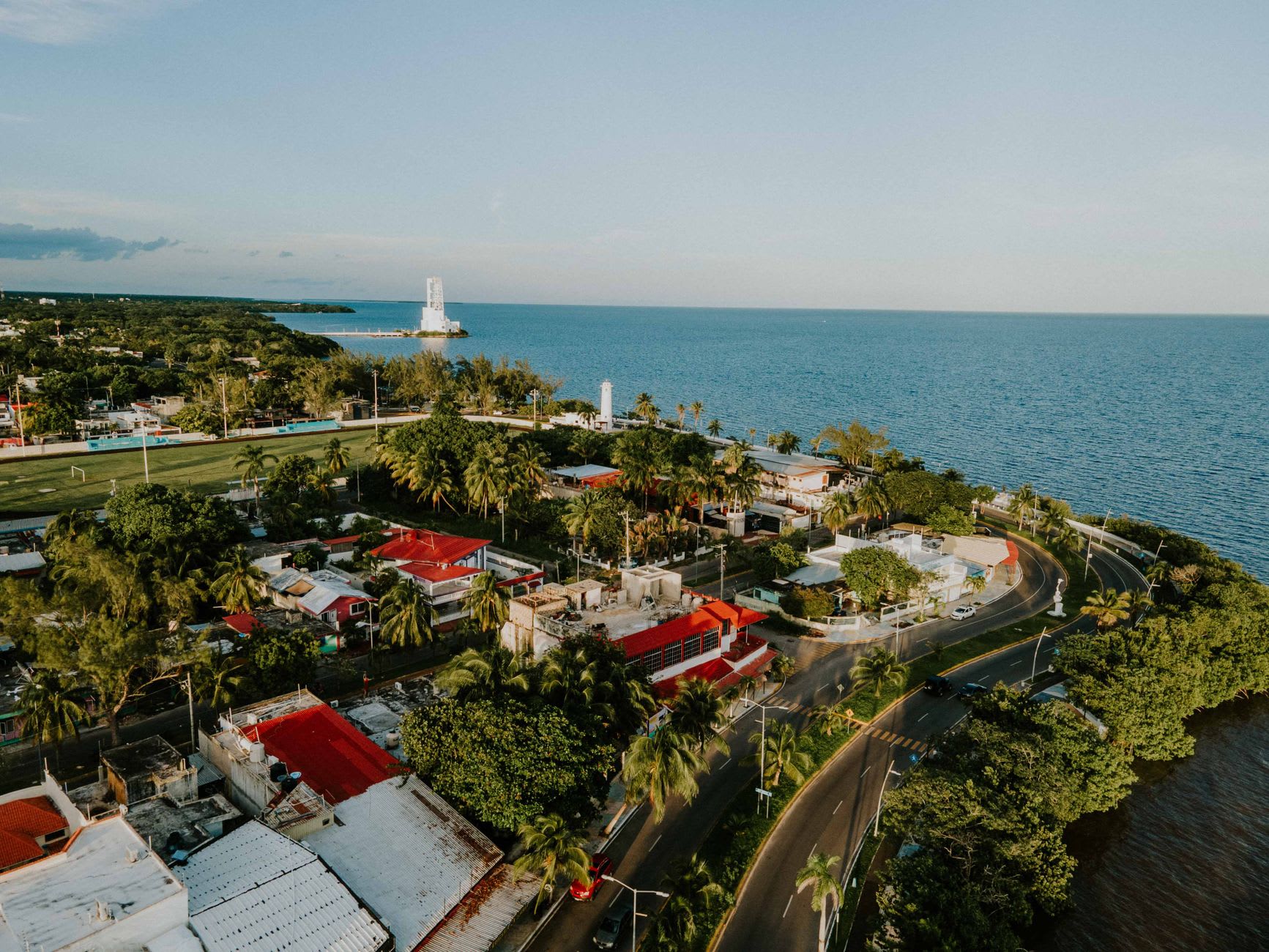
The malecon — the waterfront boulevard along Bahía de Chetumal — is where the city orients itself in the evenings. The bay is enormous and calm and a different color of blue from the Caribbean further north: deeper, more jade-green, sheltered from the waves by the curve of the coastline. I walked the malecon at 6am on my second morning and saw a group of fishermen coming in and, further out, what I initially thought was a large fish moving slowly just below the surface. It was a manatee. A large one, drifting parallel to the waterfront about twenty meters out, completely indifferent to the city on its left. I watched it for five minutes, at which point it angled away from the shore and disappeared into the deeper water.
The manatee population in the bay is established and reasonably healthy by the standards of an endangered species — the calmer, shallower waters of the bay provide the habitat they need, and Chetumal has a designated manatee sanctuary zone. You’re not guaranteed a sighting, but early mornings on the malecon are your best odds, and the walk itself is worth it regardless.
The Border and What’s Beyond It
The Belizean border is at Santa Elena, about fifteen kilometers from the city center, and crossing it is the most straightforward international border crossing I’ve encountered in Latin America — a five-minute process in both directions, assuming no complications. The ADO bus to Belize City leaves from the terminal near the market and takes about four hours. I didn’t cross on this trip, but I’ve crossed since, and what’s interesting about being in Chetumal is how much you can feel Belize’s proximity in the city — in the English-Creole you hear occasionally in the market, in the produce that comes across the border, in the general Caribbeanness of a city that is technically part of Mexico’s most tourism-industrial state but operates in a completely different register from it.
The market is the other Chetumal experience worth noting: the Mercado Ignacio Manuel Altamirano is a large, functional, non-touristic market where the Belize trade is visible in the merchandise — electronics, clothing, goods that flow across the border in both directions. The food section has Yucatecan dishes alongside things you find in southern Belize, and the lime soup (sopa de lima, a Yucatecan staple) served from one of the fondas at midday was the best version of that dish I’ve had.
I keep recommending Chetumal to people who tell me they’re going to Quintana Roo, and I keep getting the same look: the Riviera Maya is right there, why would you go to the border? Because the museum is world-class and empty. Because the manatees are in the bay. Because the architecture is unlike anything else in Quintana Roo. Because the city hasn’t organized itself around your presence and there’s something restful about that, in a state where almost everywhere has.
Practical Notes
Chetumal is 5 to 6 hours from Cancún by ADO bus (frequent service, air-conditioned, reliable), and about 5 hours from Tulum. There is a small airport with regional flights, but the bus is usually the practical option. Overnight buses from Mexico City also run, though it’s a long journey.
The Museo de la Cultura Maya is open Tuesday through Sunday, 9am to 7pm. Admission is modest — under 100 pesos. Allow a minimum of two hours; more is better.
For manatees: early morning walks along the malecon (before 8am) give the best odds. The protected zona de manatíes is marked with buoys offshore.
The border crossing to Belize at Santa Elena-Subteniente López: bring your passport, be prepared to pay a Belizean tourist card fee at entry. ADO buses run directly to Belize City; there are also taxis to the border if you’re crossing and arranging onward transport independently.
Hotel Caribe Princess and the hotels along the malecon are the most pleasant options for the waterfront access; the centro hotels are cheaper and serviceable. Chetumal is a working city with working-city hotel prices — significantly lower than the Riviera Maya.